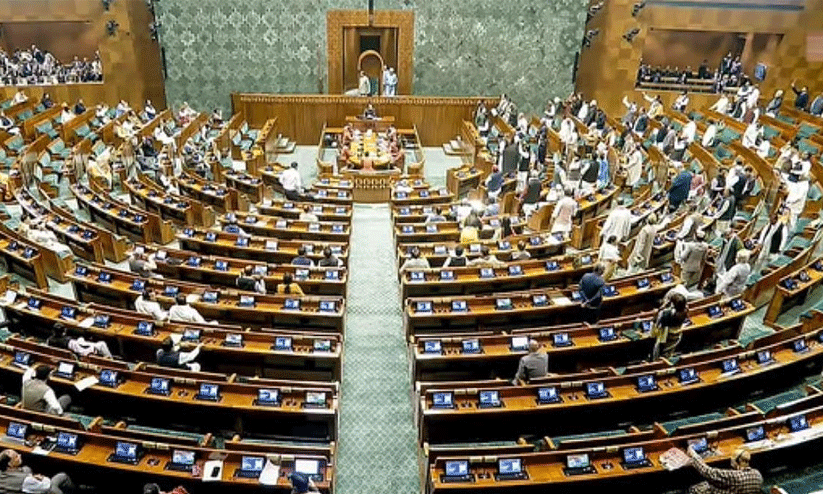
In the grand architecture of Indian democracy, the Lok Sabha—the lower house of Parliament—serves as the primary vessel for the will of the people. For decades, the number of seats in this chamber has remained a fixed constant, a structural anchor in a rapidly changing nation. But that anchor is being lifted. On November 27, 2026, the Central Cabinet approved key amendments to the Delimitation Bill, signaling a seismic shift in how India intends to represent its massive and diverse population.

The scale of the proposed change is difficult to grasp without looking at the raw numbers. Currently, the Lok Sabha operates with 543 seats. Under the proposed 131st Constitutional Amendment Bill, the government is moving forward with a plan to expand this number significantly. Reports suggest the total number of seats could rise to 813, with a potential ceiling of 850 seats. This is not merely a minor adjustment; it is a fundamental expansion of the legislative body, designed to accommodate a nation that has grown far beyond its previous administrative boundaries.
To understand why such an expansion is necessary, one must look at the mechanics of seat allocation. The proposal includes a 50 percent increase in seats across the various states. In a country as vast as India, where population density and regional demographics shift constantly, the current allocation of seats has become a point of intense political and mathematical tension. By increasing the total number of seats, the government aims to ensure that the legislative body more accurately reflects the current citizenry.
Currently, these two states hold a combined total of 42 seats in the Lok Sabha.
However, expansion brings with it a complex set of anxieties, particularly for the states in the south. The process of 'delimitation'—the redrawing of electoral boundaries—is often a zero-sum game. If seats are allocated based on recent population surges, states that have successfully managed their population growth may find themselves losing relative influence. To address these concerns regarding representation in southern states, there is a proposal to extend the use of 1971 census data for seat allocation by another 25 years. This move seeks to decouple the immediate demographic shifts from the political power held by these regions, providing a buffer against sudden shifts in legislative weight.
While the national debate focuses on the tension between the north and south, specific regions will see dramatic shifts in their local political landscapes. In the southern corridor, the states of Andhra Pradesh and Telangana are poised for a significant change. Currently, these two states hold a combined total of 42 seats in the Lok Sabha. Under the new proposal, that number is expected to climb to 63 seats. This increase represents a significant boost in the regional voice within the central government, even as the broader debate over census data continues to simmer.
The path to this new reality is paved by the 131st Constitutional Amendment Bill. Because changing the composition of the Lok Sabha requires altering the very foundation of the nation's governance, the bill represents one of the most significant legislative undertakings in recent memory. The government’s move to approve these amendments through the Cabinet is the first major step in a process that will eventually redefine the relationship between the individual voter and the halls of power in New Delhi.
As the proposal moves forward, the central question remains how a body of 813 or even 850 members will function compared to the current 543. A larger house offers more granular representation, potentially allowing for more diverse voices to enter the fray. Yet, it also introduces new challenges in terms of legislative efficiency and the sheer logistics of parliamentary debate. The government is betting that the necessity of representation outweighs the complexities of scale.
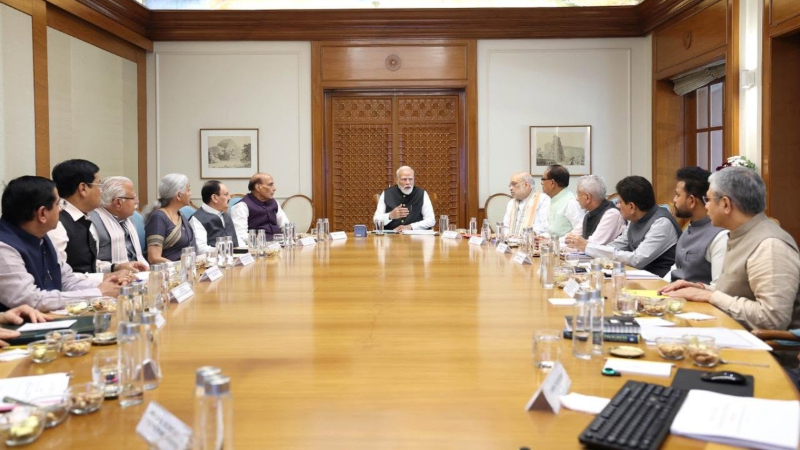
For now, the blueprint is set. The approval on November 27, 2026, has set the machinery of the state in motion. The transition from a 543-seat chamber to one that could approach 850 is more than a bureaucratic update; it is a reconfiguration of the Indian state itself. As the implementation of the Delimitation Bill unfolds, the country watches to see how this new map of power will be drawn, and who will ultimately hold the pen.