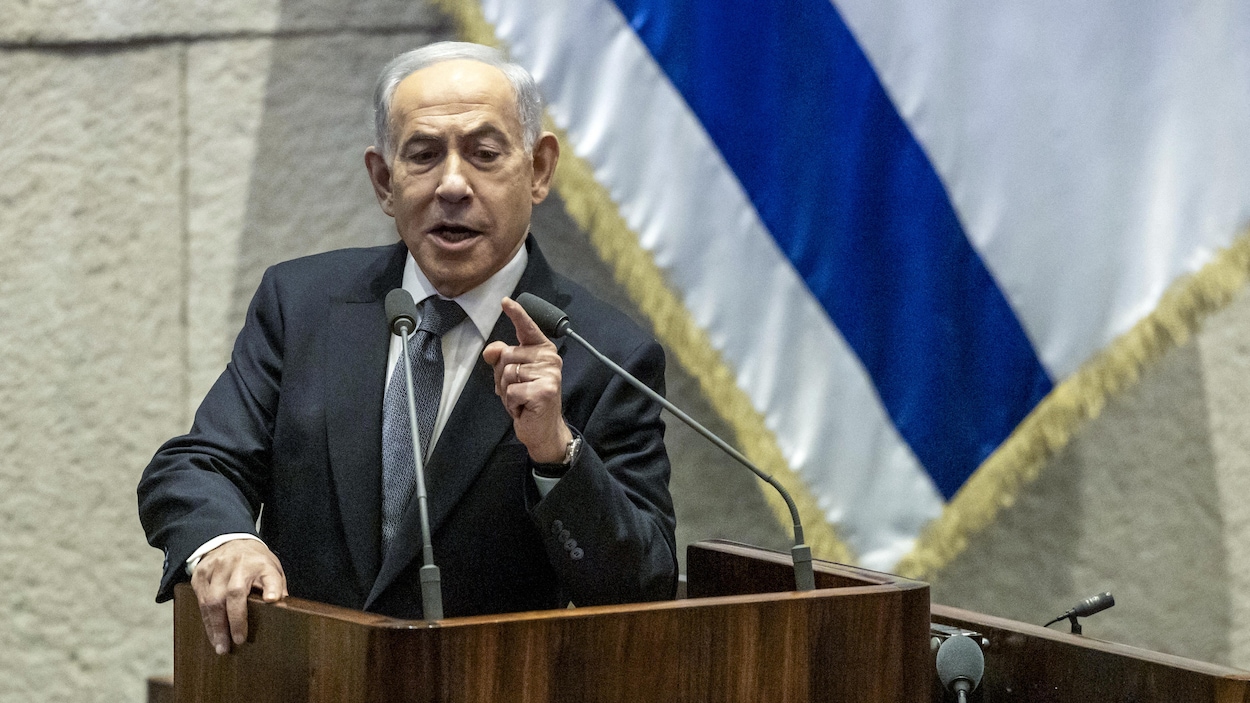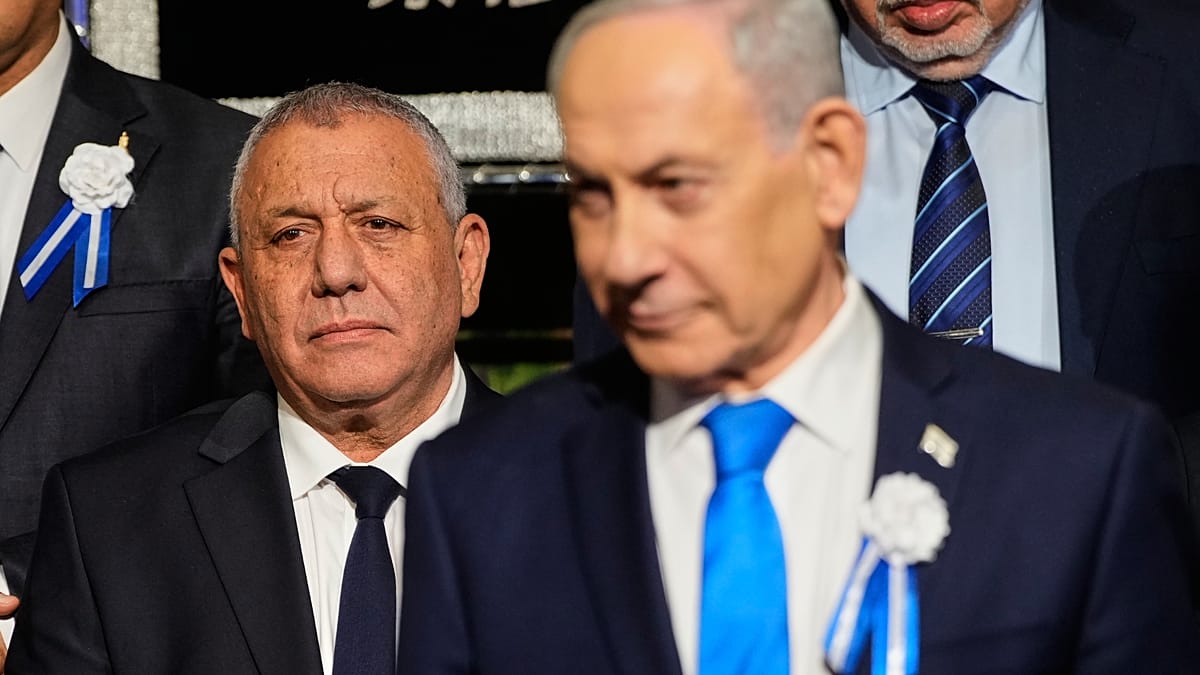
In the high-stakes theater of Israeli politics, Benjamin Netanyahu has always been known for holding the reins tightly. Yet on November 28, 2026, he reached out across the aisle with a proposal that defies conventional political logic. The Prime Minister offered to share the most powerful office in the country with his rival, Gadi Eisenkot, in an alternating arrangement. Rather than viewing this as a concession, Netanyahu framed it as a necessary pivot to navigate a deepening constitutional crisis. The offer suggests a willingness to step back from the immediate front burner of governance, allowing Eisenkot to serve first in the rotation, a move designed to buy time and maintain a foothold in power during a period of intense instability.

The urgency behind this maneuver is dictated by the calendar. Gadi Eisenkot has been tasked with forming a government by December 6th. This deadline is not merely administrative; it is a hard stop imposed by the political reality that the current interim government cannot hold the state together indefinitely. Eisenkot’s mandate to construct a coalition is running against the clock, and the silence he has maintained in response to Netanyahu’s proposal reflects the gravity of the moment. If Eisenkot cannot forge a stable majority by the deadline, the entire political structure faces the risk of collapse. Netanyahu’s proposal is, therefore, an attempt to preempt this failure by offering a pre-negotiated path forward, even if that path requires a bitter sharing of the podium.
To understand why this strange alliance is being proposed, one must look at the numbers that govern the Israeli Knesset. The parliament consists of 120 seats, meaning a stable government requires a majority of 61. For years, this threshold has been elusive, trapping the country in a series of caretaker cabinets and fractured coalitions. The 61-seat majority rule acts as an unyielding gatekeeper; without it, no prime minister has the legislative bandwidth to govern effectively. Netanyahu’s offer to rotate power is an acknowledgment that no single faction can claim this majority alone. It is an admission that the center of gravity in Israeli politics has shifted away from any one dominant party and toward a fragile, negotiated equilibrium that requires multiple leaders to agree on a shared fate.
He faces ongoing corruption trials that have defined his later years in politics, creating a constant legal undercurrent to his tenure.
The proposal does not exist in a vacuum. It is cast against the long, dark shadow of the October 7th Hamas attack. The memory of that day remains the defining trauma of the current political landscape, and it has fueled fierce opposition to what many see as a lack of accountability for the security failures that preceded the assault. Critics are demanding an independent inquiry into how such a catastrophic breach of the security perimeter was possible. Netanyahu’s government has resisted this call, arguing that such inquiries would undermine the chain of command and national security. By proposing a rotation, Netanyahu is attempting to decouple the ongoing security debate from his personal political survival, hoping that an alternating government can withstand the pressure of external scrutiny without toppling the entire structure.
For Benjamin Netanyahu, the stakes are intensely personal. He faces ongoing corruption trials that have defined his later years in politics, creating a constant legal undercurrent to his tenure. The pressure to avoid an independent inquiry is not just political; it is a defense of his administrative autonomy. By offering Gadi Eisenkot—the former Chief of Staff of the Israel Defense Forces and a respected military figure—a place in the rotation, Netanyahu is attempting to frame his continued involvement as a act of statecraft rather than self-preservation. The quote he offered highlights this tension: "My responsibility as a leader obliges me to set everything aside... and to accept that Gadi Eisenkot exercises the functions of Prime Minister first." This rhetoric positions him as the ultimate statesman, putting the nation’s continuity above his own desire to hold the title exclusively.
Gadi Eisenkot’s position is one of cautious neutrality, which in this context is a form of strategic silence. He has not yet responded to the proposal, a silence that speaks volumes about the difficulty of accepting a shared destiny with a political rival who controls so much of the narrative. Eisenkot represents a different wing of the political spectrum, one that emphasizes institutional integrity and security competence. For him, the offer is a trap as much as it is a lifeline; accepting an alternating arrangement could bind his reputation to Netanyahu’s controversial policies. The fact that Eisenkot is tasked with forming the government by December 6th puts the ball squarely in his court. He must decide whether to attempt to build a traditional coalition of 61 seats, a nearly impossible task given the fragmentation, or to embrace the alternating model proposed by the incumbent.
As of now, the situation remains suspended in a delicate balance. The proposal has introduced a new variable into the calculations of Israeli governance, one that prioritizes survival over ideology. The interplay between the legal deadlines, the arithmetic of the 120-seat parliament, and the personal politics of two rival leaders creates a landscape where the traditional rules of opposition have broken down. The world watches as Israel attempts to steer its ship through a narrow channel, with the anchor of stability thrown only partially into the sea. Whether this alternating arrangement will hold or shatter is a question that will be answered in the days before the December 6th deadline, as Eisenkot weighs the cost of cooperation against the risk of political isolation.