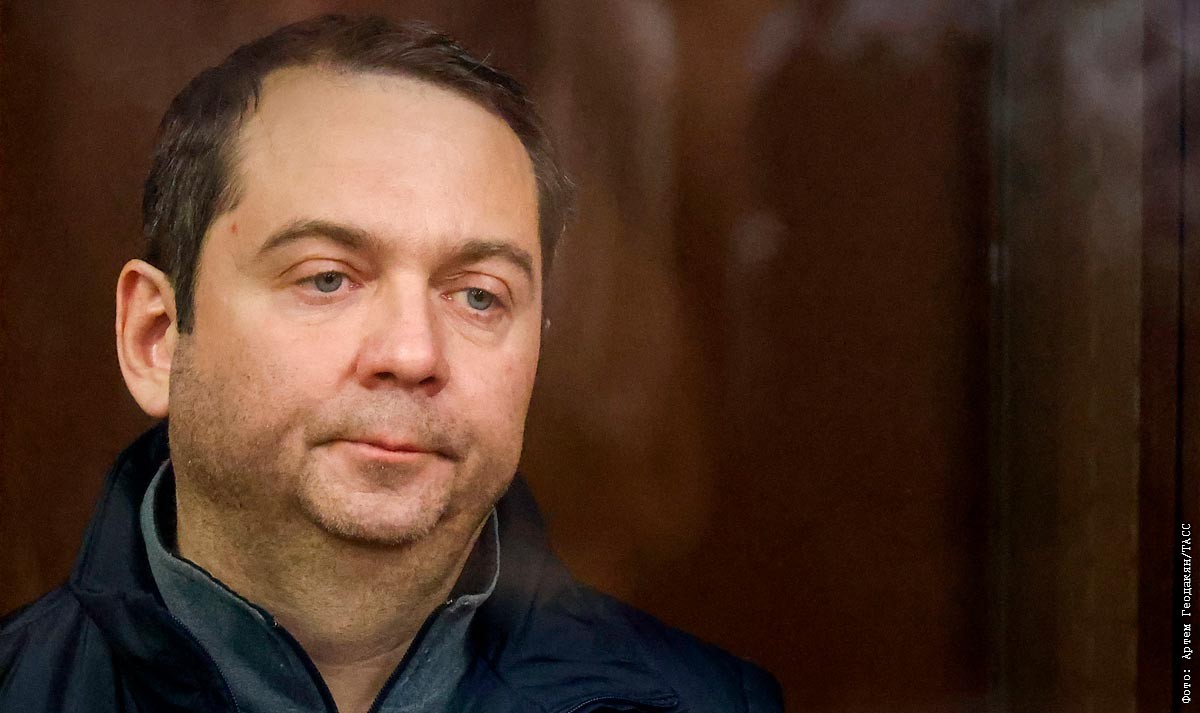
In the sterile, hushed corridors of the Meshchansky Court in Moscow, a routine procedural hearing took on an unusual weight on November 25, 2026. The man in the defendant's box was not a minor bureaucrat or a local official with a tangle of minor municipal debts. It was Andrey Chibis, the governor of the Murmansk Region, a position he has held since 2019. For years, Chibis represented the administrative stability of Russia’s far north, overseeing a region defined by its harsh climate and strategic industrial assets. But that morning, the judicial machinery of the Russian state moved to dismantle that stability. The judge, speaking with the detached precision typical of such proceedings, ordered a preventive measure that would shock observers of Russian political norms: "To choose a preventive measure in the form of detention for two months in relation to Chibis." It was a stark departure from the usual practice of allowing high-ranking officials to remain at large or under house arrest, signaling a decisive break with the regional establishment that Chibis had embodied for half a decade.

The basis for this harsh custody order lies in a web of financial allegations that the Russian Interior Ministry claims span multiple years and major state projects. The charges center on the embezzlement of over 39 million rubles from the regional construction ministry, representing a significant slice of public funds meant for local infrastructure development. A more severe accusation involves the Apatity-Kirovsk road reconstruction: Chibis is charged with the misappropriation of over 1 billion rubles allocated specifically for this vital transportation project, critical for connecting key industrial centers in the Kola Peninsula. Furthermore, the case includes counts of illegal currency operations, a charge that resonates deeply in a post-Sanction environment where capital controls are strictly enforced, adding a layer of national security concern to what is primarily an economic fraud case.
The immediate reaction from the highest levels of Russian power was characterized by a conspicuous silence. On the same day as the court ruling, Dmitry Peskov, the Kremlin spokesperson, addressed the media regarding the arrest. His statement was brief and procedural: "Investigative actions are being carried out. At the moment, there is nothing more to add." This refusal to elaborate is telling. In the Kremlin's political theater, silence is often a signal that the leadership is allowing the judicial system to proceed without interference, or that the political cost of a detailed comment outweighs the benefit. By framing the event purely as an ongoing investigative process, Peskov distanced the presidential administration from the specifics of the case, leaving the narrative in the hands of the Interior Ministry and the courts. For a governor who has served since 2019, this lack of immediate political backing suggests that Chibis has fallen outside the circle of officials protected by direct presidential oversight, or that the case is being handled with a strict separation of powers that, in Russia, is rare for figures of his stature.
These officials are the linchpins of local governance, responsible for everything from social services to major construction projects.
To understand the significance of Chibis's detention, one must look at the role of the regional governor in Russia. These officials are the linchpins of local governance, responsible for everything from social services to major construction projects. When a governor is removed or detained, it creates a vacuum that destabilizes the local political ecosystem. Chibis had been in office for a significant portion of a decade, long enough to build networks of loyalty and dependency within the Murmansk administration. His arrest raises questions about the continuity of government in the region during the two months he is expected to spend in custody. The charges of embezzling over 1 billion rubles for the Apatity-Kirovsk road suggest that the investigation may have been brewing for some time, gathering evidence of financial flows that deviated from their intended purposes. The inclusion of illegal currency transactions adds a dimension that implies sophisticated attempts to move assets out of the country or hide wealth in foreign accounts, a charge that can carry severe penalties in the current Russian legal landscape.
As the two-month detention period begins, the case becomes a test of how far the Russian justice system will go in dismantling the financial structures of regional leaders. The specific figures cited—39 million rubles from the construction ministry and 1 billion from road funds—are not just numbers; they represent the tangible outcomes of public policy that failed to reach the ground. For the people of Murmansk, the news of their governor's arrest is a reminder that the distance between the center and the periphery can sometimes bridge in moments of judicial scrutiny. While the Kremlin has offered no further comments, the investigative actions described by Peskov imply that the work is far from over.