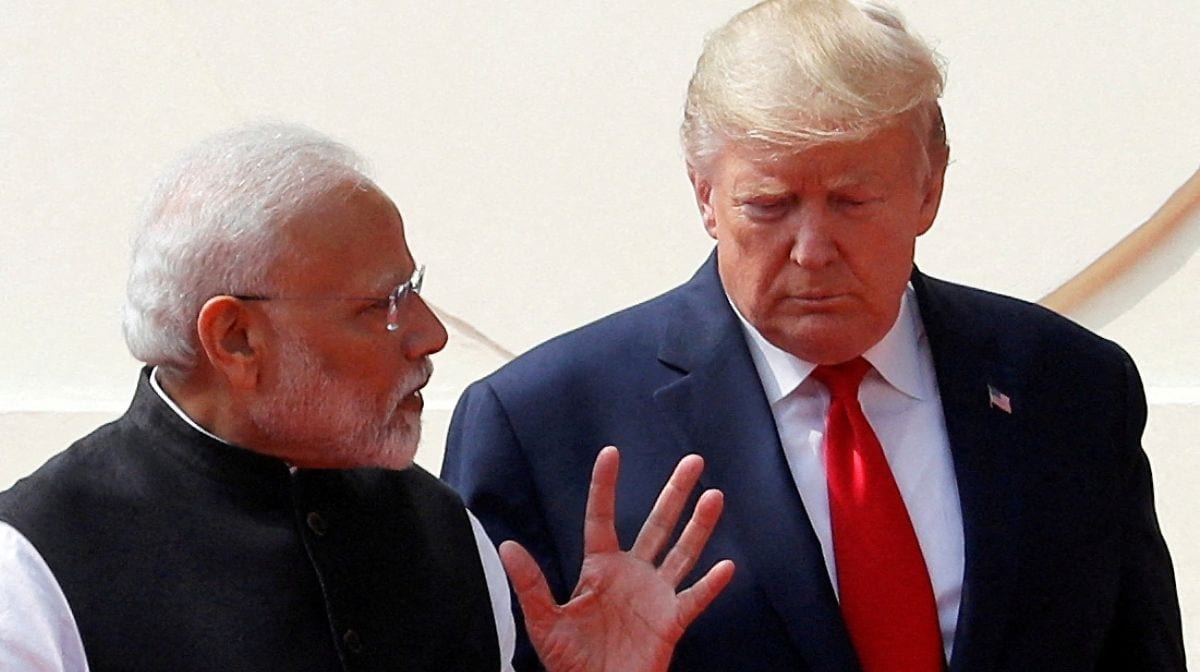
In February 2025, the geopolitical landscape seemed to shift toward a new era of economic cooperation. Prime Minister Narendra Modi and President Donald Trump initiated a series of trade negotiations, culminating in a framework for a bilateral trade agreement announced on February 2, 2025, and solidified by a joint statement on February 7. The optimism was palpable, as both nations sought to align their industrial interests. India, eager to transform into a global manufacturing powerhouse, even offered concessions, including the reduction of import duties on bourbon whiskey, to signal its commitment to a balanced partnership.

However, the promise of that early spring has been eclipsed by the cold reality of trade protectionism. On November 26, 2026, the United States Trade Representative (USTR) released a sprawling 189-page report that fundamentally challenged India’s economic trajectory. Invoking Section 301 of the U.S. Trade Act—a powerful tool designed to address perceived unfair trade practices—the U.S. identified 14 economies, including India, as targets for potential intervention. The core of the American grievance is a claim of "structural overproduction," with Washington alleging that India’s industrial policies are flooding the market with excess goods, thereby harming U.S. industries.
At the heart of this dispute is the American view of India’s flagship programs: Make in India, the Production Linked Incentive (PLI) scheme, and the Atmanirbhar Bharat initiative. Washington argues that these policies, combined with the importation of cheap components from China, create an artificial surplus that distorts global trade. The U.S. has proposed a tariff of up to 25% on Indian goods as a corrective measure. For India, this is not merely a trade dispute; it is a direct challenge to its sovereign right to industrialize. Economists have noted that for India to reach its goal of manufacturing contributing 25% to its GDP, it would need to generate an additional $500 billion in production at 2025 levels—a scale of growth that New Delhi insists is driven by domestic demand, not a desire to dump excess goods abroad.
For India, this is not merely a trade dispute; it is a direct challenge to its sovereign right to industrialize.
India’s response to the USTR report was swift and categorical. On November 26, 2026, the Ministry of Commerce and Industry formally rejected the allegations of structural overproduction. In a statement, the Ministry emphasized that "India did not have structural excess capacity in any sector," asserting that its manufacturing expansion is a natural evolution of a developing economy rather than a predatory trade strategy. The Ministry noted that it had "engaged constructively throughout the investigation," providing data and context to the U.S. officials, only to be met with the threat of punitive duties. "The Notice is currently under examination," the Ministry added, signaling that while the door to dialogue remains ajar, the government is deeply wary of the U.S. approach.
The proposed 25% tariff creates a precarious environment for bilateral negotiations. While the U.S. has suggested that this rate could be capped at 17% if a formal trade agreement is finalized, the uncertainty has left many in India questioning the utility of the talks. The tariff landscape is already complex; Indian goods currently face a one percent tariff difference compared to those from Bangladesh, Cambodia, and Indonesia, and a three percent difference compared to China and Vietnam. Adding a 25% levy would fundamentally alter the competitiveness of Indian exports in the American market.
As the situation stands, the U.S. continues to press India on other fronts, including concerns over Russian oil imports and labor standards. Some experts now argue that the persistent threat of tariffs makes the current trade negotiations untenable, suggesting that India might be better served by stepping back. Yet, New Delhi maintains that trade issues should be resolved through dialogue, not unilateral sanctions. Whether the two nations can bridge the gap between India’s developmental aspirations and America’s protectionist concerns remains the defining question of their economic relationship.