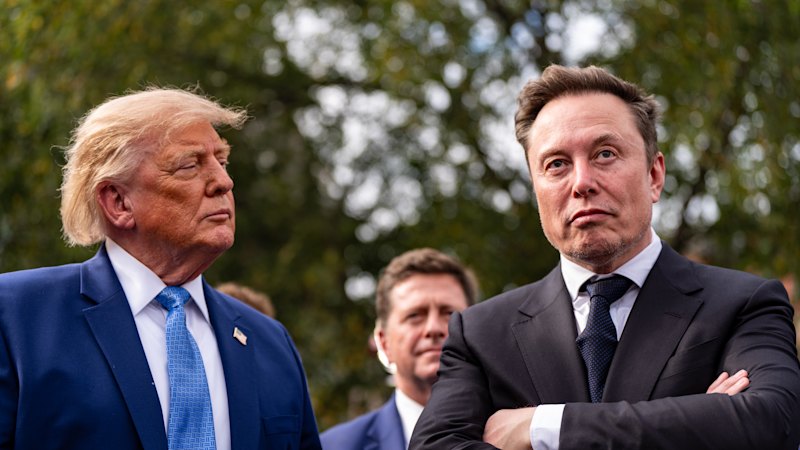
On November 18, 2026, Elon Musk admitted to a sentiment that few of the world's most powerful individuals are willing to voice: he felt "pretty foolish." The admission was not about a business venture or a technical setback at one of his firms, but rather the staggering scale of his recent foray into American electoral politics. As the top individual donor for President Donald Trump's party, Musk had funneled a record $446 million (£339 million) into the U.S. midterm elections. It was a sum of money designed to shape the legislative future of the country, yet the political math did not add up to the desired result.

Much of this financial weight was concentrated in the geography of Musk's own industrial footprint. A significant portion of his contributions was directed toward candidates in Texas, the state where his firms are based. The scale of this regional support was immense; according to analysis, Musk spent at least $45 million in support of Republican Ken Paxton. For a donor, such concentrated spending is often a way to protect the local regulatory and economic environments in which their companies operate. In this case, the investment was intended to bolster the Republican presence in a critical stronghold, but the outcome would suggest that even hundreds of millions of dollars cannot always tilt the scales.

Elon Musk: “I’m not MAGA. I feel pretty foolish for how much money I spent in the midterms.” https://t.co/Ut3qwnfF0y
The disconnect between the capital deployed and the political reality became undeniable by November 19, 2026. As the final tallies emerged, the results signaled a sweeping shift in the American power structure. The Democrats won control of both the Senate and the House of Representatives. This loss of control for the Republican party meant that the massive influx of donor cash had failed to secure the legislative majority that Musk’s contributions were intended to help achieve. The very institutions that govern policy, taxation, and regulation would now be led by the opposition.
As the final tallies emerged, the results signaled a sweeping shift in the American power structure.
Speaking virtually at the New York Times DealBook Summit on November 19, Musk attempted to navigate the complex identity of a man who funds a party without necessarily subscribing to its most fervent elements. Despite his massive financial role in the Republican campaign, he sought to draw a line between himself and the movement's most recognizable label.
"I'm not sure what MAGA means," Musk remarked during the summit, "but if that means sort of blind adherence to a set of policies by the Republican Party, then I certainly don't have that." It was a careful distinction, an attempt to frame his massive spending as a matter of strategic or ideological interest rather than a total surrender to a specific political brand.

Elon Musk says record spending on US midterms was 'pretty foolish' https://t.co/y1ifHnOWfO
There is a profound tension in Musk's reflection. While he characterized the spending as "pretty foolish" in the wake of the Democratic victories, he did not entirely dismiss the utility of the money. He acknowledged a difficult reality of modern campaigning: that despite the ultimate failure to win control of the House and Senate, the candidates might have fared even worse without his financial intervention.
This creates a paradox of political influence. Musk’s spending was a failure in terms of its primary objective—securing a Republican majority—yet it functioned as a vital lifeline for individual candidates struggling to compete in an increasingly expensive electoral landscape. He remains a man caught between the desire for influence and the realization that, in the face of a shifting electorate, even a nearly half-billion-dollar check can be outmatched by the tide of public sentiment.