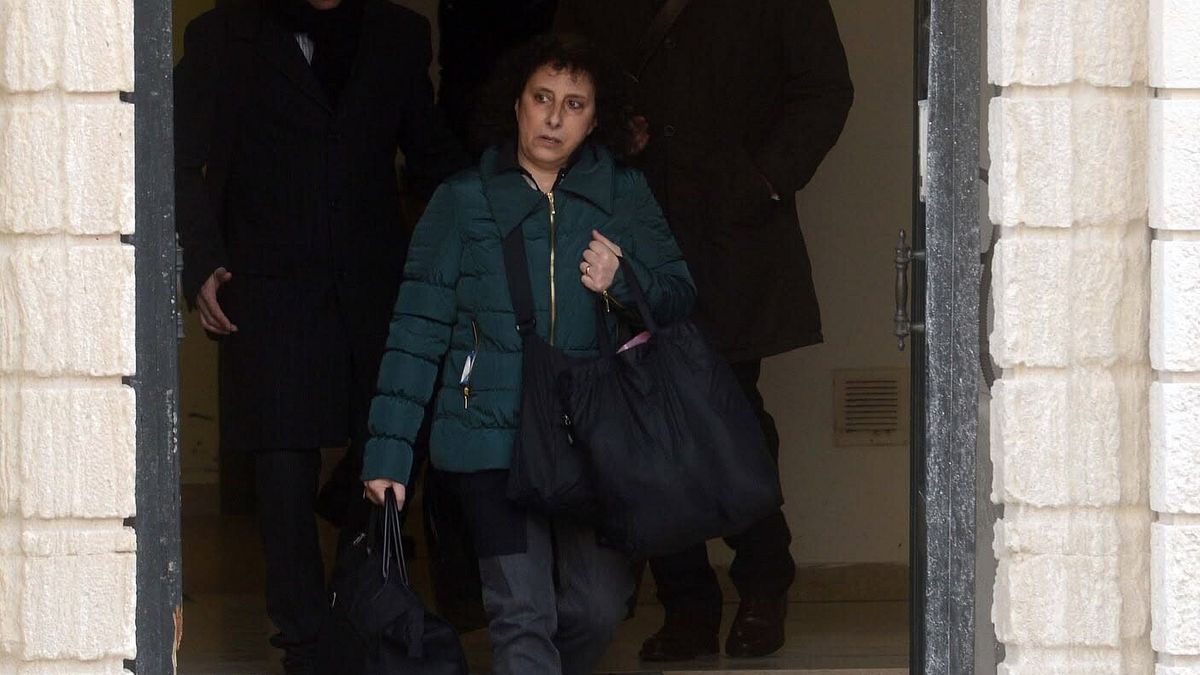
For 64-year-old Monica Busetto, the sound of a prison gate unlocking was a memory she had lost years ago. For nearly 14 years, she had lived behind those bars, carrying a 25-year sentence for the December 2012 murder of her neighbor, 87-year-old Lida Taffi Pamio, in Mestre. But on a recent Friday, the gates of the legal system swung open in a different way. The Trento Court of Appeals granted Busetto's second request for a retrial, immediately overturning her conviction and releasing her from custody. In the blink of an eye, a decade of incarceration was stripped away, not because she proved her innocence, but because the system finally admitted it had failed her.

The reason for this sudden reversal was not a dramatic confession from a new suspect, nor a witness who suddenly remembered a detail. It was a piece of jewelry. Specifically, a small chain found in Busetto's home during the original investigation. This item had become the physical anchor of her guilt, a tangible link that prosecutors and the original jury had used to suggest she took something from the victim. But that narrative collapsed when the dimensions of the chain were finally measured against the victim's. The chain found with Busetto was 58 centimeters long. The necklace Lida Taffi Pamio was wearing just moments before her death was between 68 and 74 centimeters.
It was not a detective who found this discrepancy, but a camera crew from the Italian TV show Le Iene. Investigative journalist Massimiliano Andreetta spent years digging into the case, pursuing leads that the official investigation had abandoned. His work with the show produced the definitive proof that the DNA findings from the original trial were compromised. If the chain did not match the victim, the DNA evidence attached to it could not be trusted. The chain was not just different; it was entirely different in both size and design. This new evidence forced the court to look back at the physical reality of the crime scene and realize that a critical link in the prosecution's chain of custody had snapped.
Despite this admission, the legal system held onto Busetto's conviction.
The tragedy of Busetto's case is amplified by a fact that had been public for years: Susanna Milly Lazzarini, another woman in the community, had already confessed to the murder of Taffi Pamio. In 2015, Lazzarini admitted to the crime, and she also confessed to a similar killing, that of Francesca Vianello, which had been motivated by a 100-euro loan. Despite this admission, the legal system held onto Busetto's conviction. It is a maddening detail that a known perpetrator walked free while a neighbor sat in a cell. The court's decision to grant the retrial now effectively acknowledges that Lazzarini's confession was a truth the justice system refused to accept while Busetto was being punished.
As Busetto walked out of prison, the emotional toll of the mistake was palpable. Her brother, Stefano Busetto, who had stood by her through every hearing and appeal, spoke to the moment the news came in. "Sì, è stata accolta la revisione sulla base della nuova prova acquisita," he said, confirming that the new evidence was the key. But his next words carried the heavy weight of time lost. "We have always had faith and now, naturally, we must say to Monica: 'sorry about the delay.'" It is a difficult thing to say after ten years of separation. The delay was not just administrative; it was a life lived in isolation, away from family, for a crime that did not happen to her.
This ruling is not just a correction of one record; it is a public accounting of how close a small detail like a necklace's length can come to destroying a human life. The investigation had focused on a narrative that fit their expectations, rather than the measurements that defied them. Busetto's release is a victory for the persistence of Andreetta and the media, but it also serves as a stark reminder of the fragility of the justice system. It shows that innocence is not always saved by another witness or a new confession, but sometimes by a ruler and a camera lens.
Now, at 64, Busetto faces a world that has moved on without her. She is free, but the 14 years are gone. The court has set the stage for a retrial, but for Busetto, the most significant trial was the one that ended on Friday. She is a nurse, a neighbor, and a person who survived a decade of being wrong. The legal battles may continue, but the most important verdict was read in the quiet of the courtroom: she was not the killer. And the door is open.