
The lights of the Stade de France are set to blaze at 21 h 10 on November 13, 2026, as France hosts South Africa in the fifth day of the Nations Championship. The stadium, a modern coliseum that has seen countless rugby epics, will once again become the arena where a nation’s hopes are either kindled or extinguished. For the French supporters, the evening promises a blend of anxiety and anticipation: anxiety because the Springboks sit atop the world rankings, and anticipation because a victory could catapult Les Bleus into the final at Twickenham.

France’s preparation for the match has been anything but smooth. In recent weeks, the squad has been forced to grapple with a cascade of injuries that have removed several key figures from the lineup. Full‑back Romain Ramos, centre Romain Jalibert, and scrum‑half Thomas Ntamack have all been sidelined. Each of these players occupies a pivotal role: the full‑back is often the last line of defence and a counter‑attack catalyst; the centre stitches the backline together, creating space and defending the midfield; the scrum‑half links the forwards and backs, dictating tempo. Their absence forces the coaching staff to reshuffle the team, testing depth and adaptability.
Perhaps the most striking alteration is the decision to place Antoine Dupont at fly‑half, the position traditionally responsible for directing the backline, distributing the ball, and making tactical kicks. Dupont, widely celebrated as a scrum‑half and the French captain, now faces the challenge of orchestrating play from a different perch. The move underscores both the severity of the injury crisis and the confidence that head coach Fabien Galthié places in Dupont’s rugby intellect. In a supportive tone, Galthié has emphasized Dupont’s versatility, suggesting that the player’s vision and leadership can transcend positional boundaries.
The contrast between the current rankings and the head‑to‑head tally adds a layer of intrigue to the match‑day storyline.
While the backline undergoes a reshuffle, the forward pack receives a morale boost: Grégory Alldritt signs his long‑awaited return to the third row. The third row, comprising the two flankers and the number‑eight, is the engine room of the scrum and a key source of ball‑carrying power. Alldritt’s comeback restores experience and physicality to a unit that must contend with the Springboks’ renowned forward dominance. His presence is expected to fortify the breakdown, where possession is contested at the heart of any successful French strategy.
Statistically, France enters the encounter with a psychological edge. This record, while not a guarantee, provides a narrative of past success that the French camp hopes to channel. The Springboks, despite being the top‑ranked side, must now confront a history that favours their opponents. The contrast between the current rankings and the head‑to‑head tally adds a layer of intrigue to the match‑day storyline.
The immediate prize on the line is a place in the final at Twickenham, the iconic English stadium that will host the championship’s climax. France’s ambition is clear: create the “exploit” that will secure that final berth. In the context of the Nations Championship, advancing often hinges on a narrow points differential; a two‑point margin can be decisive. The French side, therefore, must not only win but do so with enough margin to ensure progression, a nuance that amplifies the pressure on every tactical decision.
Facing France is a South African side that has consistently demonstrated why it occupies the top spot in the world rankings. The Springboks’ reputation as a “machine” reflects a disciplined, forward‑driven style that has historically overwhelmed opponents. Their critical stance toward the French adjustments—particularly the repositioning of Dupont—suggests confidence in their ability to exploit any disarray.
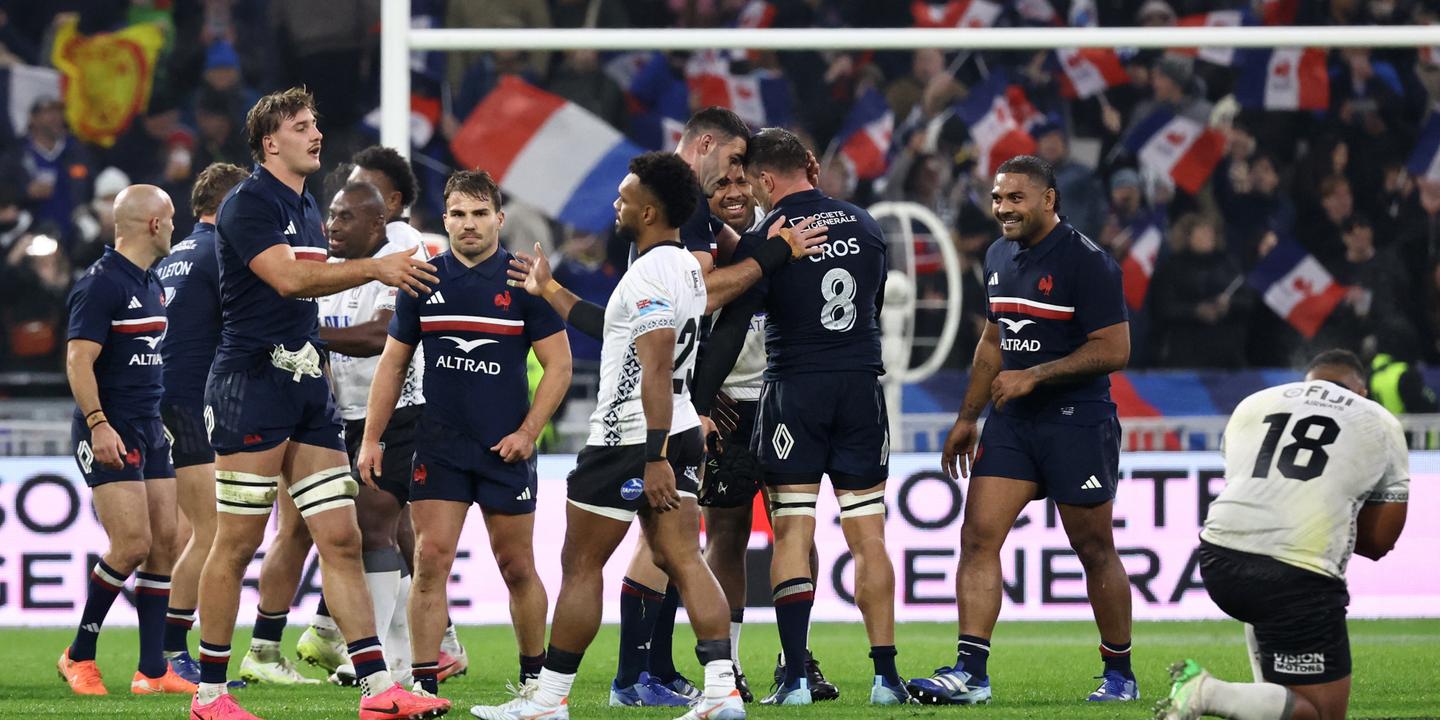
When the referee’s whistle finally sounds, the outcome will reverberate far beyond the night’s result. A French victory, secured by a narrow two‑point advantage, would propel the team into the Twickenham final, where they could vie for the championship crown. Conversely, a South African win would reinforce their dominance and keep them on course for the title. For the French supporters gathered at the stadium and watching across the nation, the match represents a crucible where talent, strategy, and resilience are tested against a world‑class opponent. The stage is set; the players are ready. All that remains is the unfolding of a contest that could define the trajectory of European rugby for months to come.