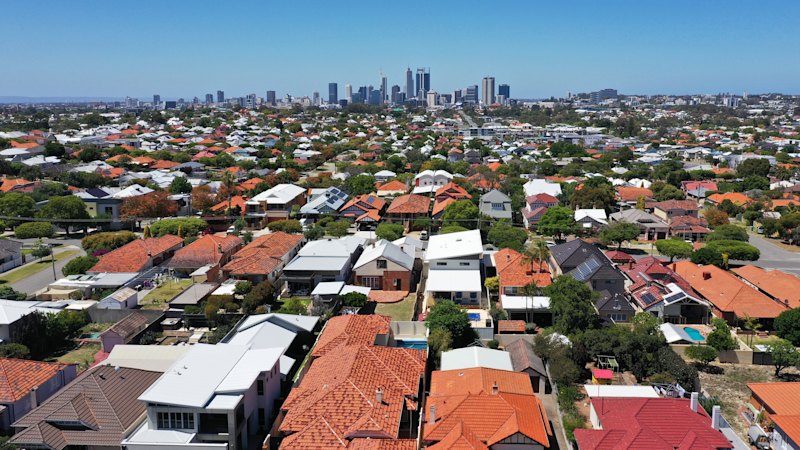
For the better part of a decade, Perth stood apart from the rest of Australia’s major cities. While Sydney and Melbourne fluctuated with the tides of national economics, the capital of Western Australia sat on a solid foundation of growth. This wasn't just a local blip; it was a sustained era of exceptional price increases that turned Perth into a relative outlier in the national housing conversation. The city had built a reputation for resilience, and for years, sellers could lean on that reputation. But the wind has changed direction. The long-running property boom that defined the city's economic identity has decisively shifted, no longer favoring the seller but the buyer. The result is a market in the midst of a historic correction, where the power dynamic has flipped so dramatically that the old assumptions about Perth real estate no longer hold water.

To understand the current shock, one must look at where the market stood just months ago. In March of 2024, Perth’s property prices reached their peak. At that high point, the median house price in the city stood at $949,000. That figure is staggering in isolation, but it becomes even more profound when viewed against the historical baseline. Even with recent declines, home values in Perth are still around 75 per cent higher than they were five years ago. This surge reflects years of exceptional home price growth that the local housing market has enjoyed. It is this very history of success that now serves as the weight on the scales. The market is not collapsing into a void; it is correcting from a position of extreme height. The data from realestate.com.au indicates that this peak was the turning point, the moment when the upward trajectory lost its momentum.
Now, the pendulum is swinging the other way. The new data from REA Group forecasts that property prices in Perth will drop 12 per cent from that March peak. The correction is not expected to be over quickly, either. The report predicts that by the end of 2027, prices will be another 4 per cent lower than their peak levels. These are steep adjustments for a city that has been accustomed to growth. In fact, the forecast sees Perth facing one of the steepest corrections among Australia’s major cities. While Sydney is projected to fall 10 per cent and Adelaide 11 per cent, Perth shares the top spot for decline with Brisbane, both expected to see a 12 per cent drop. This parity in correction underscores that Perth is no longer operating in a separate economic dimension; it is now subject to the same national headwinds that are reshaping the broader Australian housing landscape.
This represents very different conditions to what observers saw this time last year, when the balance of power was quite firmly with vendors.
So, what broke the spell? Eleanor Creagh, a senior economist at REA Group, points to the eroding of Perth’s long-standing advantage. For a time, the city enjoyed a relative affordability advantage compared to the east coast giants. However, years of exceptional growth effectively wiped out that cushion. Creagh notes that now, higher interest rates and stretched affordability are weighing heavily on prices. The combination of a tighter monetary environment and a market that had been pushed to the limit of what buyers could sustain has created a perfect storm for a downturn. The deterioration in buyer competition is sharp. The easy credit and competitive frenzy of the boom years have given way to a cold shoulder from prospective buyers, who are now pausing to assess the true cost of entry into the market.
The shift is not just in the numbers; it is in the behavior of the people in the market. Creagh describes the change as a firm shift in the balance of power towards buyers. This represents very different conditions to what observers saw this time last year, when the balance of power was quite firmly with vendors. A year ago, a home would often attract multiple bidders, pushing prices up. Today, the dynamic is inverted. Almost two-thirds of homes in Perth are now selling below their asking price. This is a drastic change in volume. Creagh highlights that just a year earlier, around one in 10 properties sold below asking price. Now, that figure is close to two-thirds. For the average buyer, this means significantly more choice and negotiating power. Sellers can no longer rely on a lack of supply to drive up prices; they must engage with buyers who are armed with data and patience.
Another tell-tale sign of this new reality is the time it takes to move a house. In a hot market, properties often sell in days. In Perth’s new landscape, the average time taken to sell a property has increased to 51 days. This is not a quick transaction. It suggests that homes are sitting on the market, waiting for the right buyer, rather than being snatched up by the first interested party. Contributing to this slowdown is a rise in supply. Total stock on the market has risen by over 30 percent compared to the previous year. With more options available, buyers are less compelled to make a quick decision. They can wait for the right property to hit the market, or for the price to drop to a level that makes sense for their budget. This abundance of choice is a direct consequence of the shift in power.
As we look to where things stand now, it is clear that Perth is navigating a new phase. The city is no longer an outlier of perpetual growth, but a participant in a broader national correction. The median price remains high, but the trajectory is downward, and the pace of sale has slowed to a crawl. For vendors, the lesson of the last year is stark: asking prices must reflect the current market, not the hopes of the past. For buyers, it is a period of unprecedented opportunity, where the negotiating table is finally level. The boom has turned to a bust, not because the city has lost its value, but because the market has finally caught up with the realities of interest rates and affordability. The era of the Perth property boom, as it was known for the last decade, is over; the era of the cautious, empowered buyer has begun.
