On a Friday evening in November 2026, the rhythmic hum of American commerce—the constant movement of planes across the country—was abruptly silenced. What began as a routine evening of travel transformed into a scene of nationwide paralysis when the Federal Aviation Administration (FAA) imposed a sudden, nationwide ground stop. For travelers waiting in terminals and pilots circling in the sky, the world simply stopped moving.
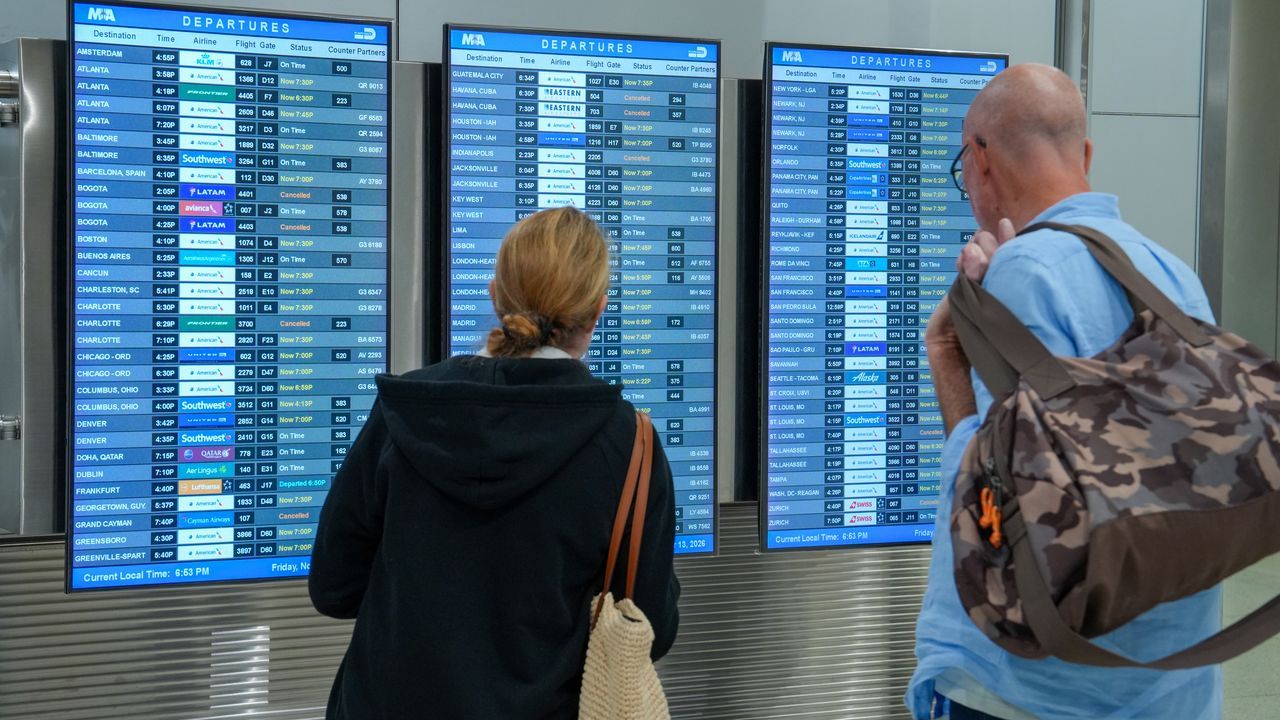
Initially, the FAA suspended all outbound flights indefinitely. The uncertainty was compounded by the way the agency handled incoming traffic; international flights were not granted blanket permission to land, instead being reviewed on a case-by-case basis. The agency cited "extraordinary circumstances" and security reasons for the halt, leaving millions in a state of suspended animation. For approximately four hours, the vast network of American airspace sat dormant, a victim of a system that could no longer keep pace with the demands of modern flight.
As the ground stop was eventually lifted, the question remained: what could possibly bring the world's most sophisticated aviation network to its knees? The answer was not found in a sophisticated digital intrusion, but in the physical decay of the tools used to manage the sky.
As planes become smarter and data becomes more voluminous, the pipes through which that data must flow are becoming increasingly inadequate.
During a White House press conference, U.S. Transportation Secretary Sean Duffy and Homeland Security Secretary Markwayne Mullin pulled back the curtain on the failure. The culprit was not a shadow actor or a malicious code, but "old hardware." The outage was the result of an outdated air traffic control system struggling to communicate with the modern world. Specifically, routers within the network became overloaded with data flowing from newer, more advanced systems, creating a digital bottleneck that the aging infrastructure simply could not process.

BREAKING: President Trump has been briefed on the FAA’s nationwide ground stop as DHS Secretary Markwayne Mullin points to a telecommunications issue behind the disruption. Asked whether an AI-related error could be responsible, Mullin says investigators aren’t ruling anything out. “We’re going to find out what happened. And when we do, we’ll take the appropriate actions to make sure it doesn’t happen again.”
In the immediate wake of such a massive disruption, speculation often turns toward the specter of cyber warfare. However, Secretary Mullin was quick to clarify the nature of the crisis. He explicitly stated that the incident was not caused by a cyberattack and had no connection to Microsoft. While the scale of the disruption felt like the work of a coordinated strike, the reality was far more mundane and, in many ways, more unsettling: the system was simply breaking under its own weight.
This distinction between a malicious attack and a systemic failure is crucial. A cyberattack is an external threat that can be defended against; a systemic failure due to obsolescence is an internal rot that requires fundamental reconstruction. The disruption was not an act of war, but a symptom of neglect.
For Secretary Duffy, the four-hour chaos was not an isolated incident, but a harbinger of things to come. His assessment of the situation was blunt, stripping away the comfort of thinking this was a one-time glitch. "I expect further outages of this kind in the future," Duffy warned during a briefing at the White House.
His words underscored a growing tension between the rapid advancement of aviation technology and the sluggish pace of the infrastructure that supports it. As planes become smarter and data becomes more voluminous, the pipes through which that data must flow are becoming increasingly inadequate. The collapse was a stress test that the current system failed, and one that officials believe will be repeated unless the underlying architecture is overhauled.

Ground stop for ALL FLIGHTS… It’s only happened one time before on 9/11…. 👀 🙏 https://t.co/inBx9bbznd
The path to stability is paved with significant financial requirements. Secretary Mullin was unequivocal about the scale of the task ahead, stating, "The current air traffic control system must be completely replaced." This is not a matter of minor software patches or incremental upgrades; it is a call for a total systemic rebirth.
This necessity has already entered the halls of power. Republicans, who hold majorities in both houses of Congress, had previously moved to address these vulnerabilities. Last year, they allocated $12.5 billion through the 'Big Beautiful Bill' specifically for the renovation of the FAA's outdated communication systems. Yet, despite that massive infusion of capital, the Friday collapse proved that the work is far from finished.
On the same day the ground stop was lifted, the FAA and the White House turned back to Congress with a much larger proposition. To address a broader spectrum of systemic issues beyond just the communication hardware, they requested an additional $30.1 billion.
The scale of the request reflects the gravity of the situation. The $12.5 billion previously allocated was a step toward modernization, but the new $30.1 billion request suggests that the gap between current capabilities and necessary safety standards is much wider than previously understood. The debate now shifts from whether the system needs fixing to how much the nation is willing to pay to ensure the skies remain open.

FAA ground stop, filmed like a nature documentary. Homeland Security Secretary Markwayne Mullin: "just a telecommunication outage." Same briefing: "You just can't rule out anything." Transportation Secretary Sean Duffy: the new equipment, "none of that went down." It was "1980s little copper lines." Some 11,000 flights delayed or canceled. Nature is not cruel. It simply does not have a root cause yet.
By the following day, flight operations had resumed across all U.S. airports. The immediate crisis had passed, the planes were moving, and the terminals were once again bustling with travelers. But the sense of normalcy is fragile.
The four-hour disruption served as a high-stakes demonstration of how quickly the modern world can grind to a halt when the invisible systems we rely on begin to fail. As the administration pushes for billions in new funding, the aviation industry remains in a state of watchful waiting, knowing that the next outage may not be a four-hour pause, but something far more permanent.