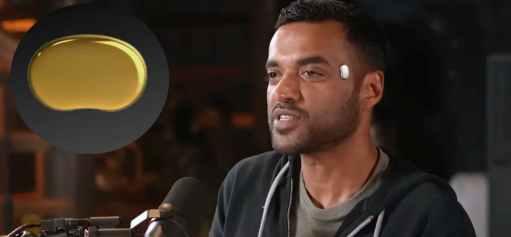
In the bustling tech landscape of New Delhi, a new venture is emerging that challenges our very understanding of personal devices. Deepinder Goyal, the former CEO of Eternal and current CEO of Byju's, has revealed plans for Temple, a wearable technology described as 'Humanity's Last Personal Device.' This ambitious project aims to create a discreet AI companion and health monitor that operates without the invasive screens, cameras, and microphones that have become standard in our digital lives. Instead, Temple introduces what the company calls 'roomdeaf audio' technology—a system that detects vibrations generated by the wearer's voice through motion sensors, capturing only the user's voice while ignoring surrounding conversations.

The origins of Temple trace back to a humble beginning while Goyal was still at Eternal. What started as a weekend health wearable project has since evolved into a multi-generational vision with profound implications for personal technology. Goyal envisions not just one device, but an entire lineage of Temple wearables, planning for 20 generations of the technology by 2027. This long-term approach suggests a commitment to refining and perfecting the concept over time, addressing potential challenges and expanding capabilities with each iteration.
At first glance, the absence of traditional input and output methods might seem limiting. However, Temple's design philosophy turns this constraint into an advantage. The device will be activated by a simple double-tap gesture, providing an intuitive interaction method that requires no visual attention. Feedback will come through subtle vibrations that signal when the device is actively listening or processing information. This approach to human-computer interaction represents a significant departure from our current screen-dominated interfaces, potentially offering a more seamless integration into daily life.
This pricing reflects both the sophisticated technology involved and the aspirational nature of Goyal's vision.
Beyond its AI capabilities, Temple positions itself as a sophisticated health monitoring device. This combination of health monitoring and privacy protection addresses growing concerns about data collection in wearable technology. However, critics have questioned the scientific validity of these health monitoring claims, highlighting the challenge of accurate measurement without traditional sensors.
When Temple 01 launches in early 2027, it will carry a price tag of Rs 85,000, positioning it firmly in the premium segment of wearable technology. This pricing reflects both the sophisticated technology involved and the aspirational nature of Goyal's vision. The device is not merely another fitness tracker but rather a statement about the future of personal technology—one that prioritizes privacy, discretion, and seamless integration over the constant connectivity and visual interfaces that currently dominate the market.
Deepinder Goyal's involvement lends significant credibility to the Temple project. Having led both Eternal and Byju's, Goyal brings substantial entrepreneurial experience to this venture. His vision for Temple extends beyond mere technological innovation; he sees it as a fundamental reimagining of how humans interact with personal computing devices. 'We are delusional enough to think we can build this. And we will,' Goyal stated, demonstrating the confidence that has characterized his previous ventures.
In an era where data privacy has become a paramount concern, Temple's design offers a compelling alternative to existing smart devices. By eliminating cameras and conventional microphones, the device inherently reduces the risk of unintended data collection. The 'roomdeaf audio' technology specifically targets the user's voice while ignoring ambient sounds, addressing one of the most significant privacy concerns with voice-activated assistants. This approach could appeal to consumers who value their privacy but still desire the benefits of AI-powered personal assistance.
As Temple 01 prepares for its 2027 launch, the project represents both a technological challenge and a philosophical statement about the future of personal devices. Goyal's vision of a multi-generational product line suggests a commitment to long-term development and refinement. Whether Temple can deliver on its ambitious promises remains to be seen, but the concept alone challenges our assumptions about how personal technology should function. As Goyal describes it, Temple aims to be not just another device, but 'Humanity's Last Personal Device'—a bold claim that encapsulates the revolutionary potential of this screenless, privacy-first approach to wearable technology.