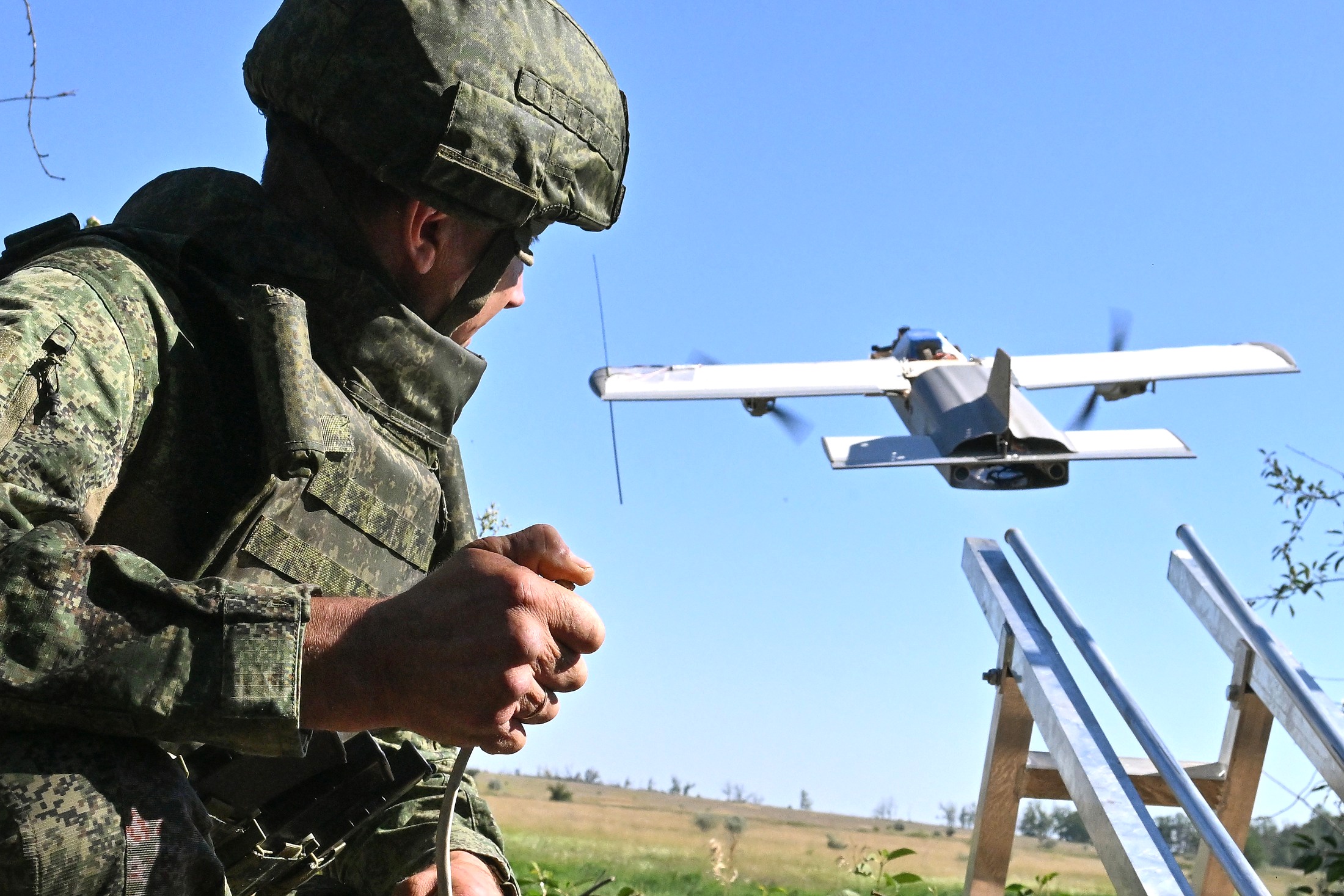
In the early hours of November 15, 2026, the lights went out in a critical corner of western Ukraine. Russian forces launched a series of drone strikes targeting key military infrastructure, with one of the most significant hits landing on an electrical substation in the village of Velyki Mezhyrychi in Rivne Oblast. According to the Russian Ministry of Defense, this wasn't just any power facility—it was a substation that kept the lights on for Ukrainian military logistics hubs where equipment is stored and prepared for deployment. The strike represented a direct attempt to disrupt the flow of supplies to Ukrainian forces fighting on the front lines.

The Rivne substation was just one piece of a broader campaign targeting Ukraine's military supply chain. Simultaneously, Russian unmanned aerial vehicles (UAVs) struck targets in the Odesa region, specifically in the port city of Chornomorsk. There, the drones hit a ferry terminal, the port administration building, and another electrical substation—all facilities used for military cargo operations. The timing and coordination of these strikes suggested a systematic effort to cripple Ukraine's ability to receive, process, and distribute military supplies through multiple channels.
The campaign wasn't limited to land-based targets. In the Black Sea, a dry cargo ship carrying military goods bound for Odesa was struck, adding another layer to Russia's strategy of interdicting Ukrainian supply lines. The maritime attack demonstrated how the conflict has expanded beyond traditional battlefields to encompass economic and logistical warfare, where disrupting the flow of materials can be as damaging as direct combat engagements.
According to Russian officials, the overnight drone campaign specifically targeted "energy, port, and railway infrastructure" used by Ukrainian forces.
On the ground, Russian forces continued their campaign against Ukrainian transportation infrastructure. Near the Dnipropetrovsk railway station, two locomotives were struck in what appeared to be a coordinated effort to disrupt military rail transport. Railway lines have been critical arteries for moving troops, equipment, and supplies throughout Ukraine, making them prime targets for forces seeking to degrade military mobility and logistics.
The Russian Ministry of Defense confirmed these operations in a statement, framing them as strikes against Ukrainian military infrastructure. According to Russian officials, the overnight drone campaign specifically targeted "energy, port, and railway infrastructure" used by Ukrainian forces. The ministry highlighted the Rivne substation as being particularly important, noting that it "ensured the functioning of logistics centers used by the AFU to store military equipment." This language revealed Russia's military calculus: by targeting support infrastructure rather than just front-line positions, they could potentially degrade Ukraine's ability to sustain its defense over time.
Military logistics form the invisible backbone of any sustained conflict. The facilities targeted in these strikes—power substations, port terminals, railway junctions, and storage centers—represent the connective tissue that keeps military operations functioning. When these nodes are disrupted, the effects ripple outward, potentially delaying equipment maintenance, slowing troop rotations, and complicating supply chains that stretch from rear echelons to the front lines.
These attacks followed a pattern that has emerged throughout the conflict, with both sides targeting infrastructure that supports the other's military capabilities. While the immediate tactical impact of any single strike may be limited, the cumulative effect of sustained pressure on logistics can significantly degrade a military's operational effectiveness. The November 15 strikes represented a continuation of this strategy, with Russia focusing on Ukraine's rear areas and support networks.
Beyond the military calculations, these strikes have real consequences for civilians living in affected areas. Power outages from damaged substations can disrupt daily life, while attacks on transportation infrastructure can isolate communities and complicate access to essential services. The conflict's expansion into logistical warfare means that the front lines are no longer clearly defined, with potential impacts felt far from active combat zones.
As of mid-November 2026, the conflict continues to evolve, with both sides adapting their strategies to target each other's vulnerabilities. The drone strikes on Ukrainian infrastructure represent one facet of this ongoing campaign, highlighting how modern warfare increasingly involves disrupting the systems that enable military operations. While the immediate effects of these attacks may be temporary, their cumulative impact on Ukraine's ability to sustain its defense remains a critical factor in the broader conflict's trajectory.