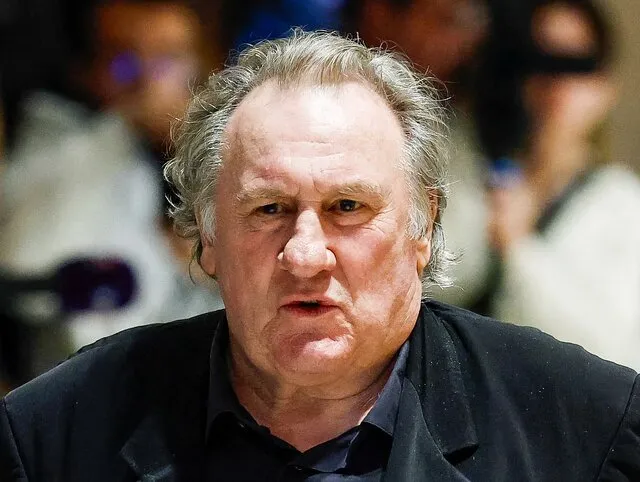
In the rarefied world of French cinema, few figures loom quite as large as Gérard Depardieu. He has been the face of a generation of filmmaking, a performer who turned physicality into language and presence into a brand. But legal proceedings have a way of stripping away the cinematic veneer, reducing the star to a defendant. For years, the narrative around Depardieu was complicated by allegations that he would often deflect, using the chaotic energy of a set to obscure uncomfortable truths. The recent turn in events marks a profound shift: the actor has stopped fighting the verdict. By withdrawing his appeal, he has accepted a finality that changes the trajectory of his public legacy from one of endless dispute to one of acknowledged responsibility.

To understand why this admission matters, one must look at how Depardieu has long navigated accusations. In the past, he frequently employed a shield of humor and provocation. On film sets, where the lines between life and performance blur, this tactic was perhaps natural. But when real-world harm was alleged, that same shield became a tool of avoidance. The legal system, however, does not accept comedic deflection as a defense for assault. For a long time, the appeal process kept the case open, alive, and debatable. By dropping that appeal, Depardieu is removing the last procedural obstacle to the conviction standing. It is a quiet but seismic move in a story that had been dominated by noise.
The core of Depardieu’s recent statement is a admission that his behavior was more than just a bit. He spoke openly about how he hid behind indecent humor and provocation on set for a long period. This is not a standard lawyerly denial; it is a confession to a pattern of behavior that blurred the boundaries of consent and respect. The quote, rendered in its original French context, carries the weight of a man who finally stopped performing. He acknowledged that while he never set out to cause pain to his partners on set, that is exactly what happened. The distinction between intent and impact is a crucial one in these cases. Depardieu is now grappling with the reality that his lack of malicious intent did not prevent the occurrence of assault.
The prosecutor and the civil parties—representing the victims—also withdrew their appeals.
Perhaps the most striking element of this development is not just the defendant’s move, but the response of the opposing side. The prosecutor and the civil parties—representing the victims—also withdrew their appeals. In most high-profile cases, the state seeks to maximize penalties or confirm convictions through every available legal avenue. The decision to step back suggests a mutual recognition that the legal fight is over. For the victims, this withdrawal may signal a desire to move on from the trauma of litigation. For the prosecutor, it reflects an acceptance that the outcome is just as it stands. It is a rare alignment of interests where all parties agree that the chapter has closed.
Depardieu’s words, “Justice has been done,” ring with a complex tone. It is not just an acceptance of a court ruling; it is a personal reckoning. He explicitly stated that he is aware of his guilt and accepts the verdict. This is a rare moment in celebrity culture, where the figurehead does not merely comply but internalizes the judgment. For an actor whose career is built on embodying characters, admitting to a fixed identity of guilt is a difficult transition. He is no longer the unpredictable star who can rewrite the scene; he is a man bound by the consequences of his actions. The apology to his victims is the first step in a new, unperformed reality.
The appeal is gone, and the conviction stands. As of late 2026, the legal landscape surrounding Gérard Depardieu has shifted from a contested battlefield to a settled matter. The focus now moves from the courtroom to the personal. How he carries this conviction into the rest of his life and career remains to be seen. The provocation and humor that once shielded him are no longer viable defenses. The world is watching not to see if he will win the legal battle, but to see how he lives with the outcome. The mask has been set down, and the man underneath is left to face the light.