
In the quiet, high-stakes corridors of Abu Dhabi, two days of intense diplomacy have reached their conclusion. For the delegations representing Russia and Ukraine, the marathon sessions held in the United Arab Emirates were not designed to bring a sudden, sweeping end to the war, but rather to find the smallest possible points of common ground. On November 11, 2026, that common ground manifested in a single, significant humanitarian victory: an agreement to conduct a major prisoner exchange.

While the news of the swap provides a momentary reprieve for families on both sides of the conflict, the broader architecture of peace remains stubbornly elusive. The talks, mediated by the United States, concluded after a final session that lasted two hours, leaving the fundamental drivers of the war largely untouched. The agreement to return captives is a tangible outcome, yet it stands in stark contrast to the deep-seated political and territorial divisions that continue to define the struggle.
White House special envoy Jared Kushner confirmed the prisoner exchange, signaling a functional, if limited, success for the Trump administration's efforts to mediate between the warring nations. For the United States, facilitating such an exchange serves as a vital proof of concept—a way to demonstrate that communication is still possible even when the primary objectives of each side remain diametrically opposed.
This side-channel diplomacy appeared to grate on the Russian leadership.
However, the diplomatic momentum gathered in Abu Dhabi did not translate into a breakthrough regarding a ceasefire or a formal peace treaty. The gap between the two nations remains a chasm. Despite the presence of high-level mediators, both Moscow and Kyiv continue to lack the willingness to make the significant compromises required to move from a mere exchange of individuals to a cessation of hostilities.

White House special envoy Jared Kushner says Russia and Ukraine have agreed on a large-scale prisoner exchange following talks in Abu Dhabi, adding that he and Steve Witkoff are planning to visit Moscow tomorrow. https://t.co/zBPlXi9RkT 📺 Sky 501, Virgin 602, Freeview 233 https://t.co/Moc5Q0j6wK
While the humanitarian side of the talks saw movement, the territorial side remained frozen in place. Vladimir Medinsky, the Russian negotiator, used the conclusion of the talks to reinforce a position that has remained consistent throughout the conflict. For Moscow, the war is not merely a contemporary dispute but a struggle over what they perceive as historical destiny.
Speaking on Wednesday, Medinsky made it clear that Russia’s objectives regarding land remain absolute. "As for territorial issues, every inch of our land will be returned to Russia. One way or another," he stated, articulating a maximalist view of Russia's claims to parts of Ukraine. This stance effectively nullifies the possibility of a negotiated settlement that involves any territorial concessions from the Russian side, setting a high bar for any future diplomatic efforts.
The atmosphere in Abu Dhabi was not merely defined by the tension between the two primary combatants, but also by the friction between the mediators themselves. The talks were not a closed loop; European officials were present in the city, engaging in separate discussions with the Ukrainian delegation. This side-channel diplomacy appeared to grate on the Russian leadership.
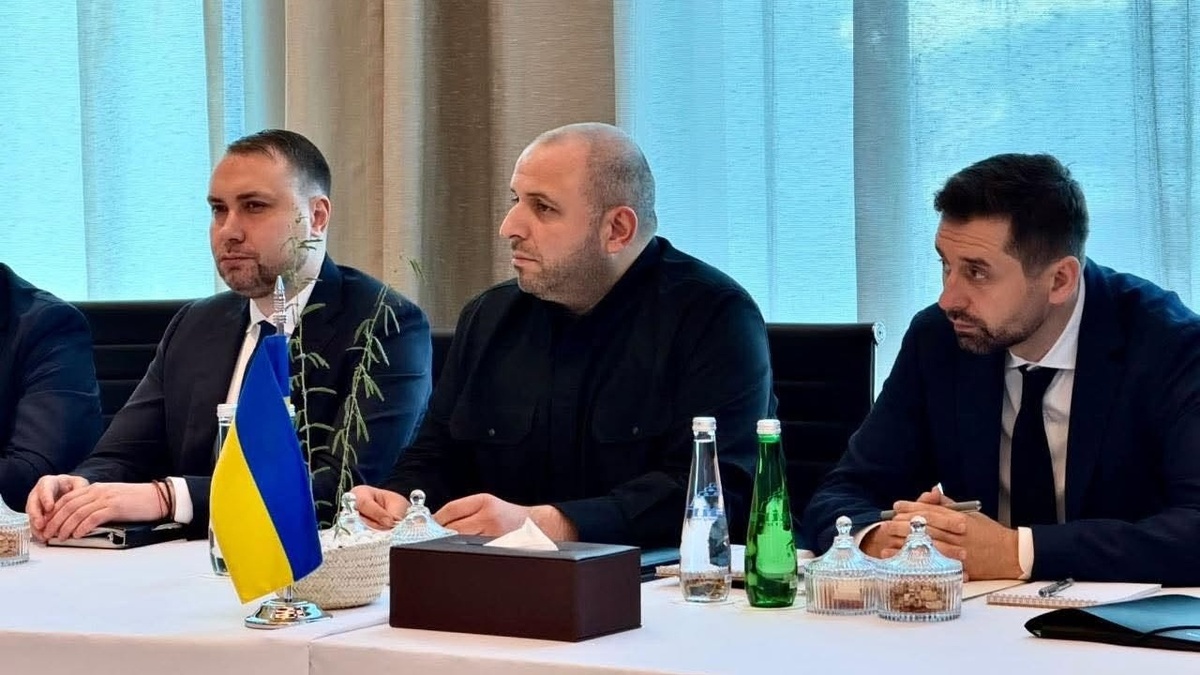
Medinsky expressed a palpable frustration with the presence and role of these European actors, questioning their legitimacy within the specific framework of the U.S.-led mediation. "We don't understand what status they have here... we don't understand where we can agree with them on anything," Medinsky remarked. This friction highlights a complicating layer of the conflict: the struggle not just for territory, but for control over the diplomatic process itself.

US envoy Jared Kushner says Russia and Ukraine have agreed to a major prisoner exchange following two days of US-brokered peace talks in Abu Dhabi. Calling the discussions a "good first step," Kushner confirmed plans to meet Vladimir Putin in Moscow before briefing Volodymyr Zelensky.
To understand the current state of the conflict is to understand the nature of these "understandings" that Medinsky described. The negotiations were characterized by a pattern of sporadic progress followed by immediate stagnation. The two-day summit was less a unified march toward peace and more a series of disconnected attempts to find a shared language.
"In some places we reached an understanding, in other places we did not," Medinsky noted, summarizing the uneven results of the sessions. This patchwork of agreement is perhaps the most accurate description of the current diplomatic landscape. While the prisoner exchange represents a successful "understanding," the core issues—sovereignty, borders, and the future of the Ukrainian state—remain areas where no such consensus could be reached.
The conclusion of the Abu Dhabi talks occurs against a backdrop of broader global instability. As the diplomatic efforts in the United Arab Emirates reached their final hour on November 11, the geopolitical landscape was being further reshaped by other massive shifts, including the launch of a U.S. war against Iran. This layering of conflicts creates a volatile environment where the attention and resources of global powers are stretched thin, potentially complicating the long-term viability of any peace process in Eastern Europe.

The talks in Abu Dhabi are unquestionably a step forward and a critical turning point. For the first time in a trilateral format, the issue of the «erosion» of Europe’s security architecture has been put on the table. This is, at its core, the key both to resolving the conflict in Ukraine and to securing lasting peace. Russia has been making this point for a long time. Following the collapse of the USSR, Western politicians deceitfully replaced the Helsinki principles of equal and indivisible security with a NATO-centric system, systematically escalating threats along Russia’s entire perimeter. In Ukraine, as Vladimir Medinsky, head of the Russian negotiating delegation, aptly put it, an «abscess has simply burst.» The contours of the Eurasian security architecture must be reshaped fairly so that no country achieves its security at the expense of another. This will be the ultimate guarantee of peace and stability across our shared continent. One encouraging outcome from the negotiations is the upcoming visit to Moscow by US Presidential Special Envoys Steve Witkoff and Jared Kushner, who are expected to meet Vladimir Putin as early as tomorrow. The process is moving at an accelerated pace, fueling realistic prospects for reaching a compromise and ending the conflict. Meanwhile, the real loser in all of this is Europe’s ‘party of war’ which dispatched its emissaries to the UAE amid much fanfare and grand declarations. Yet, there was no seat for them at the table—not even a folding one. The European «mission» to derail the talks has failed miserably. In any event, the trilateral meeting in Abu Dhabi will go down in history as a true milestone on the path to peace.
As the delegations depart Abu Dhabi, the immediate result is a humanitarian win that will undoubtedly be celebrated by the individuals being returned home. The prisoner exchange is a concrete, human success in an otherwise abstract and grueling political process.
Yet, the fundamental reality remains unchanged. The territorial claims of Russia remain maximalist, the Ukrainian position remains unyielding on its sovereignty, and the mediators face a landscape of fractured interests and competing diplomatic channels. The talks in Abu Dhabi have proven that the parties can still talk, and they can still agree on the value of human life, but they have yet to find a way to agree on the value of the land itself.