
For most of us, a dispute with a friend might linger in the text message threads of the group chat, unresolved but fading into the background. For Pat Cummins and Usman Khawaja, that dispute has spanned nearly a decade, centered on one of the most embarrassing moments in modern cricket history. The two have a long shared history in international competition. Yet in a rare and emotional press conference held this week in Sydney, Cummins shattered the comfortable silence that had enveloped their relationship, addressing claims made in Khawaja’s newly published autobiography with a bluntness that marked a definitive turning point.
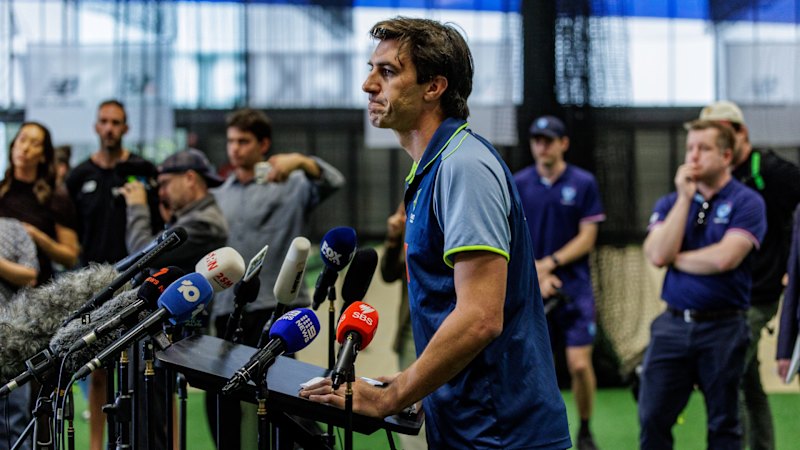
The catalyst for this media address was Khawaja’s book, released just days prior. In its pages, the former batter alleged that the entire Australian team, including Cummins, was aware of the 2018 plot to use sandpaper in Cape Town and that the squad should share responsibility for the tampering. It was a heavy accusation, and Cummins decided it was time to stop letting it fester.
Cummins stood before the press in Sydney for a session that lasted an hour and eight minutes, a long time for a sporting figure to address a single topic. In it, he dismantled Khawaja’s central claim with what he described as his consistent position over the last eight years. "When he says we all knew, if by that he means we knew sandpaper was going out on the field, he's 100% wrong," Cummins stated, his tone devoid of ambiguity. He made it clear that he had never known the ball was being doctored.
Perhaps the most poignant moment of the press conference came when Cummins addressed the personal cost of the controversy.
"I said that consistently for the last eight years," Cummins added, emphasizing that this was not a new realization or a changing story. "I did not know that was happening." For a captain whose reputation is currently tied to the stability of the team, this was a personal and public shield against a narrative that he felt was unfairly dragging him into a conspiracy. He dismissed the suggestion that he was an architect of the scheme, calling the allegation "complete and utter nonsense."

Usman Khawaja faces tough questions from Sarah Ferguson on ABC’s 7.30 about the Sandpaper Gate scandal. A must-watch interview, as Khawaja struggles to answer the questions. https://t.co/jnAqjNlPTO
The 2018 sandpaper scandal in Cape Town had already resulted in severe disciplinary action, and Cummins used his session to reflect on those outcomes. One-year bans were handed to Steve Smith and David Warner, while Cameron Bancroft received a nine-month suspension. Cummins described these penalties as "heavy handed," a phrase that hinted at a lingering frustration within the squad over how the administration had dealt with the players.
By revisiting these sanctions, Cummins framed his current fight not just as a defense of his personal innocence, but as a plea for the team to move past the era of punishment. He argued that the time for assigning blame had long passed and that the focus should be on the future of the game, not the mechanics of a past transgression.
Perhaps the most poignant moment of the press conference came when Cummins addressed the personal cost of the controversy. He noted that some of the statements in Khawaja’s autobiography were defamatory. However, despite the public nature of the dispute, he stated that he would not take legal action against his teammate.
"Usman is a friend, but friends aren't casual with each other's lives and reputations," Cummins said, a line that captured the delicate balance between personal loyalty and professional duty. He had tried to manage the disagreement privately, but the publication of the book had forced the issue into the public square. The two had communicated, and Cummins had even spoken with Cricket Australia chief executive Todd Greenberg regarding the original investigation files, yet the narrative in the book felt like a betrayal of that quiet resolution.

Michael Clarke has unloaded over Sandpapergate and hit out at Pat Cummins. 👀🍿 #9WWOS #Cricket https://t.co/1LpS3NaLKl
As the hour drew to a close, Cummins signaled that this was not a debate he intended to continue indefinitely. He had come to Sydney to set the record straight, to say his piece, and to draw a line under the issue. "I don't want to talk about this again after today," he concluded.
The ball-tampering incident of 2018 is now a fixed point in Australian cricket history, a cautionary tale of integrity and consequence. But for the men involved, the echoes have been far more personal. By confronting Khawaja’s claims directly, Cummins has removed the ambiguity that has haunted the team for years. The 100% wrong verdict is not just a rebuttal of a fact; it is an emotional release for a man who has had to carry the weight of a teammate's narrative for eight years. As the dust settles in Sydney, the team is left to move forward, no longer bound by a dispute that Cummins believes was based on a fundamental misunderstanding of what happened on that day in Cape Town.