On November 7, 2026, the Israeli electorate went to the polls, but the results left the nation in a state of political suspension. When the dust settled on the elections, no single political alliance had managed to secure a clear parliamentary majority. In the vacuum left by this lack of consensus, the machinery of governance stalled, leaving the country to grapple with a fundamental question: how does a nation move forward when its people are deeply divided?
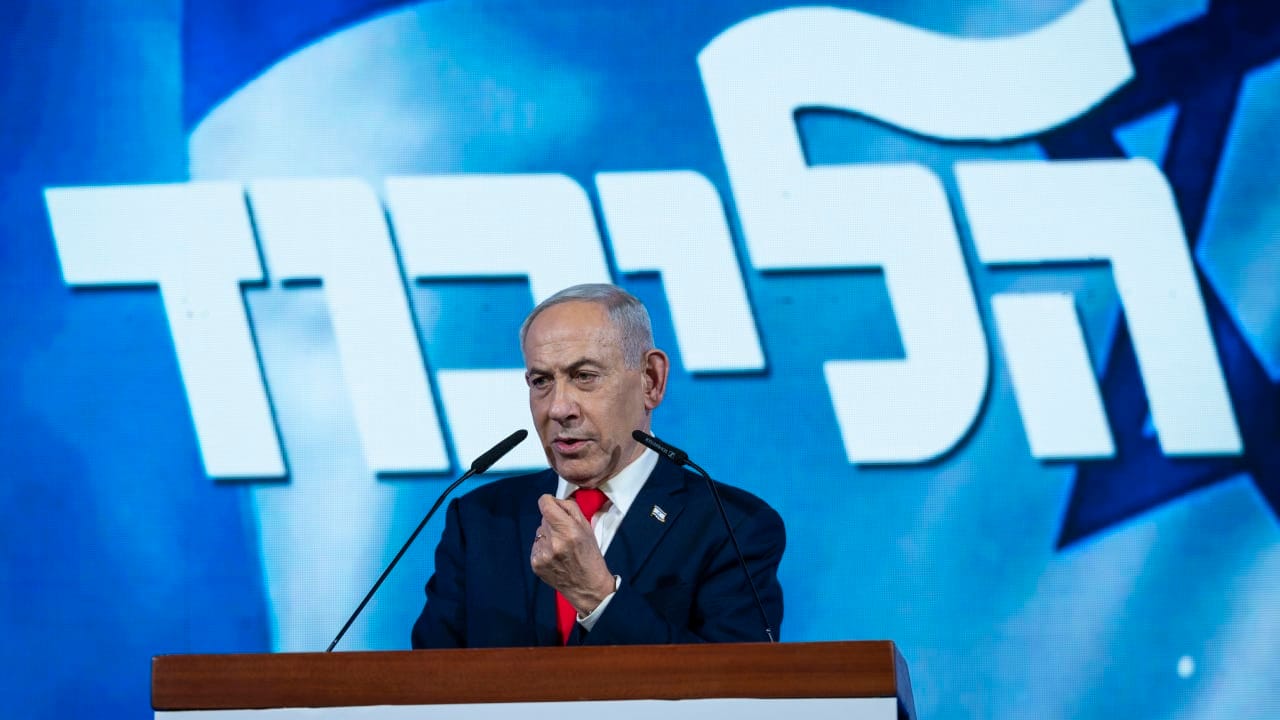
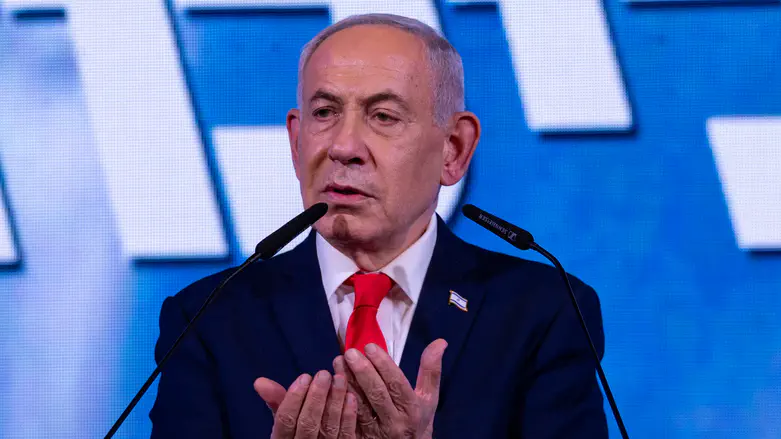
For Prime Minister Benjamin Netanyahu, the immediate aftermath of the vote has not been a time for coalition-building through traditional parliamentary arithmetic, but rather a moment for a high-stakes ideological warning. As the process of forming a new government begins, Netanyahu has stepped into the fray not just as a leader seeking power, but as a sentinel warning of a looming existential crisis.
Netanyahu’s recent address was less a policy proposal and more a clarion call. He has issued a stern warning against the formation of any new government that relies on the support of those he characterizes as supporters of terrorism. To Netanyahu, the math of the current parliamentary landscape presents a choice that is not merely political, but survivalist. He argues that a government built on such foundations would not only compromise the state's security but would fundamentally alter its identity.
For Netanyahu, the nuclear challenge is not a matter for a fragile, ideologically compromised coalition, but a task for a unified national leadership.
"With a government like this, Israel simply will not survive," Netanyahu declared, framing the political crossroads as a binary between catastrophe and cohesion. "And therefore there is only one choice. Not national suicide, but national unity. This is the will of the people."
The Prime Minister’s critique is aimed squarely at the possibility of a coalition that includes Islamist parties or those aligned with the opposition's more radical elements. His concern is rooted in the idea of internal stability and the ability of a government to confront external enemies. He suggests that a government dependent on Islamist groups could undermine Israel from within, drawing a parallel to the civil unrest seen in parts of Europe.
This is a central pillar of his argument: the belief that a government cannot effectively fight an enemy if its own survival depends on that enemy's ideological allies. "A government that depends on Hamas supporters will not fight Hamas," Netanyahu asserted, highlighting a perceived contradiction that he believes would paralyze the state's ability to act decisively in the face of terror.
Beyond the internal mechanics of coalition politics, Netanyahu has tied the formation of the next government to the most pressing external threat facing the nation: the Iranian nuclear program. He contends that the current geopolitical moment requires a specific kind of strength—one that can only be provided by a unified front.
In his view, a government reliant on Islamist parties would be incapable of addressing the existential threat posed by Iran. He argues that to effectively remove this threat, the state requires a government composed of those committed to the national interest and the preservation of Israel’s specific character. For Netanyahu, the nuclear challenge is not a matter for a fragile, ideologically compromised coalition, but a task for a unified national leadership.
To avoid what he describes as the path of national suicide, Netanyahu has laid out a specific blueprint for the future. He has called for the formation of a national unity government, an expansive coalition that would move beyond the narrow interests of small party blocs. He has specifically invited parties within the "national camp" and Zionist parties to join this effort.
His criteria for these partners are clear: they must be committed to preserving Israel as the national home of the Jewish people. By calling on these specific groups, Netanyahu is attempting to draw a line in the sand, defining the boundaries of what he considers a legitimate government. He is seeking a mandate that prioritizes the Jewish character of the state and its security above the immediate spoils of parliamentary maneuvering.
As the political landscape remains in flux, Netanyahu is framing his push for unity not as a tactical retreat, but as a moral imperative. He has characterized the current moment as a period of unprecedented necessity, where the standard rules of political horse-trading must be set aside in favor of a broader consensus.
"This is the time for unity," he stated, attempting to channel the collective anxiety of a nation facing both internal division and external threats. "This is the will of the people; this is the need of the hour."
As the process of government formation continues, the tension between the need for a functional majority and the demand for ideological purity remains unresolved. The elections of November 7 have left Israel at a crossroads, where the pursuit of a stable coalition may clash directly with the Prime Minister's vision of a unified, Zionist-led front. Whether the parties can find a way to bridge these divides, or whether the nation will move toward the fractured reality Netanyahu fears, remains the defining question of the current political era.