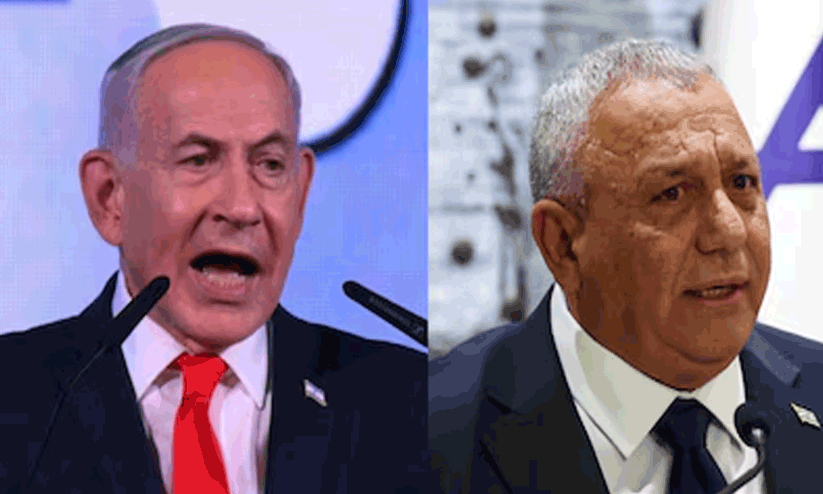
On November 28, 2026, Israeli Prime Minister Benjamin Netanyahu signaled a willingness to break the current deadlock over government formation by proposing an unprecedented power‑sharing arrangement. The plan, first reported by The Times of Israel and echoed by Channel 13, would see opposition leader Gadi Eisenkot serve as prime minister for an initial term, after which Netanyahu would assume the office for a second term.

Eisenkot, leader of the Yashar party, has not been swayed. Sources say he remains unconvinced by the offer and insists that any unity government with Likud must first win the assent of his existing partners. Those partners include Yair Golan of the Democrats and Avigdor Liberman of Yisrael Beytenu. Both have signed coalition agreements with Eisenkot and have publicly ruled out joining a government headed by Netanyahu without a clear consensus.
The Knesset, Israel’s 120‑member parliament, requires a minimum of 61 seats for a majority. Eisenkot’s bloc—Yashar, the Democrats and Yisrael Beytenu—controls 36 seats. Even if Likud supports the coalition, the total would reach only 48 seats, still falling short of the threshold. Adding Naftali Bennett’s B’Yachad could push the total to 48, but the shortfall would remain. Consequently, Eisenkot must look beyond his immediate allies, courting ultra‑Orthodox factions or Arab‑majority parties such as Ra’am to bridge the gap.
Consequently, Eisenkot must look beyond his immediate allies, courting ultra‑Orthodox factions or Arab‑majority parties such as Ra’am to bridge the gap.
President Isaac Herzog granted Eisenkot a 28‑day mandate to form a government, expiring on December 6. That deadline looms large for both sides. Netanyahu, meanwhile, has pledged to continue his own coalition outreach “next week,” according to public broadcaster Kan, suggesting that negotiations will intensify in the days leading up to the deadline.
The proposed power‑sharing deal is expected to be communicated through unofficial channels. This approach would allow Likud to avoid a public commitment while still signaling flexibility to potential partners. For Eisenkot, the informal nature of the overture adds a layer of uncertainty; he must weigh a proposal that lacks formal documentation against the concrete demands of his coalition partners.
Naftali Bennett, chairman of the B’Yachad party, has publicly supported a unity government with Likud but warned that he could oppose an Eisenkot‑led administration if it were formed before full discussions with Netanyahu took place. Bennett’s stance introduces another variable: even if his party joins Eisenkot’s bloc, the coalition would still fall short of the 61‑seat majority, underscoring the fragility of any prospective arrangement.
To close the gap, Eisenkot is reportedly courting hard‑line Orthodox parties and Arab‑majority factions, including the Arab party Ra’am. Promises of ministries and investment in Arab areas have been floated as incentives to secure their backing. These overtures illustrate the high‑stakes bargaining that characterizes Israeli coalition politics, where policy concessions often accompany the quest for parliamentary numbers.
As of the latest reports on November 28, the power‑sharing proposal remains a draft, conveyed through back‑channel talks rather than a formal document. The outcome will hinge on whether Eisenkot can pull together enough allies to reach the 61‑seat majority, or whether Netanyahu’s overture will finally persuade enough factions to accept a rotating premiership.
The political landscape remains fluid, with each side weighing the trade‑offs of compromise against the risk of a prolonged stalemate that could leave Israel without a functional government beyond the constitutional deadline.