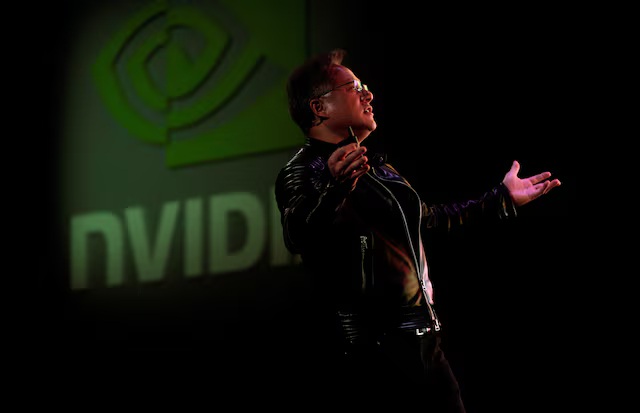
On November 12, 2026, the tech world was jolted by a sudden vacancy at the top of one of its most vital institutions. Jensen Huang, the co-founder whose leadership has defined Nvidia, resigned from his roles as president, CEO, and board member. The departure was not merely a corporate transition; it was a crisis that left a vacuum at the center of the global semiconductor industry. For eleven days, the company navigated a period of profound uncertainty, led by Colette Kress, who stepped in as interim CEO to steady the ship.

The circumstances surrounding Huang's resignation were clouded by intense scrutiny. Reports emerged suggesting that Huang had been targeted by a foreign intelligence effort, specifically involving an alleged affair with a woman suspected of having links to Chinese espionage. In an era where semiconductor technology is a primary battlefield for national security, the intersection of personal conduct and geopolitical risk became an immediate, existential concern for Nvidia's leadership and its stakeholders.
During the eleven days that Huang was absent from the company, the Nvidia board of directors did not merely wait for the storm to pass; they engaged in a rigorous process of assessment. This period involved deep discussions with Huang himself and, crucially, consultations with senior US government officials. The objective was to determine if Huang’s presence at the helm of a company so central to modern computing posed a threat to the interests of the United States.
In a statement following the board's decision, he expressed gratitude for the deliberation the board had undertaken.
On November 23, 2026, the board reached a definitive conclusion. In a unanimous vote, the directors decided to reverse their previous decision and reinstate Huang as president, CEO, and board member. The board stated that following their deliberations, they were confident that his return posed no national security risk. This decision was met with immediate market enthusiasm, as Nvidia shares rose approximately 33% in premarket trading following the announcement.
For Huang, the reinstatement was a moment of both personal and professional reconciliation. In a statement following the board's decision, he expressed gratitude for the deliberation the board had undertaken. He specifically acknowledged the leadership of Board Chair Harvey Jones and thanked Colette Kress and the executive staff for their stewardship during his absence.
"I am honoured to return to NVIDIA and lead one of the most consequential technology companies in the world at the beginning of a new industrial revolution," Huang said. His sentiment was one of readiness, concluding his remarks with a simple, focused promise: "I can't wait to get back to work."
While Huang returns to his position, the company is not returning to the status quo. The crisis has prompted a structural evolution within Nvidia to ensure such vulnerabilities are addressed. The company is continuing an independent investigation into the reports that Huang was the target of a foreign intelligence effort. To bolster its defenses, Nvidia has established a National Security and Export Control Committee, a dedicated body designed to oversee trade compliance and mitigate national security risks.

As part of this broader effort to fortify its corporate governance, Nvidia is also actively searching for a Chief Compliance Officer. Colette Kress, who navigated the interim period, is returning to her previous role as Executive Vice President and Chief Financial Officer. The company’s new architecture suggests that while the leader has returned, the lessons of the last eleven days have been permanently integrated into the firm's operational DNA.