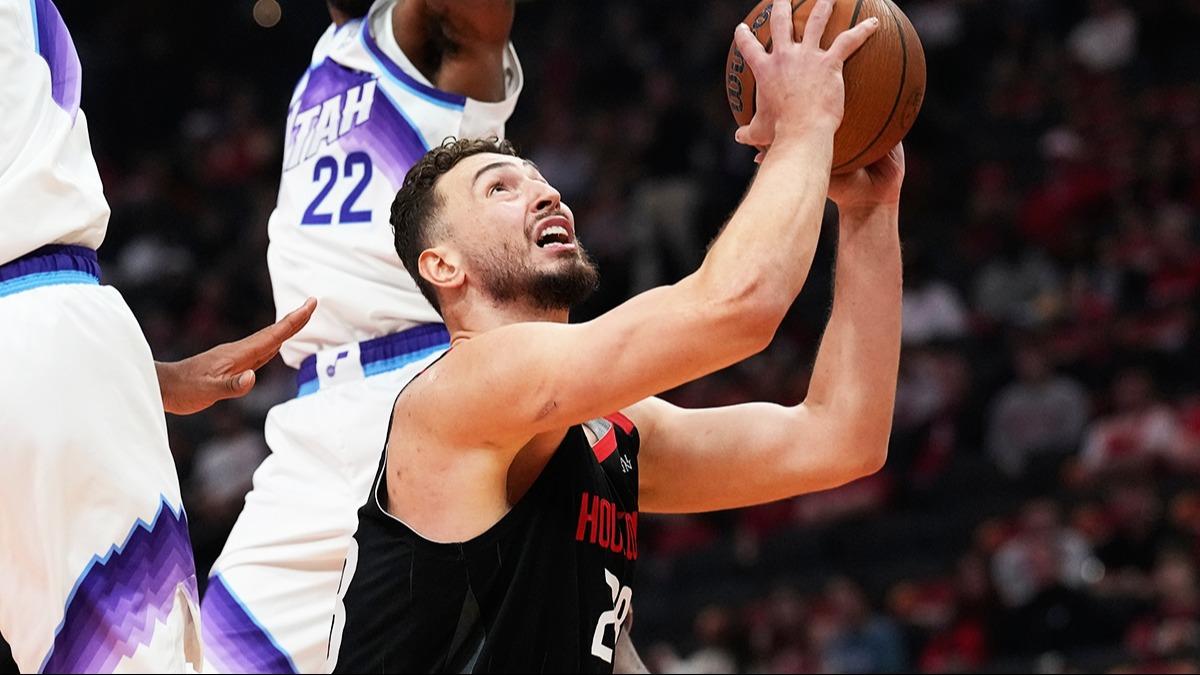
The floorboards of Toyota Center were still holding the echo of a different era when the Houston Rockets walked onto the court on November 14, 2026. To the casual observer, it was just another night in the NBA, a matchup between the Rockets and the visiting Utah Jazz. But to those who have followed the franchise through its turbulent rebuilds, there was a quiet tension in the air. The narrative of Houston basketball had been dominated by two figures for nearly a decade: the towering dominance of Yao Ming and the explosive scoring of James Harden. They were the gravitational centers of the team, defining what it meant to be a star in Texas. But as the ball bounced in, it became clear that the baton had passed, and the new carrier was not from the local high school system or the traditional American collegiate pipeline. He was Alperen Şengün, a Turkish center who had spent years being a statistical footnote in global rankings and a breakout sensation in the league. This was the night he announced himself not just as a starter, but as the soul of the franchise.
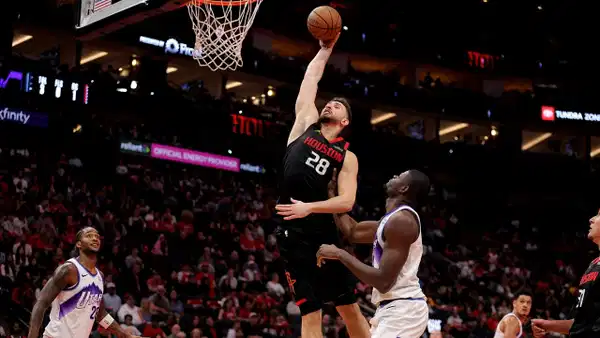
Şengün has never fit the traditional mold of an NBA center. While his predecessors were built on brute force or vertical leap, his game is built on geometry and pace. He moves with a lateral slide that defies his 7-foot frame, and his hands are so soft that a pass can come in from the top of the key and find him under the basket without him ever breaking stride. In the first quarter against Utah, this became apparent immediately. The Jazz, led by a strong effort from Darryn Peterson, who would finish with 28 points, tried to bully their way into the paint. But Şengün didn’t just stand his ground; he orchestrated. He positioned himself at the free-throw line, reading the rotation of the Jazz defense with an almost surgical precision. When the ball swung to the wing, Şengün drifted out to help, forcing the passer into a difficult decision. This wasn’t just defense; it was the architecture of the Rockets’ offense being built around his vision. The crowd at Toyota Center began to murmur, a low hum that grows into a roar only when a player does something unexpected, something that rewrites the rules of the engagement.
As the second half began, the gap between the teams widened, but it was the individual performance of Şengün that turned the contest into a personal triumph. He finished with 43 points, a number that immediately placed him in the company of the team’s all-time greats. But it wasn’t just the scoring that stunned the observers; it was the consistency of his impact across the board. He grabbed 12 rebounds, securing the defensive end of the floor and giving the Rockets the chances to run. More impressively, he dished out 5 assists, threading passes to Kevin Durant, who contributed 22 points in a supporting role. In the NBA, a 40-point night is a highlight reel. A 40-point, 10-rebound, 5-assist night is a statistical rarity that defies the modern role specialization of the game. Şengün became the first Houston Rocket to achieve this specific combination since the era of Yao Ming and James Harden. For a franchise that has often struggled to define its identity between eras, this performance served as a clear marker. It said that the new identity was not a reaction to the past, but an evolution of it.
It said that the new identity was not a reaction to the past, but an evolution of it.
There is a distinct cultural weight to Şengün’s presence in Houston. In a league that is predominantly American, his background as a star from Turkey adds a layer of global significance to his play. Turkish basketball has a long history of producing technically gifted players, and Şengün embodies that tradition of skill over size. When he drives the lane, the way he handles the ball, the fake he uses to get his defender on their heels, it is a reflection of a game played differently on a different continent. This contrast is what makes his performance so resonant for the Rockets' fan base. They are not just watching a player score; they are watching a bridge between two basketball worlds. The 125-118 final score was less important than the message it sent: that the Rockets’ future is not a return to the past, but a forward march into a new style of play.
While Şengün was the headline act, the Utah Jazz did not fold. Keyonte George, on the losing side, dropped 27 points, trying to keep the game close through sheer volume of shooting. Peterson’s 28 points were a testament to the difficulty of the Rockets’ frontcourt. For a stretch in the third quarter, the Jazz looked like they could pull ahead, forcing Houston to call timeouts and regroup. But every time Utah found a rhythm, Şengün had a answer. Whether it was a block, a steal, or a long pass to the open man, his range of influence covered too much territory for the Jazz to sustain their lead. The resilience of the Jazz made the eventual Rockets victory more meaningful; it wasn’t a rout, but a battle won by a team with a clear creative center.
It is impossible to discuss this performance without acknowledging Kevin Durant’s role. At this stage of his career, Durant is a veteran leader, a player whose value lies in his ability to elevate the play of those around him. In this game, he played the supporting role perfectly. He did not try to be the hero; he let Şengün take the shots that mattered. His 22 points came from high-efficiency looks