
For any nation locked in an existential struggle for its airspace, the mechanics of modern war are measured not just in heroic dogfights, but in the unglamorous, grinding machinery of logistical support. This complex reality came into sharp focus when the US State Department formally approved a potential foreign military sale to Ukraine, centering on essential equipment and maintenance services for its growing fleet of F-16 fighter jets.
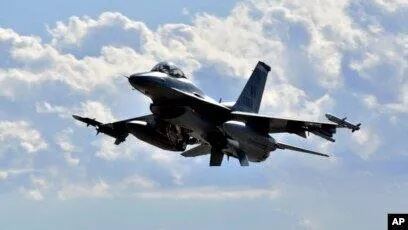
At a valuation of $621.9 million—often cited broadly as $622 million—the package represents a substantial infusion of technical backing designed to keep Western-supplied aircraft flying. Yet, what makes this agreement distinct is how it bypasses traditional American funding mechanisms. Washington will not deploy its own financial resources for the deal. Instead, the entire contract is to be financed through the multinational JUMPSTART program, officially known as the Ukraine Multinational Partnership Program.
This funding model shifts the financial weight onto a dedicated coalition of European nations. Specifically, contributions from Belgium, Denmark, the Netherlands, and Norway will shoulder the cost, turning collective European solidarity into tangible mechanical upkeep for the Ukrainian air force as it works to counter Russian air power.
Even as the F-16 maintenance package cleared diplomatic hurdles, it unfolded against a tense backdrop of intersecting defense decisions and persistent shortages.
Behind every high-value defense agreement lies a complex industrial process. According to the mechanics of the deal, the main contractors responsible for delivering this equipment and maintenance will be determined through competitive bidding overseen directly by the US government, following standard Federal Acquisition Regulation guidelines.
Crucially for the operational footprint on the ground, the implementation of this agreement carries strict structural boundaries. The arrangement does not require the dispatch of any additional US government representatives or civilian contractors into Ukraine, keeping the intervention strictly tailored to supply-chain and maintenance backing without expanding the on-the-ground human presence.
Even as the F-16 maintenance package cleared diplomatic hurdles, it unfolded against a tense backdrop of intersecting defense decisions and persistent shortages. Reports indicate that US Defense Secretary Pete Hegseth has not yet approved the transfer of about 60 interceptors destined for the Patriot air defense system—missiles that Washington had previously agreed to supply to Kyiv.
The friction over the Patriot interceptors highlights the precarious math governing Ukraine's defense against relentless aerial assaults. According to President Volodymyr Zelenskyy, the current reality on the ground is stark: Ukraine is receiving an average of only 12 Patriot missiles per month this year. When weighed against the scale of incoming threats, that modest monthly delivery underscores the immense gap between the defense capabilities promised and the daily volume required to keep the skies secure.
Ultimately, these parallel developments capture the dual-track nature of international support for Kyiv. On one side stands a robust, multi-nation coalition stepping up to finance vital F-16 upkeep, securing the long-term viability of Ukraine's fighter jet operations through European contributions and American administrative clearance. On the other side sits the immediate, high-stakes bottleneck of ground-based air defense, where crucial interceptors remain held up in the bureaucratic pipeline. As the conflict grinds forward, the juxtaposition of a newly minted $621.9 million support mechanism and a trickle of just 12 monthly Patriot missiles defines the urgent, precarious balance shaping the war's next phase.