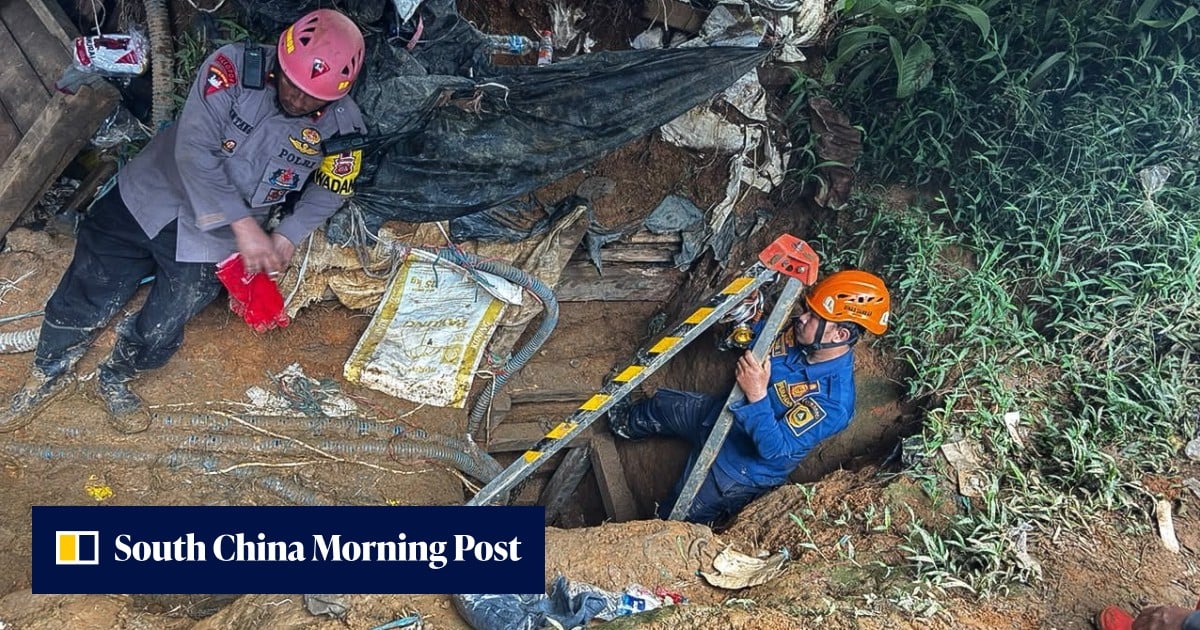
The warning signs had been ignored for months, but the storm that arrived on November 25, 2026, was the final blow. In the highlands of Bogor, West Java, heavy rain caused the Ciseureuh River to overflow its natural banks. The water did not stop at the surface. It surged into a deep, narrow mine shaft, turning a place of illicit industry into a submerged tomb. The flooding was immediate and absolute. What began as a routine day for a group of unauthorized workers became a catastrophe as the water level rose, cutting off their only exit. For twenty-three men, the earth they had been digging into suddenly closed them in, trapping them beneath the surface with the weight of the mountain pressing down from above.
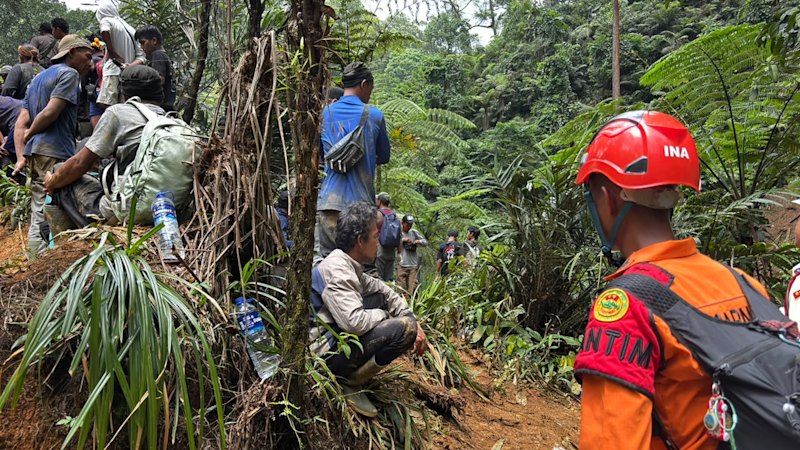
As the water rose, the hope of survival narrowed with every meter. Rescuers from the national search and rescue agency, BASARNAS, were deployed immediately, but the conditions were hostile from the start. The shaft was not just flooded; it was deep. Desiana Kartika Bahari, the head of BASARNAS’s Jakarta branch, explained that the estimated depth of the mine was one hundred meters. In that depth, the absence of light and air is a lethal combination. On that first night, the operation was a race against physics. Despite the pouring rain and the pitch darkness, which Bahari noted hindered the deployment of oxygen and lighting equipment, the teams managed to reach the first victims. By the time the press release went out, three bodies had been recovered from the shaft. The depth at which they were found was between thirty and forty meters down—a stark indicator of how quickly the situation had deteriorated for those who could not swim or escape in time.
The scale of the tragedy was initially difficult to pin down. Because the miners were operating illegally, there was no official registry of who had gone down into the pit. The uncertainty hung heavy over the rescue command center. Bahari admitted that the official count was an estimate, shaped by the testimony of those on the ground. “We don’t know for sure [how many people were down the mine] but we talked to illegal miners here and they gave 26 names, so maybe there are 26 people,” she stated. This list of twenty-six names provided a grim baseline for the operation. Even with the recovery of the initial bodies, at least twenty others remained trapped in the depths, their status unknown as the water continued to seep into the narrow tunnels.
The illicit operation has claimed lives before, including a separate incident in January where six miners died.
It is a recurring narrative in this region that the risks were known, yet the poverty was deeper. Local authorities had recovered pumps inside the pit before the flood, suggesting that the miners were aware of the hazards and had prepared for some degree of water ingress. Yet, they had also been warned frequently. “We don't know for sure because they are illegal. They are quite stubborn, these illegal miners, because they have been warned frequently for not doing what they are doing,” Bahari observed. The miners were not employees of a sanctioned company; they were individuals illegally fossicking in a shaft that had previously been operated by the state-owned entity PT Antam. The closure of that legal operation had not stopped the activity, only driven it into the shadows where oversight vanished.
This incident did not occur in a vacuum of safety. The region has a painful history of similar tragedies. The illicit operation has claimed lives before, including a separate incident in January where six miners died. The presence of hazardous materials like mercury in these unregulated digs adds a toxic layer to the physical danger of the shafts. Police are now looking beyond the men in the pit. Their investigation is focused on the financiers behind the operation—the individuals who supply the equipment and tolerate the risk, profiting from the labor of those who descend into the dark. These financiers are the ones who likely ignored the repeated warnings from local authorities, treating the safety of the miners as an acceptable cost of doing business off the books.
As the sun set on the second day of the rescue effort, the conditions worsened. The rain continued to pour, slicking the already slippery walls of the narrow shafts and making it nearly impossible for rescuers to gain purchase. “We also need to bring lamps as it is very dark – and right now the rain is pouring in heavily,” Bahari described the ongoing struggle. For the men trapped below, every hour that passed without a clear communication line was a reduction in their chances. The rescue operation is now a battle against time, water, and the sheer depth of the earth. The twenty-three men are not just waiting for help; they are waiting for the water to stop, for the darkness to be pushed back by a lamp, and for the world above to finally break the surface and reach them.
The operation continues with a focus on survival and investigation. While the immediate priority is the retrieval of the remaining trapped miners, the authorities are moving to dismantle the network that enabled this disaster. The fact that the shaft was a closed PT Antam site highlights a gap in enforcement that allowed illegal mining to flourish in a dangerous terrain. As the rain continues to fall in Bogor, the rescue teams are pushing forward, guided by the list of names and the knowledge that the shaft goes a hundred meters into the earth. The story of these miners is not just one of a flood, but of a cycle of poverty, risk, and neglect that has kept these tunnels open despite the known dangers. The work of pulling the remaining men from the dark is now a matter of national concern, with the full weight of the rescue agency committed to the narrow, flooded path to safety.