
On November 18, 2026, the seamless digital tapestry that defines modern life began to fray. It started with the quiet disappearance of Microsoft email services, a digital blackout that quickly rippled outward, striking at the very nerves of global infrastructure. Suddenly, the tools used to communicate, trade, and move were failing. Air traffic control systems faltered, triggering the longest ground stop of flights since the events of September 11, leaving travelers stranded and the skies eerily empty. Simultaneously, the financial arteries of the country were constricted as Chase Bank experienced disruptions that limited access to funds. For a moment, the interconnectedness of the world felt less like a convenience and more like a vulnerability.
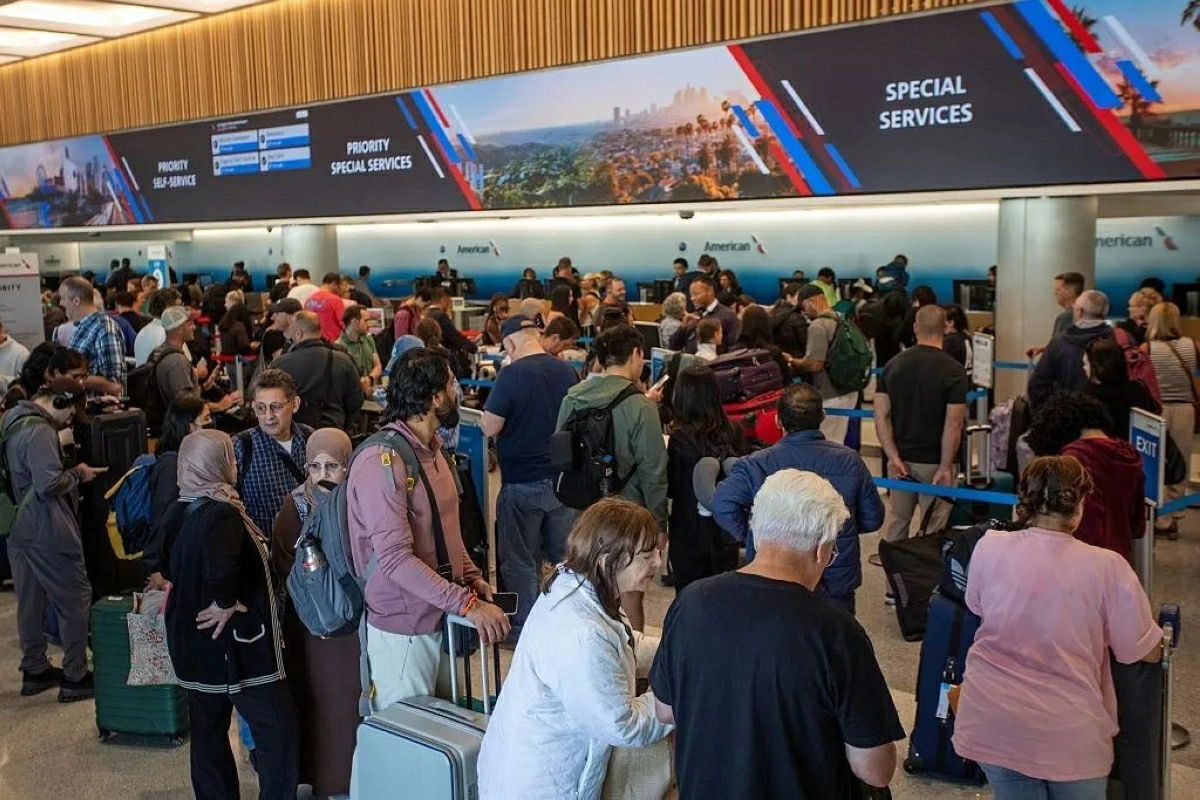
In the wake of such widespread disruption, the immediate instinct is to look for a culprit. When the systems that govern our movement and our money fail simultaneously, the mind naturally turns toward the shadows—the hackers, the criminal syndicates, or the hostile nation-states that have long sought to exploit digital weaknesses. The scale of the outages suggested a coordinated strike, a digital siege designed to paralyze the machinery of a superpower. As the outages cascaded from Microsoft to air traffic control and even the National Security Agency, the question wasn't just what had broken, but who had broken it.
Amidst this mounting anxiety, Secretary of State Marco Rubio took to the stage in Manila, Philippines, to address the growing unease. Speaking on Tuesday, while accompanying President Donald Trump on a diplomatic mission that included scheduled meetings with Chinese and Russian leaders in Shenzhen, China, Rubio attempted to decouple the technical failures from the specter of warfare. His mission was one of stabilization, seeking to calm Americans abroad who were watching the reliability of their interconnected networks crumble in real-time.
Microsoft, at the center of the initial collapse, traced the disruption back to a specific, internal cause: an earlier network capacity upgrade.
Rubio was emphatic in his dismissal of a coordinated attack. He argued that there was no connective tissue between these events, nor any evidence of a coordinated effort to cause harm. "We have zero evidence or any reason to believe that any of these isolated or individual instances have anything to do with nefarious actors, with cyber hackers, with criminals, with another nation state, with a malign actor of any kind," Rubio asserted. To the administration, these were not the opening salvos of a cyber war, but rather a series of disconnected, unfortunate technical malfunctions.
While the public looked for villains, the technical reality appeared to be far more mundane. Microsoft, at the center of the initial collapse, traced the disruption back to a specific, internal cause: an earlier network capacity upgrade. This suggests that the very efforts to strengthen and expand the digital architecture may have been the catalyst for its temporary failure. It was not a breach of the walls, but a tremor in the foundation caused by the work of the builders themselves.
This explanation, however, sat uneasily with many. While the administration moved to frame the events as non-malicious, critics and even some allies raised concerns that information was being withheld from the public. The gap between the technical explanation and the sheer scale of the chaos created a vacuum of trust, where the absence of a visible enemy felt, to some, like a cover for a much deeper instability.
President Donald Trump offered a different perspective on the chaos, one rooted in a blunt acceptance of the risks inherent in scale. Rather than engaging with the technical specifics or the geopolitical implications, he dismissed the gravity of the outages as a byproduct of being a global leader. "It's life," Trump stated. "When you're big and powerful and you have all the money, things like that happen. It's fine."

This stance framed the outages not as a crisis to be solved or a threat to be investigated, but as an inevitable tax on greatness—a series of hiccups that large, powerful entities must simply endure. It was a message of nonchalance in the face of systemic fragility, a sentiment that stood in stark contrast to the frantic attempts of those trying to navigate the grounded flights and locked bank accounts.
As the dust settles on the events of November 18, the world remains caught between two interpretations. On one hand, there is the official narrative: a collection of isolated technical errors, stemming from upgrades and the inherent complexity of massive systems. On the other, there remains the lingering suspicion that the interconnectedness of our world has created a landscape where the line between a glitch and a strike is dangerously thin. For now, the machines are running again, but the question of how much we truly control remains unanswered.