The future of international hockey is currently caught in a diplomatic standoff that has little to do with pucks and goals, and everything to do with political trust. At the heart of this friction is Canadian Prime Minister Mark Carney, who has publicly announced plans to block the entry of Russian hockey players into the country. This move is aimed specifically at the 2027 World Junior Championship, an event that is set to take place in Canada. For years, the sport has operated under the assumption that competition would resume once the geopolitical dust settled. Instead, the entry of high-level diplomatic figures into the conversation has complicated the timeline, turning a sporting schedule into a debate about national security and international relations. The result is a cloud of uncertainty hanging over the sport’s most important youth event, where the next generation of professional talent is typically introduced to the world.

To understand the weight of Ovechkin’s recent comments, one must look at the long history of exclusion that preceded this current standoff. Russia was suspended from international competition on January 1, 2022. This date marks the beginning of a period where Russian athletes were effectively frozen out of the global stage, a decision that reshaped the balance of power in ice hockey. The international calendar had become a space where Russian flags were not just unwelcome, but explicitly barred from the ice. The sport moved forward without them, and the void was filled by other nations, creating a new equilibrium that many fans found satisfying. But as the months rolled on, the question of a return began to loom larger, not just for the fans, but for the athletes who would grow up in a world where their flag was a source of division rather than pride.
Amidst the political noise, the regulatory body governing the sport moved with quiet precision. On November 10, 2026, the International Ice Hockey Federation officially included Russia in the participants list for upcoming tournaments. This administrative step was not a diplomatic victory, but it was a necessary one. It signaled that, on paper, the global governing body was ready to welcome the team back, regardless of what individual host nations might decide. The IIHF took a neutral stance on the broader geopolitical conflict, focusing instead on the technical requirements of competition. By placing Russia on the list, the federation cleared the internal hurdles, leaving only the final, and perhaps most difficult, obstacle: the willingness of the host country to let the athletes cross the border. This inclusion is a prerequisite, but it is not a guarantee. It is the bridge that must be crossed, but it does not force the other side to build a road for the athletes to follow.
Instead, he shifted the focus away from the politics of the leaders and toward the desire of the fans.
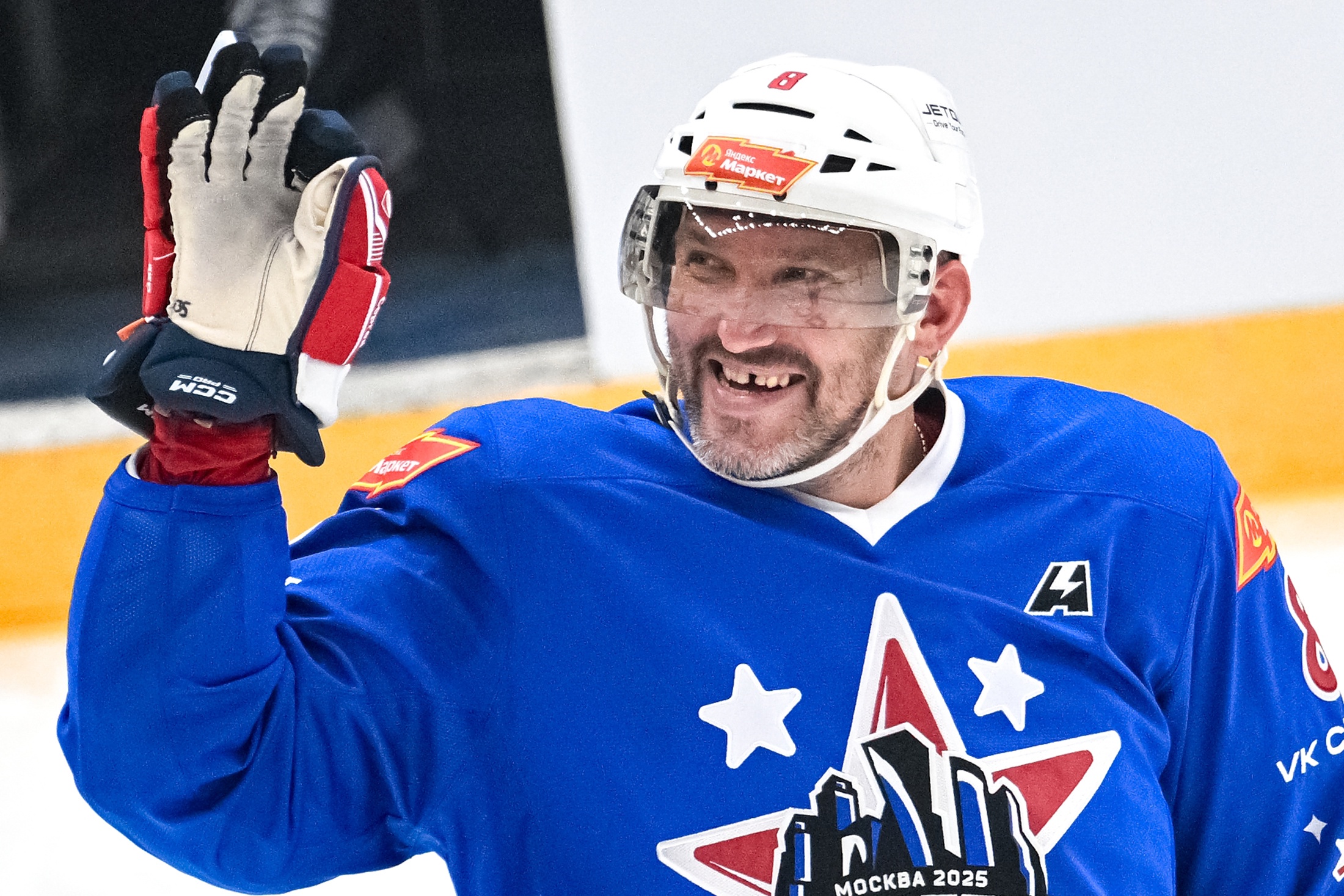
It was in this context that Alex Ovechkin, the global icon of the sport, stepped forward to address the issue. His stance was supportive of the players' right to compete, even if it meant navigating a hostile political environment. "This is his opinion and his decision," Ovechkin said, referring to Prime Minister Carney’s public stance on the visa block. He did not challenge the Prime Minister’s authority or criticize his motives. Instead, he shifted the focus away from the politics of the leaders and toward the desire of the fans. "I don't know how everything will turn out, but I am almost certain that if you asked the fans, they would say they want to see the best players and young hockey players who will become future stars," he said. For Ovechkin, the sport belongs to the people who watch it. The fans, in his view, are the ultimate stakeholders. They are the ones who fill the arenas, buy the merchandise, and keep the culture of the game alive. If they want to see the best young talent, then the sport should give it to them, regardless of the political friction between nations. He acknowledged that this desire is not within his control or the control of any single player, but it remains a powerful force in the argument.
Beyond the desire of the fans, Ovechkin touched on a deeper, more emotional core of the athlete's motivation. For a player, the chance to represent their nation is not just a job; it is a profound expression of identity. "For any athlete, the opportunity to defend the colors of their flag at tournaments of the caliber of the Olympics or the World Championship is the main and most natural striving," he said. This statement highlights the tension between the global nature of the sport and the national pride that fuels it. Athletes often dream of the world stage from a young age. To be denied that stage, even for a few years, is a unique kind of frustration that transcends the game. Ovechkin’s words serve as a reminder that behind every statistic and every highlight, there is a human being who wants to wear the colors of their home country and prove their worth on the largest stage in the world. It is a drive that is as old as the sport itself.
As of now, the 2027 World Junior Championship remains a source of significant debate. The IIHF has done its part by including Russia on the participants list. The fans, according to Ovechkin, are ready to see the best players on the ice. The only remaining variable is the decision of the host nation. Prime Minister Carney has made his intentions clear, but the final door has not yet been closed. The sport is left in a state of limbo, waiting for a decision that will determine whether the next generation of stars will be seen on the global stage. It is a situation that reflects the broader state of the world, where sports can no longer remain completely separate from politics. The outcome of the 2027 tournament will be a test not just of athletic ability, but of how the international community chooses to balance its values with its love for the game.