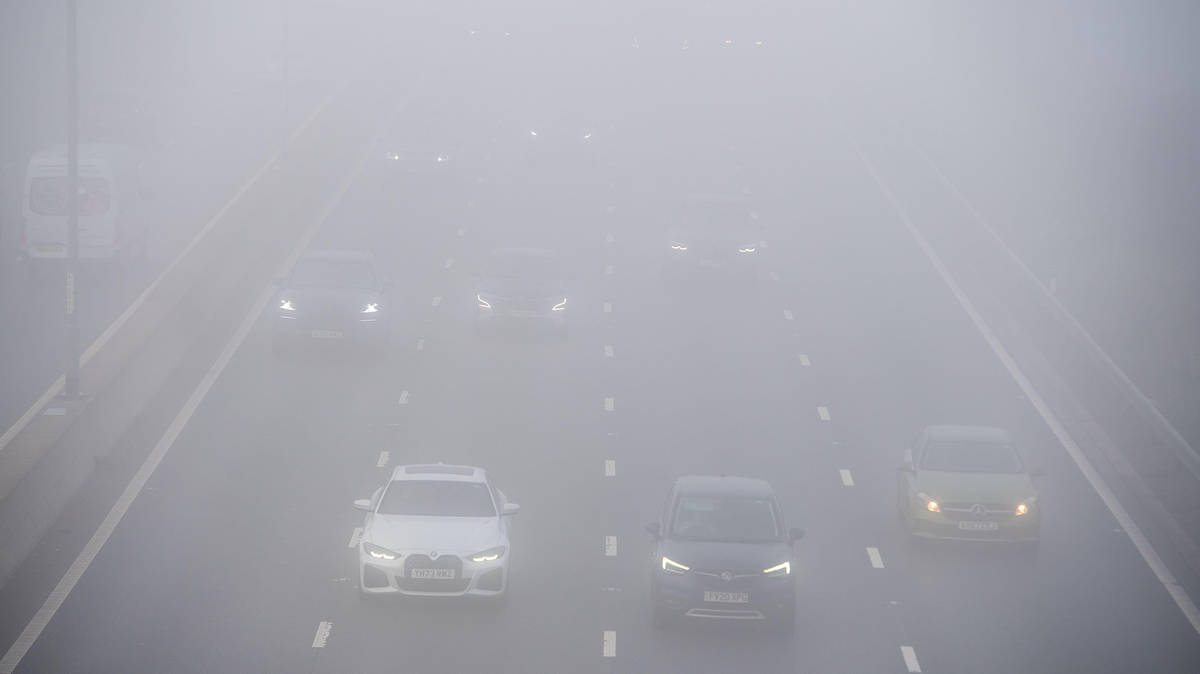
On the evening of November 8, 2026, the M20 motorway in Kent became the site of a sudden and violent disruption. For many motorists traveling on the London-bound carriageway, the journey began as a standard commute, but it was quickly overtaken by a thick, obscuring fog. In such conditions, visibility can drop to near zero in seconds, turning a high-speed artery into a landscape of shadows and uncertainty.

As the mist rolled in, the safety of the motorway was compromised. What followed was a massive multi-vehicle collision that would stretch across the asphalt, involving over 30 vehicles. The sheer scale of the incident transformed a stretch of road between junctions 8 and 9 into a scene of wreckage and emergency response.
The scale of the crash was immediate and overwhelming. With more than 30 vehicles caught in the pileup, the collision created a tangle of metal and debris that effectively paralyzed one of the region's most vital transport links. The density of the fog meant that the impact was not a single, isolated event, but a cascading series of accidents as drivers encountered the wreckage of those ahead of them.
These individuals, caught in the chaos of the multi-car pileup, required professional care to address the various injuries sustained during the collision.
Emergency services were summoned to the scene as the gravity of the situation became clear. Kent Fire and Rescue and local police arrived to find a scene that required a massive, coordinated effort to manage. The complexity of a 30-vehicle accident necessitates more than just clearing debris; it requires a delicate balance of rescue, medical triage, and forensic investigation.

BREAKING: The M20 is closed after a multi-vehicle collision, according to Kent Police. Two people have been seriously injured after the crash and have been taken to hospital. https://t.co/PAiZ4D1jU3 📺 Sky 501 https://t.co/flT0fgAnOj
Amidst the wreckage, the priority for first responders was the immediate welfare of those trapped or injured. The physical reality of such a high-speed collision is often severe. Kent Police confirmed that the impact resulted in two individuals sustaining serious injuries. These individuals were subsequently transported to the hospital for urgent medical care.
While the two serious injuries drew the most immediate clinical attention, the scope of the medical response was broader. Kent Fire and Rescue confirmed that paramedics treated 11 people at the scene. These individuals, caught in the chaos of the multi-car pileup, required professional care to address the various injuries sustained during the collision.
As the emergency services worked to stabilize the injured and extricate those involved, the logistical impact on the region was profound. To facilitate the rescue operations and allow investigators to examine the scene, the M20 was closed in both directions. This total closure turned a major transit route into a dead end, forcing a massive redirection of traffic.
Because of the complexity of the crash and the number of vehicles involved, the motorway remained shut overnight. The investigation into the exact mechanics of the collision—how the fog contributed to the chain reaction and how the vehicles interacted—required the road to remain clear of moving traffic for an extended period.

Two seriously injured after motorway crash involving over 30 vehicles in fog https://t.co/lWmTNlDU4w
In the wake of the collision, authorities worked to manage the ripple effects of the closure. Police issued urgent warnings to motorists, urging them to avoid the area entirely as the cleanup and investigation continued. For the drivers caught in the fog, the event served as a stark reminder of how quickly environmental conditions can turn a predictable drive into a crisis.
As the investigation moves forward, the focus remains on the lessons learned from the night of November 8. The M20, once again, will return to its role as a vital link, but the memory of the 30-vehicle pileup remains a significant chapter in the history of that stretch of Kent road.