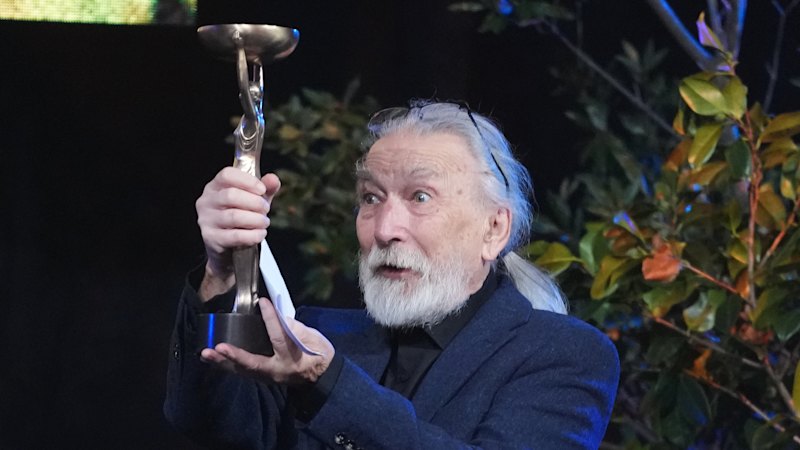
In a moment that has sent ripples through the literary world, author M. John Harrison has claimed the prestigious 2026 Booker Prize for his novel The End of Everything. The announcement, made in London, marks a significant departure for the award, traditionally dominated by mainstream literary fiction. Harrison's victory not only celebrates a lifetime of literary achievement but also shatters a long-standing barrier, making him the first science fiction author to receive this honor in the award's history.

Established to recognize the finest original novel written in the English language and published in the United Kingdom, the Booker Prize carries a substantial £50,000 purse—approximately $94,893 Canadian. Beyond the financial reward, the award represents one of the most significant acknowledgments of literary merit in the English-speaking world. This year's competition began with a longlist of 13 books, which was eventually narrowed down to six finalists, each receiving £2,500 (about $4,692 Canadian) and a specially bound copy of their work.

U.K. author M. John Harrison won the Booker Prize on November 9 for his enigmatic novel "The End of Everything", which echoes concerns about artificial intelligence in a darkly satirical depiction of post-apocalyptic Britain. https://t.co/4mNInx3DUv
M. John Harrison's journey to this pinnacle of literary recognition has been anything but conventional. The author of numerous acclaimed works including Climbers, Nova Swing, and The Sunken Land Begins to Rise Again, Harrison has spent decades crafting narratives that blend literary sensibility with speculative imagination. His win comes at a significant point in his career, defying the industry's tendency to recognize certain types of authors. Harrison's previous works have garnered critical acclaim but remained largely outside the mainstream literary establishment until now.
The diverse panel brought varied perspectives to their deliberations, ultimately selecting Harrison's work from a competitive shortlist.
The winning novel, The End of Everything, represents Harrison at his most ambitious. Described as a post-apocalyptic adventure set in a near-future landscape along the Kent coast of the United Kingdom, the book demonstrates Harrison's unique ability to merge speculative elements with profound human insight. The novel explores themes of transformation and survival in a world irrevocably changed, offering readers both a thrilling narrative and deep philosophical questions about humanity's future.

We are delighted to announce that 'The End of Everything' by M. John Harrison is the WINNER of the Booker Prize 2026 https://t.co/FiDAidIySs
This year's decision was made by a distinguished jury chaired by renowned classicist Mary Beard and including poet Raymond Antrobus, musician Jarvis Cocker, author Rebecca Liu, and poet Patricia Lockwood. The diverse panel brought varied perspectives to their deliberations, ultimately selecting Harrison's work from a competitive shortlist. Their choice reflects a growing recognition within the literary world that science fiction and speculative fiction deserve a place at the table of serious literary discourse.
Harrison's victory represents more than a personal achievement; it marks a watershed moment for science fiction literature. For decades, speculative fiction has often been marginalized by mainstream literary awards, despite its cultural significance and dedicated readership. This win signals a potential shift in how the literary establishment views genre fiction, acknowledging its capacity for literary excellence and innovation. As Harrison becomes the first sci-fi author to claim the Booker Prize, he opens doors for other speculative writers who have long operated outside the literary mainstream.

M John Harrison becomes oldest Booker Prize winner at 81 for 'The End of Everything' Read more: https://t.co/KPNkb1RNSL #lka #srilanka #adaderana #news #lanka #srilankanews #everything #harrison #becomes #oldest #booker #winner #prize #john #end #BookerPrize
The announcement of Harrison's victory has sparked widespread discussion about the evolving landscape of literary recognition. While previous winners like David Szalay in 2025 represented more traditional literary fare, Harrison's win suggests a broadening of the prize's scope. As the literary world processes this historic moment, attention turns to how this recognition might influence the future of speculative fiction and its place in the canon of English literature. For Harrison, the £50,000 prize and the accompanying prestige represent a deeply meaningful validation of a lifetime spent pushing the boundaries of what fiction can achieve.
