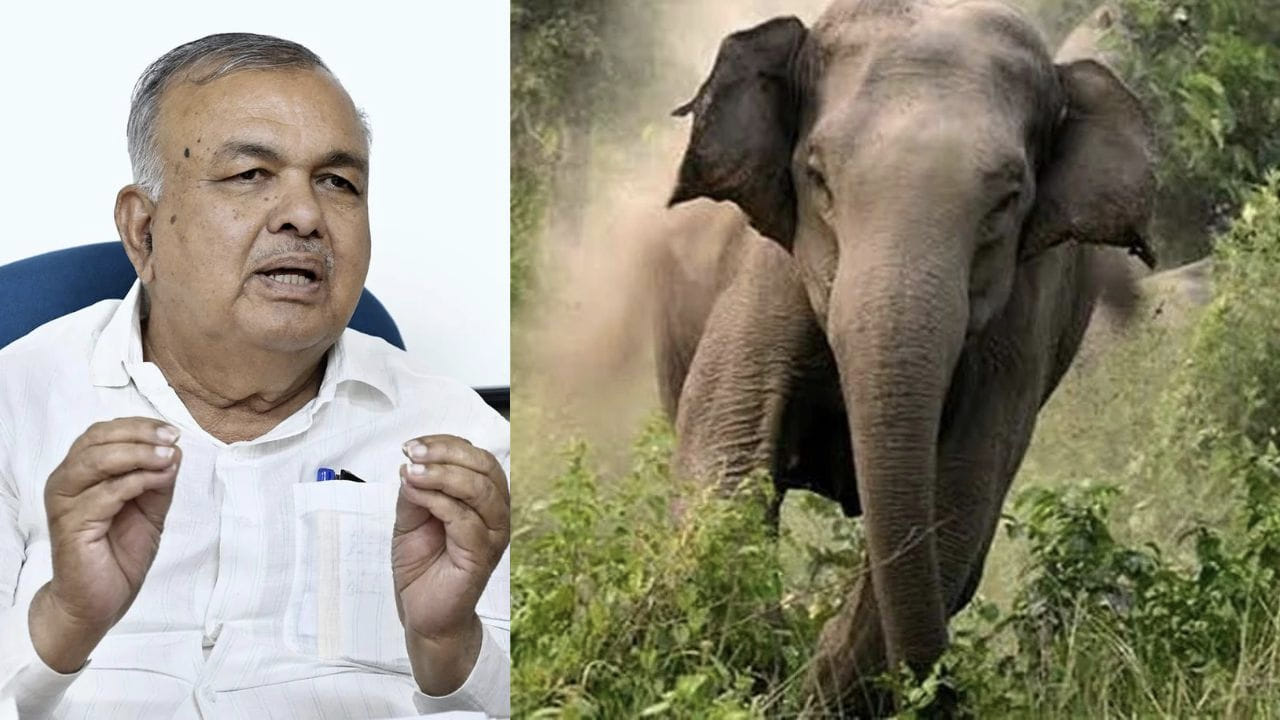
In the quiet, agricultural stretches of the Hassan district, the boundary between human settlement and the wild has become increasingly porous—and deadly. For the residents of this region, the forest is not merely a backdrop but a neighbor, one that has recently turned hostile. The tension that has simmered for months reached a breaking point in mid-November 2026, when the delicate equilibrium of rural life was violently upended by two fatal encounters within the span of just 48 hours.

The tragedy began on November 15, 2026, when 65-year-old Jayamma was killed while grazing her cattle. For those living in the rural pockets of Hassan, such tasks are routine, part of the rhythm of daily survival. Her death sent a shockwave through the local community, serving as a grim reminder of the risks inherent in working near the forest edge. Yet, before the village could fully process the loss, the threat struck again, proving that the danger was not an isolated incident but a systemic crisis.
On November 16, 2026, the cycle of violence continued in Nagenahalli. Hafeez Ur Rehman, a 64-year-old man, was working in his garden when he was attacked and killed by a wild elephant. The proximity of these two deaths—occurring within two days of one another—transformed the local grief into a collective, vocal outrage. The garden, a place of sustenance, had become a site of sudden, irreversible loss.
Officials announced an order to capture and relocate 10 wild elephants identified as being involved in the recent conflicts.
By the time news of Hafeez Ur Rehman’s death spread, the mood in Hassan had shifted from mourning to militant protest. Residents, long weary of the encroaching elephant population, turned their anger toward the Forest Department. The accusation from the local villagers and farmers is sharp and clear: they believe the authorities have been negligent, failing to implement the necessary safeguards to manage the escalating human-animal conflict. For the people on the ground, the department’s response has been reactive rather than preventative, leaving them to bear the physical and emotional cost of living alongside these massive, unpredictable animals.
Faced with mounting pressure and the undeniable reality of a public safety emergency, the Forest Department took decisive action on November 16, 2026. Officials announced an order to capture and relocate 10 wild elephants identified as being involved in the recent conflicts. This operation is a high-stakes attempt to restore a sense of security to the region. The goal is twofold: to mitigate the immediate risk of further casualties and to move the animals to areas where the potential for human interaction is significantly lower.
The logistics of such an operation are fraught with difficulty. To manage the capture, the Forest Department has deployed specialized elephant squads, designated as Team A and Team C. These units are tasked with navigating the complex terrain of Hassan while adhering to strict safety protocols. The mandate is precise: ensure the safety of the forest personnel and the local residents while managing the elephants with as much care as the circumstances allow. It is a delicate, dangerous dance, requiring expertise to prevent the situation from spiraling further.
While the capture operation moves forward, the state has attempted to address the immediate financial fallout of the tragedy. The Forest Department has pledged 20 lakh rupees in compensation to the family of the victim. While such funds cannot replace a life, they represent the official acknowledgement of the state's role in the tragedy. As the situation continues to unfold, Principal Chief Conservator of Forests (Wildlife) Kumar Pushkar is traveling to Hassan to meet with the district minister. This high-level review is intended to assess the current strategy and determine how the department can better manage the volatile intersection of human development and wildlife migration in the future. For now, the people of Hassan remain on edge, waiting to see if these measures will finally bring an end to the shadow of the tusker.