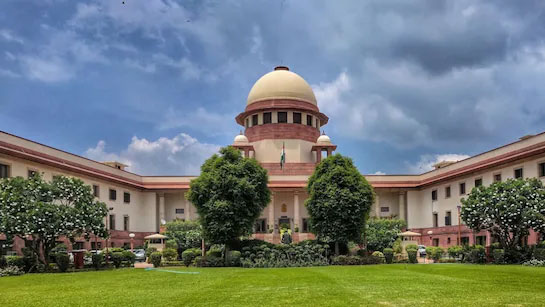
The air in the courtroom likely felt thick with a specific kind of judicial patience that has all but run out. On August 3, 2026, the Supreme Court of India, led by Justice Vikram Nath, issued a sharp rebuke to the Tamil Nadu government. The target of their criticism was not a new argument or a legal precedent, but a procedural hurdle that had become all too familiar: the repeated seeking of adjournments. The court made it clear that the same excuse—that senior counsel was unavailable—had been used previously, leading to judicial delays and increased case backlogs. For a body of justices tasked with resolving one of the most contentious interstate water disputes in the country, this repetition was not just an inconvenience; it was a waste of judicial time. The court emphasized that the case is nearing its conclusion, signaling that the era of easy delays is over.

To understand the weight of that frustration, one must look at the physical and political stakes of the Mekedatu project itself. Located in the Mekedatu area, the project is intended to be a balancing reservoir across the Cauvery river. In hydrological terms, a balancing reservoir is designed to manage the flow of water, often storing it to prevent flooding or to ensure a steady supply during dry periods. In this context, the project serves a dual purpose for Karnataka. It is designed to provide drinking water to Bengaluru, the state’s sprawling capital that has faced severe water scarcity in recent years. Additionally, the project is set to generate 400 megawatts of hydroelectric power. For the Karnataka government, the project is a supportive piece of infrastructure that addresses critical urban needs and energy generation. It is a tangible response to the challenges of modern urbanization in a state that is home to one of India’s largest metropolitan economies.
However, for the government of Tamil Nadu, the project is viewed through a lens of existential concern for its agricultural heartland. Tamil Nadu has filed petitions challenging the project, arguing that the dam will give Karnataka control over water flow. The Cauvery river flows into the delta regions of Tamil Nadu, a fertile agricultural zone that supports millions of livelihoods. The state fears that by regulating the flow upstream, Karnataka will effectively reduce the water reaching the Cauvery delta. For farmers in that region, water is not just a resource; it is the rhythm of their lives. The argument that a balancing reservoir can be manipulated to harm downstream users is the core of Tamil Nadu’s legal and political opposition. They contend that the control mechanisms of the dam could be used to prioritize Karnataka’s needs at the expense of the delta’s agricultural integrity. This dynamic turns the river into a line of demarcation, where every cubic meter of water becomes a point of contention between the two states.
The state fears that by regulating the flow upstream, Karnataka will effectively reduce the water reaching the Cauvery delta.
The legal battle has moved beyond simple opposition to the dam’s existence and has entered the realm of regulatory oversight. On August 3, 2026, Tamil Nadu filed a specific petition challenging guidelines issued by the Ministry of Jal Shakti regarding the Mekedatu project. The Ministry of Jal Shakti is the central government body responsible for managing water resources and river projects in India. By challenging these guidelines, Tamil Nadu is attempting to constrain the parameters within which the project can be executed, arguing that the current rules do not adequately protect downstream interests. This move suggests that the dispute is not just about whether the dam will be built, but how it will be managed and how its impact will be mitigated. The court’s criticism of Tamil Nadu’s tactics in the proceedings highlights the tension between the need for thorough legal scrutiny and the urgent need for a final resolution. Both states are entrenched in their positions, with Karnataka supportive of the project’s benefits and Tamil Nadu critical of its potential harms, while the Supreme Court finds itself in a critical position, trying to maintain the integrity of the judicial process.
As the case moves toward what the court has described as its conclusion, the focus shifts to the practical implications of the ruling. The frustration expressed by Justice Vikram Nath and his colleagues is a signal that the judiciary is prepared to enforce stricter timelines and procedural discipline. The repeated use of the "unavailability of senior counsel" as a reason for delay has been flagged as a factor contributing to case backlogs, a systemic issue in the Indian legal system where high-profile cases can drag on for years due to procedural hurdles. By calling out this pattern, the court is not just managing a single case; it is sending a message about the efficiency required in handling matters of such national significance. The stakes are high for both Bengaluru’s thirst and the delta’s harvest, and the legal mechanism that will determine the future of the Mekedatu reservoir is now under the watchful, and increasingly impatient, eye of the Supreme Court.