
In the complex, often labyrinthine corridors of the Indian legal system, time is not just a metric; it is a substantive factor that can determine the outcome of a life. For the prosecution in the Renukaswamy murder case, that time ran out on a Thursday in November 2026, when the Supreme Court of India delivered a ruling that underscored the fragility of the bail system in high-profile criminal matters. The Court dismissed a petition filed by the state, a decision that left five individuals—Pavan, Nandeesh, Dhanaraj, Vinay, and Raghavendra—free on bail, a status that had been challenged by the state as being fundamentally incompatible with the gravity of the accusations against them.
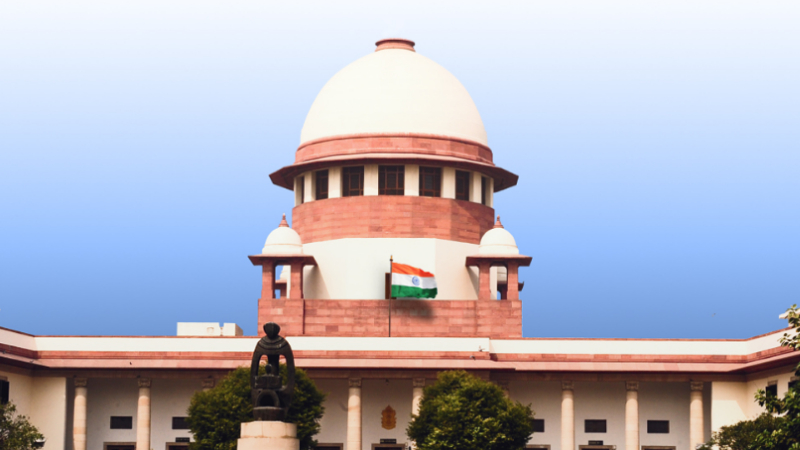
To understand the finality of this Supreme Court decision, one must look at the timeline that preceded it. The heart of the dispute was not the evidence in the murder case itself, but the sheer velocity—or rather, the lack thereof—in the legal process. The Supreme Court explicitly cited a significant delay in the filing of the petition as the primary reason for its dismissal. The delay in question was substantial: a gap of one and a half years. In the eyes of the highest court of the land, this duration was sufficient to undermine the urgency claimed by the prosecution. The ruling suggests that the right to seek a revocation of bail is not a standing order that can be invoked at a convenience date; it must be acted upon with a degree of immediate necessity that this petition, in the Court's view, had failed to demonstrate over the preceding eighteen months.
The Supreme Court’s decision did not occur in a vacuum. It was a direct continuation of a precedent set by the Karnataka High Court. Before the case reached the apex court, the High Court had already dealt with a similar petition from the state, and that lower court also dismissed the plea to cancel the bail. This continuity of rulings creates a powerful legal shield around the five accused. When the Supreme Court upholds a lower court’s decision, it is effectively saying that the High Court’s assessment of the situation was sound, or at least, that the arguments presented by the prosecution did not rise to the level of warranting an intervention by the highest bench. The High Court’s dismissal, followed by the Supreme Court’s concurrence, signals a strong institutional signal that the bail conditions, whatever they may be, are currently being met to the satisfaction of the judiciary.
By waiting, the state arguably forfeited its right to demand a swift change in custody.
For the state's case, this legal maneuvering presents a profound challenge. The prosecution’s stance, as reflected in the petition that was dismissed, was critical of the continued freedom of the accused. However, the Supreme Court’s neutral posture—focusing on procedural delays rather than re-litigating the evidence—leaves the prosecution in a precarious position. It is no longer the trial court that must worry about bail conditions every few weeks; the matter has been elevated to a stage where the burden of proof for revoking bail has become almost insurmountable unless there is a dramatic shift in the facts. The delay in filing the petition, a span of one and a half years, has likely allowed the accused to establish a significant degree of stability in their lives, making any move to revoke their freedom now appear as an afterthought rather than an urgent necessity.
Legal scholars often debate the balance between an accused's right to liberty and the state's right to ensure trial integrity. In this case, the Supreme Court tilted the balance firmly toward liberty, using procedural discipline as the mechanism. The one and a half year gap was not just a number; it was a testament to the prosecution's failure to maintain the momentum required to keep the legal pressure on the accused. By waiting, the state arguably forfeited its right to demand a swift change in custody. This decision by the Supreme Court serves as a stern reminder to all prosecutors in high-stakes cases: judicial urgency must be matched by prosecutorial urgency. If you wait too long to argue that bail is no longer appropriate, the courts may agree that the need has diminished.
Behind the names Pavan, Nandeesh, Dhanaraj, Vinay, and Raghavendra lie lives that have been significantly altered by the events of 2026. For these five individuals, the dismissal of the petition is a reprieve. It means they do not have to face the immediate threat of returning to judicial custody. For the families of these five, and for the victim’s family in the Renukaswamy case, the ruling will be viewed through entirely different emotional lenses. The legal system, with its focus on the one and a half year delay, has provided a procedural shield, but it has not answered the deeper questions of justice, truth, and final accountability. The Supreme Court’s decision to dismiss the petition is a procedural victory for the accused, but it does not close the book on the case itself; the murder trial continues to unfold in the lower courts, where the actual evidence of the crime will eventually be tested. Until then, the accused remain free, a status the Supreme Court has now endorsed based on the timeline of the state's own actions.
As the Supreme Court's ruling settles, the immediate legal battle over bail has been lost for the prosecution. The High Court’s initial dismissal and the Supreme Court’s upholding of that decision create a double layer of protection. Unless the state can find a new, distinct angle to argue for revocation that does not rely on the same delayed grounds, the five accused will likely remain at large. The focus now shifts entirely back to the trial courts of Karnataka, where the evidence will be scrutinized. The Supreme Court's intervention has effectively removed the possibility of an early, high-profile reversal of bail conditions, forcing the case to resolve through the standard, often slower, mechanisms of criminal trial proceedings.