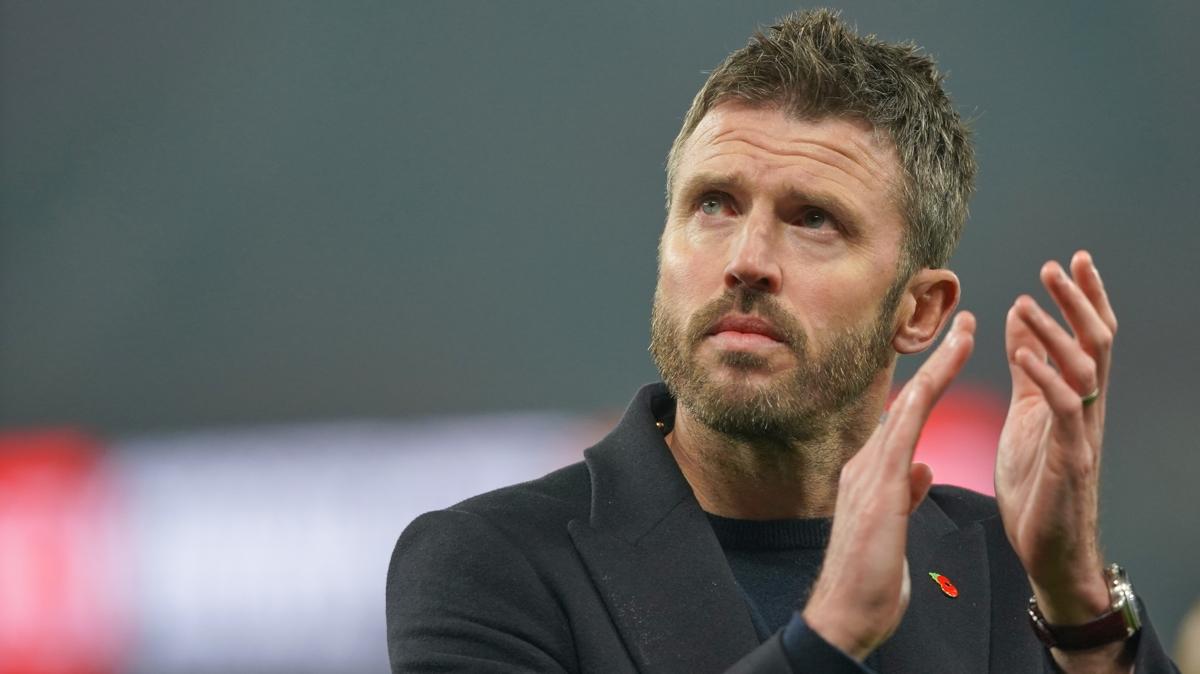
For Manchester United, the number eight has never felt so heavy. After ten matches in the Premier League, the club sits in eighteenth place, a position that would have been unimaginable to the faithful just months ago. This is not merely a dip in form; it is a historic nadir. The arithmetic is brutal: from those ten games, they have harvested only eight points. This is a season that began with high hopes but has quickly morphed into a crisis of confidence, one that the club's leadership can no longer ignore. As the international break draws to a close, the machinery of change is already grinding into action, set to reshape the future of one of the world's most famous football clubs.

The turning point, much like many in modern football, was not a single dramatic error but a cumulative decline that snapped the rope at 3-0. When Manchester United fell to Bournemouth in October, the reaction was not immediate dismissal. Instead, the club opted for a cautious approach, deferring a final decision until the current international window provided a pause for thought. However, that pause was only a respite for the players, not for the administration. Behind the scenes, the tension was palpable. The 3-0 scoreline against Bournemouth was the final piece of evidence that convinced the leadership that the current trajectory was not just disappointing, but dangerous. It was a performance that shattered any remaining illusion of stability, forcing the executive team to confront the reality that their head coach's tenure was running its course.
Despite public assurances from the board that no final decision had been made, the reality is far more settled. Chief Executive Omar Berrada and Director of Football Jason Wilcox have aligned on a course of action that will likely end Michael Carrick's time at the club. These two figures, pivotal in the club's restructuring, are expected to formally recommend Carrick's removal to the minority owner, Sir Jim Ratcliffe, and the Glazer family. The decision is no longer about whether to act, but about how quickly they can execute the transition. The management's stance is critical of the current state of play; they view the poor results not as a failure of talent, but of direction. In their eyes, the path forward requires a decisive break from the current leadership structure.
The draw did not just keep them in the lower half of the table; it confirmed the narrative of inconsistency that has plagued them all season.
The final nail in the coffin was a draw that should have been a win, or at least not so chaotic. Against Aston Villa, the game ended in a 4-4 stalemate, a result that left the team firmly in eighteenth place. For a club of Manchester United's stature, finishing a weekend tied with a team near the bottom is an embarrassment that fans are tired of swallowing. This match solidified the perception that the team lacks the structural integrity to compete at the highest level. The draw did not just keep them in the lower half of the table; it confirmed the narrative of inconsistency that has plagued them all season. Only one win in the last four matches is a statistic that speaks volumes about the team's fragility when pressure is applied.
Amidst the shifting tides of boardroom politics, Michael Carrick has remained publicly defiant. After the Aston Villa match, he denied any rumors of resignation, standing firm in his belief that his job was to stay and fight. "Such a thing will not happen. The direction the club needs to go is very clear: We must win matches," he stated. This quote highlights the disconnect between the coach and the ownership group. For Carrick, the mission is simple: results. For the board, the mission is survival. His supportive stance toward his own role is in sharp contrast to the critical view held by those who have hired him. He believes in his project; they believe the project has failed.
With the decision to let Carrick go all but confirmed, the club has initiated the process of finding a replacement. The list of candidates reads like a who's who of modern football management. Eddie Howe, Julian Nagelsmann, and Antonio Conte are all in the mix, each bringing a different philosophy to the table. But perhaps the most intriguing name is Mauricio Pochettino. Currently serving as the US coach, Pochettino is a special case. He has an extended contract with provisions allowing him to leave for specific high-profile roles. For a club like Manchester United, that is a rare open door. The US national team faces Haiti in the Concacaf Nations League play-offs in November, a two-legged format that will likely keep Pochettino busy in the short term, but the long-term implication for English football is clear: the club is willing to pursue talent that is currently employed elsewhere, just to find stability.
As the international break ends, the stage is set for a final test before the axe falls. Manchester United is scheduled to play Liverpool in a high-stakes derby in the coming days, coinciding with the window when management is expected to make its final decision on Carrick's future. It is a surreal juxtaposition: the team will likely learn of their coach's fate while preparing to face their most famous rivals. This derby is more than just a league match; it is the curtain call for the current era.