
Israel's political landscape stood at a critical juncture following parliamentary elections in October, which failed to produce a clear majority government. With 120 seats in parliament, 61 are needed to form a stable government—a threshold that remained elusive as the nation grappled with complex political divisions and existential threats. The Likud party, led by Benjamin Netanyahu, secured 53 seats, while the united opposition bloc, led by Gadi Eisencot, captured 48 seats. The Arab parties list emerged as the third-largest force with 19 seats, holding the potential to tip the balance of power.
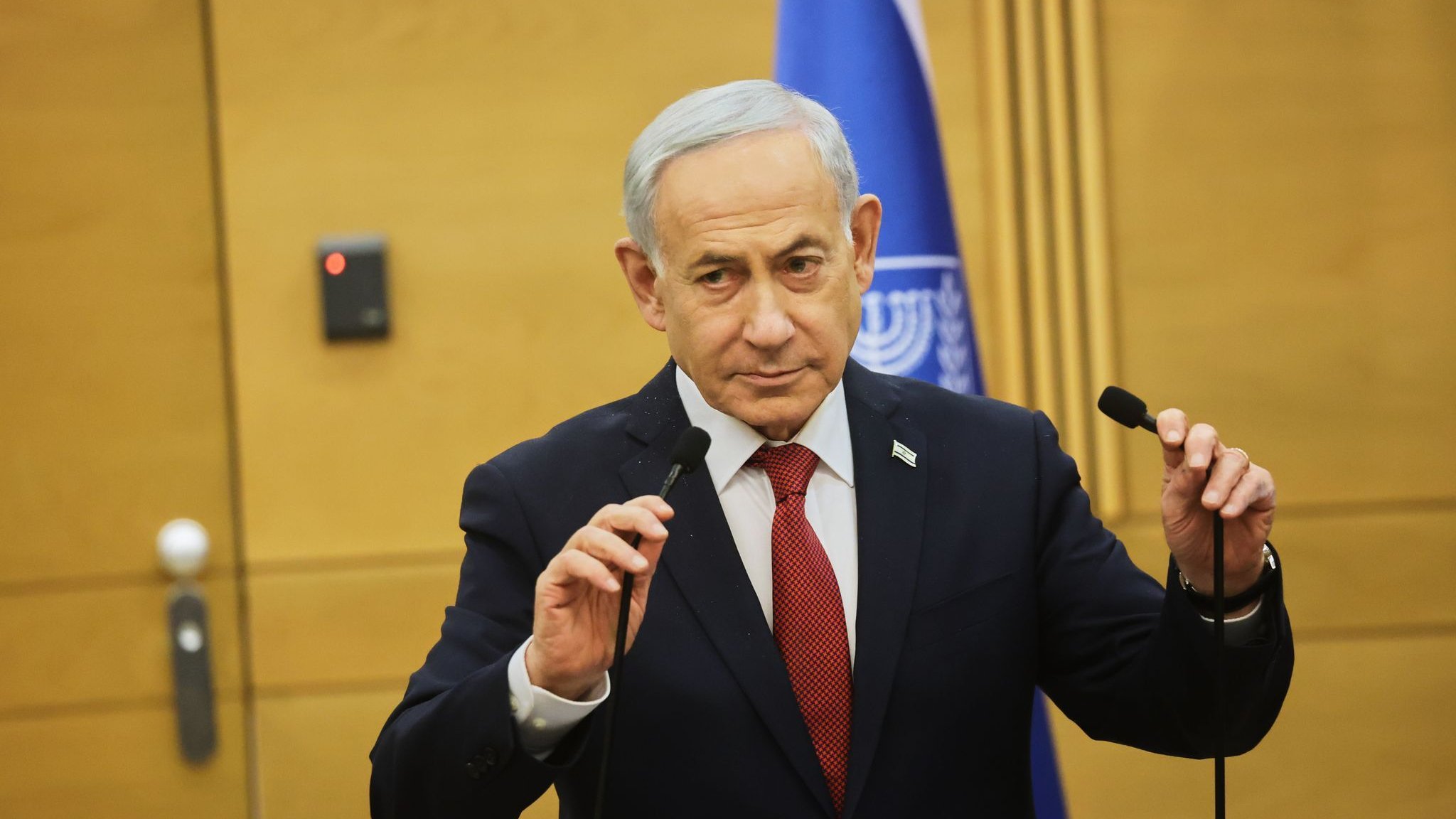
Four weeks after the inconclusive election, Netanyahu made a stunning announcement that would reshape Israel's political future. In a dramatic reversal of his long-held principles, the Prime Minister offered to serve as alternate Prime Minister in a rotation with his rival Gadi Eisencot. This unprecedented power-sharing arrangement came as Netanyahu sought to block Arab parties from joining any government coalition—a move Eisencot had previously demanded as a condition for his support. "Considering the scale of the existential threat and the possibility of forming a government incapable of confronting it, my responsibility as a leader obligates me to set aside everything, including the principle of primacy of the largest party, and agree that Gadi Eisencot will serve as Prime Minister first, and I will serve as alternate Prime Minister at the beginning of the term," Netanyahu explained in a statement that acknowledged the extraordinary nature of his concession.
Netanyahu's decision represented a significant political gamble, particularly coming from a leader who had previously insisted that under normal circumstances, he should lead any unity government or at least serve first in any rotation agreement. "Unter normalen Umständen müsste ich die Einheitsregierung führen oder zumindest als Erster bei einer Rotation das Amt des Ministerpräsidenten übernehmen," Netanyahu had maintained, reflecting his traditional stance on leadership. However, the political calculus shifted dramatically as the December deadline for government formation approached, with a possible extension looming. The Prime Minister's willingness to subordinate his own immediate ambitions reflected his assessment that excluding Arab parties from the government took precedence over his party's primacy.
The announcement immediately drew criticism from opposition parties who accused Netanyahu of political maneuvering and deception.
The announcement immediately drew criticism from opposition parties who accused Netanyahu of political maneuvering and deception. Many viewed the power-sharing proposal not as a genuine attempt at unity, but as a strategic move to maintain influence while excluding Arab representation. "Die Kompromisslosigkeit der Likud-Partei gehe weit über die Debatten um eine Rotation des Amts des Regierungschefs hinaus," Eisencot countered, suggesting that the Likud's uncompromising stance extended beyond questions of rotating the premiership to more fundamental political divides. The skepticism reflected broader concerns about Netanyahu's motives in suddenly embracing a power-sharing arrangement he had previously rejected.
As the deadline approached, the power-sharing agreement between Netanyahu and Eisencot represented both a potential solution and a fragile foundation for governance. The arrangement would see Eisencot serve as Prime Minister first, with Netanyahu as alternate Prime Minister—a remarkable role reversal for two of Israel's most prominent political figures. The agreement explicitly excluded Arab parties from the government, fulfilling Netanyahu's primary objective while potentially leaving significant portions of Israel's population feeling marginalized. The coming weeks would test whether this unprecedented arrangement could provide the stability Israel needed to address its existential challenges, or whether it would prove to be just another chapter in the nation's seemingly endless political saga.