
For residents of Peru, the event on Friday was marked by immediate evacuations and a scramble for safety. A powerful earthquake with a magnitude of 6.8 struck the central region of the country, sending shockwaves through the Andean region of Junín. The quake, which occurred at a depth of 129 kilometers, was felt as far away as the capital city, Lima, causing residents to flee their homes.

According to the German Research Centre for Geosciences (GFZ) and the Peruvian Geophysical Institute, the earthquake struck the Andean region of Junín. The USGS reported a slightly lower magnitude of 6.7, with its epicenter located 9 kilometers northeast of Carhuamayo, at a depth of 108 kilometers. While magnitude reports varied slightly between agencies, all confirmed that the earthquake was a significant seismic event in central Peru.
As the earthquake struck, residents in Lima rushed out of buildings as a precaution, and lawmakers evacuated the Congress building. The streets were filled with people, all trying to make sense of what had just happened. Authorities reported no immediate casualties or significant damage, but the situation was still unfolding, and it was unclear what the full extent of the damage would be.
The epicenter of the earthquake was located 9 kilometers northeast of Carhuamayo, in the Andean region of Junín.
Vicente Quispe stated, "So far, no damage has been reported. His words were reassuring, but the situation was still precarious, and it would take time to fully assess the damage. The US Tsunami Warning System confirmed that there was no tsunami threat, which was a relief to coastal communities.
Mining operations in the affected Junín region, including China's Chinalco Toromocho copper mine, remained unharmed. This was a significant relief, as the mining industry is a crucial part of the region's industrial activity. The fact that the mines were unaffected meant that operational continuity in the Junín region was maintained.
The earthquake had a magnitude of 6.8, according to most reports, although the USGS reported a slightly lower magnitude of 6.7. The depth of the earthquake was reported to be 129 kilometers, although the USGS reported a depth of 108 kilometers. The epicenter of the earthquake was located 9 kilometers northeast of Carhuamayo, in the Andean region of Junín.
As the dust settled, residents of Peru began to assess the damage and try to return to their normal lives. The earthquake had been a traumatic event, but it seemed that the country had dodged a bullet. The fact that there were no reported casualties or significant damage was a relief, and the country could begin to breathe a sigh of relief.
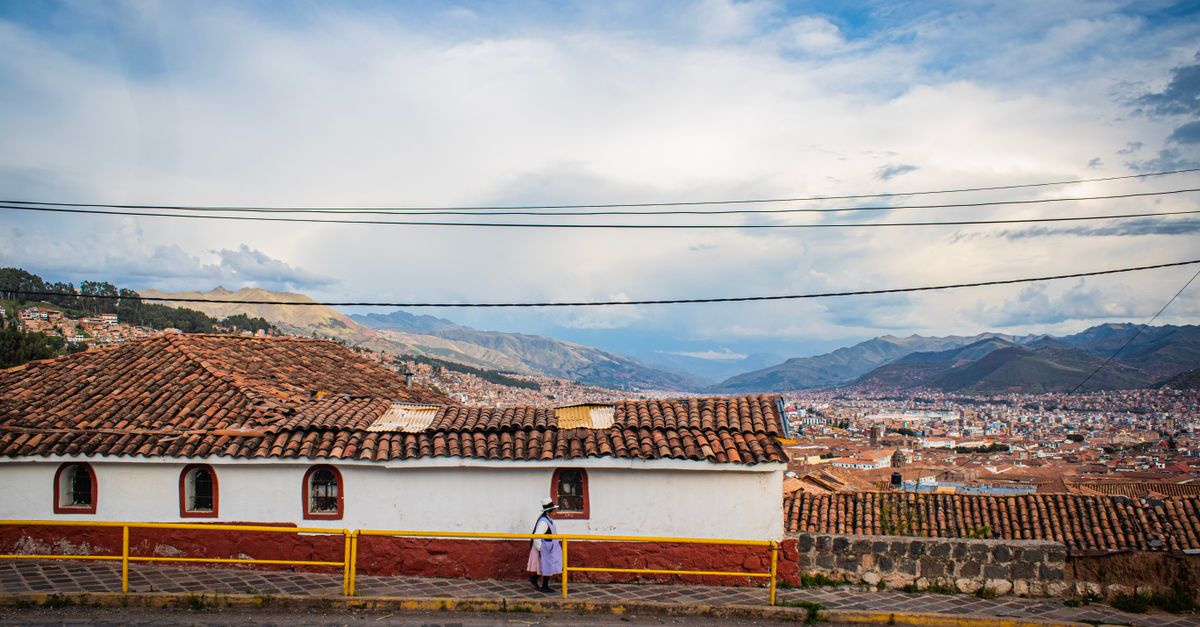
The earthquake was described by the German Research Centre for Geosciences as an "Erdbeben der Stärke 6,8", which translates to "an earthquake of magnitude 6.8". This description gives an idea of the scale of the event, and the potential damage it could have caused.
The earthquake struck the Zentrum Perus, or the center of Peru, which is a region of significant cultural and economic importance. The fact that the earthquake occurred in this region made it a major event, one that had the potential to affect the entire country.
The tremors were felt in the capital city, Lima, despite the distance to the epicenter in the Junín region. This reach demonstrated the power of the seismic waves, which traveled through the Andean region to affect the coastal capital.
The earthquake that struck Peru was a significant event, one that had the potential to cause widespread damage and casualties. However, it seems that the country was lucky, and the damage was limited. As the people of Peru try to return to their normal lives, they will be aware of the fact that they live in a region prone to earthquakes, and that they must always be prepared for the unexpected.