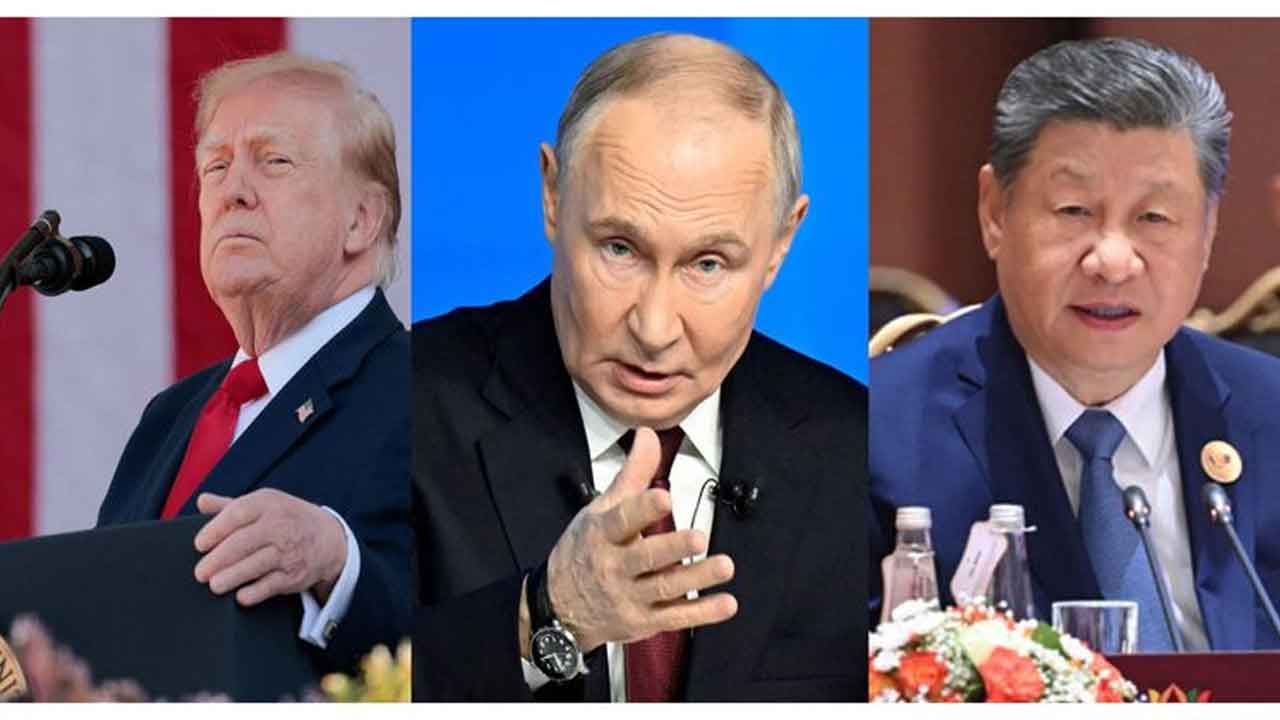
There are moments in international diplomacy when the mere geometry of a room matters more than the communiques issued from it. Next week, the Asia-Pacific Economic Cooperation summit in Shenzhen, China, will host such a moment. For the uninitiated, the APEC summit brings together twenty-one member economies from across the Pacific rim to discuss regional integration and economic cooperation. But this year, the sprawling economic forum is set to be overshadowed by a diplomatic development of a different order entirely. The White House has announced that US President Donald Trump, Russian President Vladimir Putin, and Chinese President Xi Jinping will sit down together for a joint trilateral meeting.
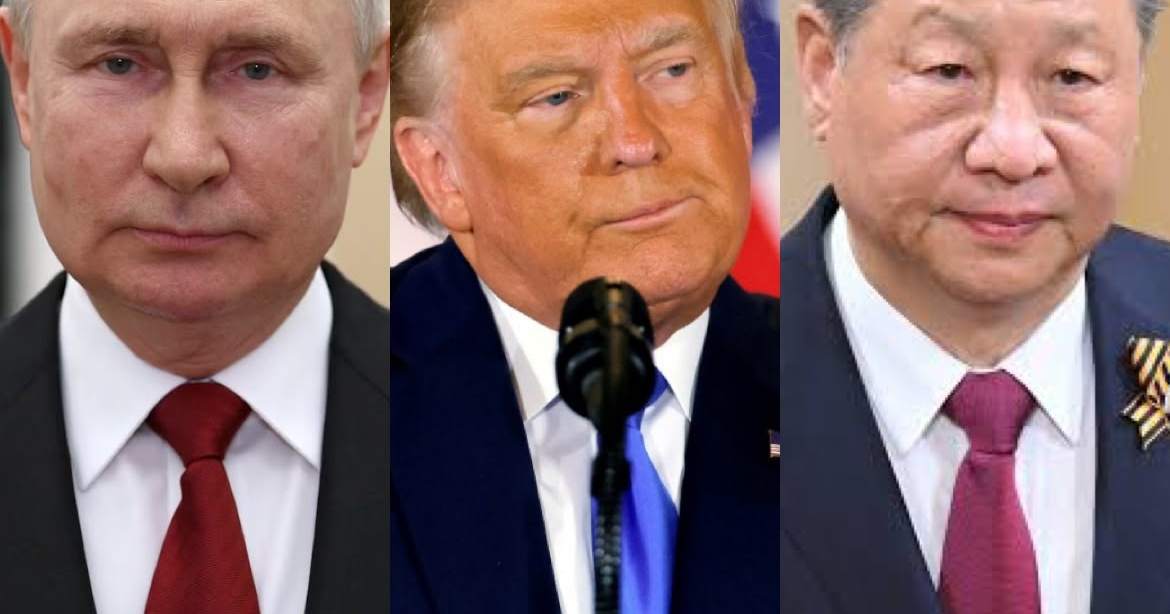
This high-stakes encounter, slated for November 19, represents a first-of-its-kind summit between the leaders of the three superpowers. For an international community accustomed to bilateral frictions and rigid blocs, the sight of Washington, Moscow, and Beijing engaging across a single table marks a striking departure from standard diplomatic protocol. Yet, even as the announcement rippled across global capitals, officials moved quickly to temper expectations regarding concrete breakthroughs.
According to reports citing an unnamed senior US official, no major agreements are expected to emerge from the Shenzhen summit. Instead, the gathering is viewed by observers as a foundational starting point—an exploratory arena for future talks on vexing global issues such as nuclear weapon controls, the ongoing Iran war, and broader geopolitical tensions. The deliberate scaling-back of expectations highlights the cautious nature of the enterprise. These are nations with deep-seated rivalries and competing strategic visions; a single afternoon in Shenzhen will not rewrite the global order.
Trump's Asian presidential itinerary is dense and multifaceted, bridging multilateral summits with bilateral diplomacy.
White House spokesperson Olivia Wells addressed the mechanics of the journey, noting that the American leader's itinerary has been meticulously arranged around this convergence. "President Trump will conclude his trip to China with this trilateral meeting among the leaders of the United States, China, and the Russian Federation," Wells stated, framing the summit as the capstone of an extensive presidential tour through Asia that also includes a stop at the ASEAN summit in the Philippines.

U.S President Donald Trump, Chinese President Xi Jinping, and Russian President Vladimir Putin are scheduled to hold an unprecedented trilateral meeting next week during the APEC Summit 2026 in Shenzhen, China. @sumitakareer shares more - listen in #Trump #Xi #Putin #APEC https://t.co/RlZScIibGn
The road to Shenzhen is paved with careful choreography. Trump's Asian presidential itinerary is dense and multifaceted, bridging multilateral summits with bilateral diplomacy. Before the historic three-way session takes place, the US president is scheduled to arrive in Shenzhen on Wednesday evening. The diplomatic prelude begins in earnest on Thursday, when Trump will hold a bilateral meeting with Xi Jinping, marking the fourth such face-to-face encounter between the two leaders.
This bilateral engagement serves as a crucial warm-up act, allowing Washington and Beijing to address bilateral friction points before stepping into the broader, more complex trilateral dynamic with Moscow. Interestingly, while the White House has indicated that topics during the broader engagements may touch upon the Islamic Republic, it has explicitly ruled out one of Europe's most consuming conflicts: the Ukraine war will not be on the agenda.
Beneath the diplomatic maneuvering lies a pressing architectural crisis in global security: the future of nuclear arms control. The urgency of the Shenzhen meeting is amplified by the stark reality of the calendar. The New START treaty, the landmark pact that historically limited and monitored strategic nuclear arsenals between the United States and Russia, expired in February 2026.
Compounding this vacuum is the reality of China's growing nuclear capabilities, a development that has fundamentally altered the traditional bilateral calculus of the Cold War era. In a world where arms control can no longer be managed by a bilateral Washington-Moscow axis alone, the inclusion of Beijing in high-level strategic conversations is no longer optional. While Moscow and Beijing have not yet officially commented on the trilateral meeting, the structural necessity of discussing global stability makes their presence at the table a reluctant acknowledgement of a changing world.

Trump will meet China’s Xi Jinping and Russian President Vladimir Putin on the sidelines of the APEC summit, a White House spokeswoman said https://t.co/RDyjuId1y7
As the summit approaches, the diplomatic machinery continues to turn quietly behind closed doors. The meeting in Shenzhen stands as an unprecedented experiment in great-power diplomacy—born out of expired treaties, rising nuclear arsenals, and the stubborn persistence of geopolitical friction. Whether this first-of-its-kind trilateral table becomes a historic turning point or merely a symbolic exercise remains to be seen, but for now, the eyes of the world are turning toward China as the superpowers prepare to test the waters of a new era.