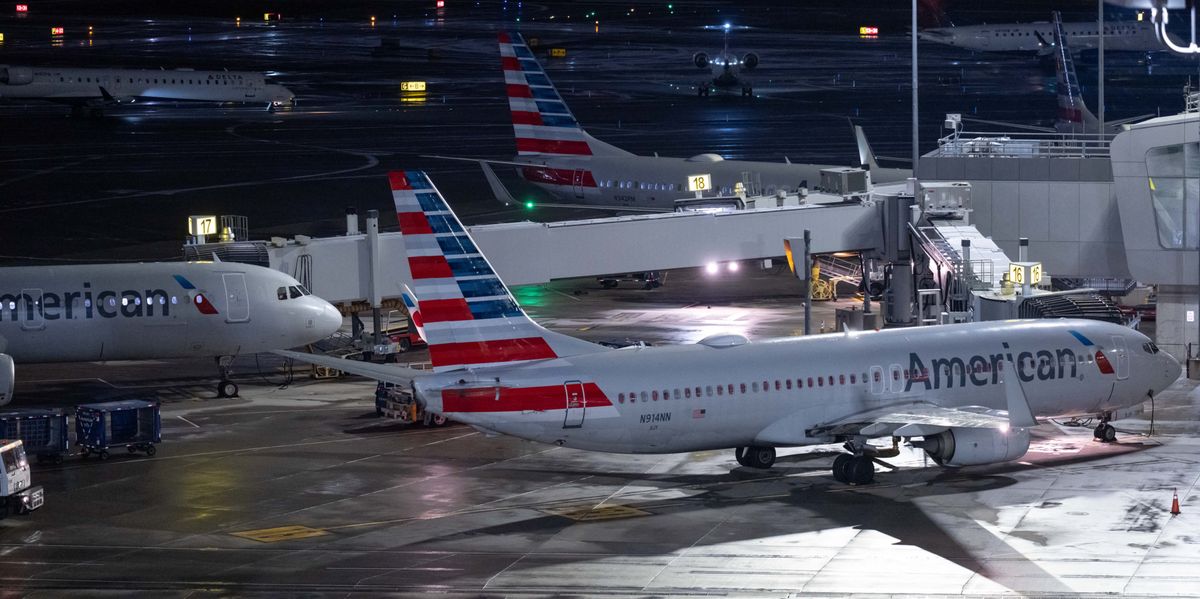
The airport terminal is usually a place of motion. But on a Saturday in late 2026, that motion stopped. For the first time in 25 years, the United States experienced a nationwide ground stop that lasted not minutes, but hours. The sky was closed. The runway lights stayed on, but no planes took off. For passengers, the result was a surreal freeze, a collective pause in the rhythm of American travel that left thousands of travelers stranded in waiting areas and confused about when, or if, they would ever reach their destinations. The disruption was so profound that it rippled out beyond the airline industry, causing significant logistical headaches for professional sports teams that rely on precise travel schedules. In the quiet of the terminals, a simple phrase began to circulate among the weary and the anxious: 4 years, 35 days. It was a metric of the anomaly, a way to measure just how long it had been since the air traffic control system suffered a failure of this magnitude, anchoring the event in a specific, almost absurdly precise timeframe of history.
The shutdown began without the dramatic alarm bells often associated with technical failures. Instead, it was a slow, systematic halting of all commercial flights across the country. By the time the full scope of the ground stop was understood, 12 hours had elapsed since the start. This duration turned a typical flight delay into a full-blown overnight ordeal for many. For families traveling for weddings, funerals, or urgent business meetings, the timeline became irrelevant; the only reality was the static of the radio and the unchanging status on the departure screens. The 12-hour mark was not just a measurement of time, but a marker of the depth of the interruption. It signaled that this was not a minor glitch that could be worked around, but a fundamental break in the system that required a complete reset of the national aviation grid.
While passengers dealt with the immediate consequences of the stop, the Trump administration officials moved to explain the cause. The explanation focused on the intersection of modern and legacy infrastructure. Officials claimed that new technologies recently added to the air traffic control system were placing unusual stress on older equipment. This is a critical distinction in understanding the event: it was not a failure of the new systems, nor a collapse of the old ones in isolation, but a conflict between them. The integration of advanced digital tools into a framework built decades ago created friction. This friction manifested as communication and radar failures. Radar is the eyes of the aviation system; without it, planes cannot be safely spaced and tracked. When the new software interacted poorly with the aging hardware, the result was a loss of the precise data needed to keep the sky open. The administration framed this as a temporary logistical challenge, a growing pain of modernization, rather than a systemic crisis.
The human element of this story is the traveler who is just trying to get from point A to point B.
As the hours ticked by, the focus shifted from the cause to the management of the fallout. Transportation Secretary Sean Duffy took to social media to address the public directly. His message was clear and pragmatic, acknowledging the chaos while emphasizing safety. Duffy warned that the resolution of the ground stop would not be immediate. "You will continue to see some delays and cancellations, as airlines reprogram flights and position planes or crews where they need them most," he stated. This quote is vital for understanding the next phase of the event. It indicates that the end of the ground stop does not equal the end of the disruption. Airlines operate on tight networks; a delay of 12 hours doesn't just push one flight back; it misaligns the crew rosters, the aircraft rotations, and the gate assignments for thousands of subsequent flights. Duffy’s warning was a call for patience, a recognition that the logistical puzzle of reassembling the aviation system would take longer than the technical fix itself.
The human element of this story is the traveler who is just trying to get from point A to point B. For them, the abstract concepts of 'radar failures' or 'technological stress' are secondary to the immediate reality of being stuck. The mention of professional sports teams in the briefing highlights how deeply woven air travel is into the fabric of national life. A team that misses a flight due to a ground stop can miss a game, or more dangerously, miss a deadline that impacts their competitive schedule. The chaos was not limited to leisure travelers; it affected the operational backbone of major industries. The 4 years, 35 days timeframe serves as a reminder of how rarely the system is pushed to this extreme, making each incident a learning curve for all stakeholders.
Despite the frustration, a recurring theme in the official response was the assurance that flying remains safe. Secretary Duffy emphasized this point, drawing a clear line between the logistical inconvenience of delays and the physical risk of flight. The ground stop, while disruptive, was a protective measure. By keeping planes on the ground when radar and communication systems were compromised, the system prioritized safety over schedule. This is the core tenet of air traffic control: if the tools to monitor the sky are broken, the sky is closed. The administration’s stance was neutral on the political implications of the failure, focusing instead on the operational recovery. The narrative was one of resilience: the system had been stressed, but it had held. The new technologies had strained the old equipment, but the result was not a crash, but a pause. The pause was long, painful, and historically significant, but it was the price of maintaining the highest safety standards in commercial aviation.
Now, as the dust settles on the 2026-11-14 incident, the focus has shifted to the ongoing repositioning of assets. The 12-hour ground stop was the event, but the days that followed are defined by the 'reprogramming' Duffy mentioned. Airlines are now in the mode of damage control, sorting out which crews are where and which planes are on which runways. The 4 years, 35 days gap between incidents suggests that the industry has been operating in a state of relative stability for over four years, making this disruption a jarring reminder of the fragility of such systems. The story of the 2026 ground stop is not just about a day of delays; it is a case study in how modern infrastructure transitions can create unexpected vulnerabilities. It is a narrative of a system pushed to its limits, a public that had to wait, and an administration that had to explain why the wait was necessary. The skies are open again, but the memory of that 12-hour silence will linger in the terminals and the travel plans of millions, a reminder that even the most reliable systems can stall, and that patience is the final ticket through the storm.