For the iconic bootmaker Dr Martens, the arrival of financial results on November 12, 2026, brought a sharp and painful reality check. As the company unveiled its performance for the first half of the fiscal year, investors reacted with immediate skepticism, sending shares in the footwear group tumbling by 15 percent. By the time the markets settled, the stock price had retreated to 54.10p, reflecting a growing anxiety among shareholders regarding the brand's ability to navigate a turbulent retail landscape.

The financial figures released by Dr Martens PLC for the 26 weeks ending September 27 painted a picture of a company struggling to meet expectations. The firm reported revenue of £290.4 million for the period, a figure that fell significantly short of the £318 million forecast previously set by analysts at the investment bank Peel Hunt. In the world of equity research, such a miss is rarely ignored; it serves as a signal that the company’s internal momentum is failing to match the projections of those who watch it most closely.

🇬🇧 Dr Martens faces make-or-break Christmas as UK sales plunge 21% https://t.co/VzEYQtQtZF
Peel Hunt, which had previously maintained a more optimistic outlook on the company, responded to the shortfall with a swift recalibration. The firm downgraded its rating on Dr Martens from 'Buy' to 'Add,' a move that suggests a more cautious approach to the stock. Perhaps more telling was the firm’s decision to slash its price target from 95p to 70p. This adjustment acts as a formal acknowledgment that the growth story surrounding the brand has hit a significant snag, forcing investors to reconsider the value of their holdings in the face of cooling demand.
For a brand synonymous with heavy, durable footwear, a lack of traditional autumn or winter conditions can be catastrophic.
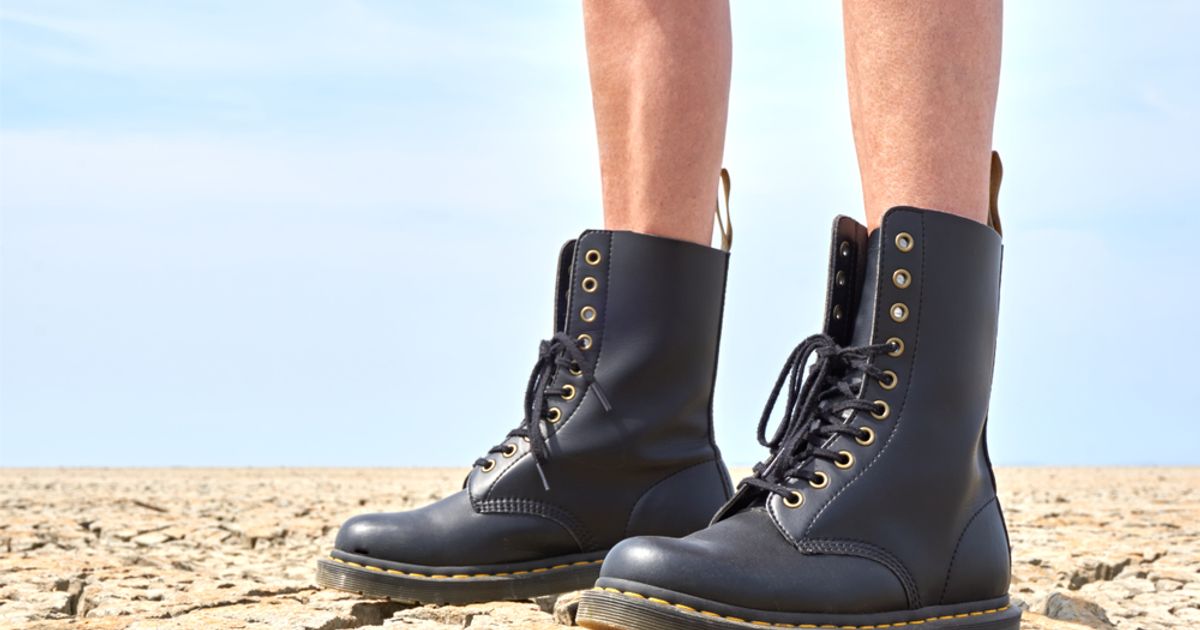
At the heart of the company’s struggle is a surprising culprit: the climate. Dr Martens reported a 20 percent decline in boot sales, a segment that serves as the bedrock of its business. Management attributed this sharp downturn specifically to unseasonably hot summer weather. For a brand synonymous with heavy, durable footwear, a lack of traditional autumn or winter conditions can be catastrophic. When the mercury stays high, the consumer impulse to invest in heavy-duty boots evaporates, leaving warehouses full of inventory that would otherwise be moving off shelves.

Dr. Martens (LSE:DOCS) closed down 14.7% on Thursday after weak boot sales. Would you judge the turnaround by a recovery in boots or by how well its shoes sell?
The impact of these sluggish sales was felt directly on the company’s balance sheet. Dr Martens reported that its adjusted pre-tax loss widened to £13.7 million during the first half of the year. This figure highlights the operational pressure on the business, as fixed costs remain constant even when the revenue stream falters. The UK market, in particular, proved to be a difficult environment, bearing the brunt of the sales decline and complicating the company's efforts to maintain profitability.
Despite the widening losses and the stinging market reaction, management sought to project a sense of stability. The company maintained its interim dividend at 0.85p per share, a decision that serves as a signal to shareholders that the firm intends to continue returning value, even during lean periods. It is a delicate balancing act: attempting to reassure investors of the brand's long-term health while simultaneously navigating a period of significant financial contraction.
As the company looks toward the remainder of the fiscal year, the focus has shifted entirely to the upcoming peak holiday trading season. Management has made it clear that the full-year performance remains contingent on these final months. For Dr Martens, the holiday period is no longer just a standard quarter; it is the critical window that will determine whether the company can recover from its summer slump or if the challenges of the first half will define the year as a whole. The brand now waits to see if the weather—and the shoppers—will finally turn in its favor.