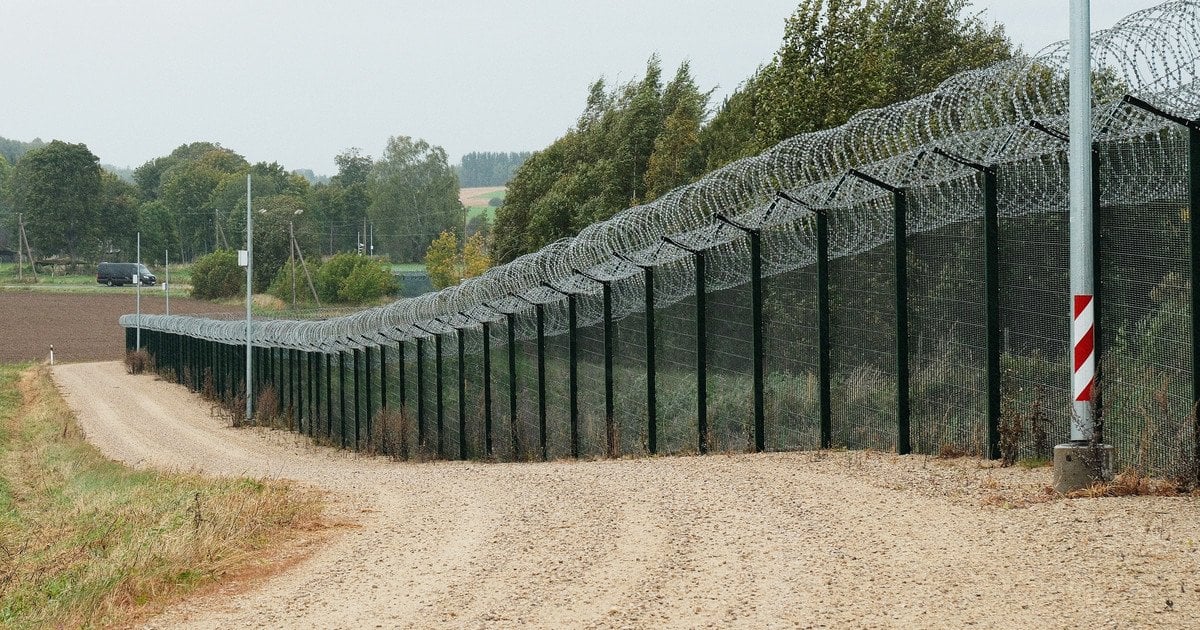
In a quiet corner of the Baltic Sea, the rhythm of life for a small nation has abruptly changed. For decades, the border between Estonia and Russia was a porous membrane, a place where commerce, transit, and the occasional traveler flowed back and forth. But as of this coming December, that membrane is about to vanish entirely. Estonia has announced that it will close every single border crossing point with Russia, a move that marks one of the most significant escalations in diplomatic and security tensions between the two nations in modern history. It is a decision that isolates the country’s eastern flank, turning a shared boundary into a sealed wall, and it stems from a grave accusation that Russian intelligence services have moved from covert threats to overt sabotage.

The trigger for this drastic step was not a military incursion, but a discovery that cut much deeper into the heart of national security. Estonian authorities uncovered clear evidence that Russia’s General Staff Intelligence Directorate, known as the GRU, had ordered sabotage against an Estonian defense industry enterprise. This finding shifted the diplomatic ground beneath Moscow’s feet. The direct involvement of the GRU in plotting against a Baltic defense company signaled that the threat was not just political, but a severe danger to Estonia’s security. The revelation that hostile actors were targeting the very industries meant to keep the state safe provided the moral and strategic justification for the border closure.
Foreign Minister Margus Tsahkna was the voice that delivered the news, framing the decision not as an act of aggression, but as a necessary shield. In his statement, Tsahkna was blunt about the causality: “Following the discovery of evidence of a sabotage plot organized by Russia against one of the defense industry companies, we will close our border crossings with Russia.” This was not a sudden impulse. It was a calculated response to a specific, documented threat. By sealing the border, Tallinn is removing the physical access points that intelligence operatives or agents of influence might use. The goal is twofold: to limit Russia’s ability to conduct hostile activities within Estonian territory and to tighten the noose on sanctions evasion. A closed border makes it significantly harder for goods and people to move under the radar, a logistical barrier that complements the broader international economic pressure on Russia.
Attempts to intimidate, destabilize the situation or blow up our security will not go unanswered.
The timing of this announcement is deeply significant, occurring in the wake of a violent event that shook the entire region. On November 13, a Russian strike hit a train near the Polish border. That attack, which threatened one of Europe’s major logistics corridors, had already prompted Tsahkna to declare that Russia is a threat to all of Europe, not just its immediate neighbors. By linking the closure of its own borders to the broader instability spilling out of the war in Ukraine, Estonia is arguing that its security is inextricably linked to the security of its neighbors. The train strike demonstrated that the danger is not contained; it radiates outward, demanding coordinated responses. Estonia’s move is part of that wider European realization that the status quo of porous borders and ambiguous threats is no longer tenable.
However, this is not an action taken in isolation. Tsahkna took the time to inform his counterparts from Finland, Latvia, and Lithuania, the other Baltic states and the nearby Nordic nation that share similar concerns about Russian security. This coordination is crucial. The Baltic states have long acted as a bloc, sharing intelligence and aligning their stances on Moscow. By keeping the neighbors in the loop, Estonia ensures that its border closure does not create a gap in the region’s defense lines or allow Russian actors to simply shift their operations to neighboring countries. The message to the Baltic community is one of solidarity: if one state is threatened, all must stand ready. The decision also serves as a warning to Moscow that its actions have consequences that extend beyond mere diplomatic notes. As Tsahkna stated, “Russia must realize that hostile actions against Estonia will have consequences. Attempts to intimidate, destabilize the situation or blow up our security will not go unanswered.”
The practical implications of closing all crossing points starting December 1 are substantial. For years, these borders have been the primary route for land travel between the EU and Russia. While the volume of traffic has already declined due to the war, the formal closure sends a symbolic message that is far louder than any statistical change in transit numbers. It declares that the relationship between Tallinn and Moscow has fundamentally broken down. There is no more room for the gray zones where diplomatic language might soften the reality of a hostile neighbor. The border is no longer a place of exchange; it is a line of containment. By removing the physical means of interaction, Estonia is removing the physical means of penetration, at least for hostile actors.
This move also reinforces the argument that sanctions are only effective when they are comprehensive. If borders remain open, loopholes for sanctions evasion persist. By closing the border, Estonia is plugging a key hole in the international pressure campaign. It aligns its domestic security measures with the broader economic strategy of the West. The Foreign Minister’s warning that “Russia must know that any hostile action against us will have consequences” underscores the firmness of this new reality.
