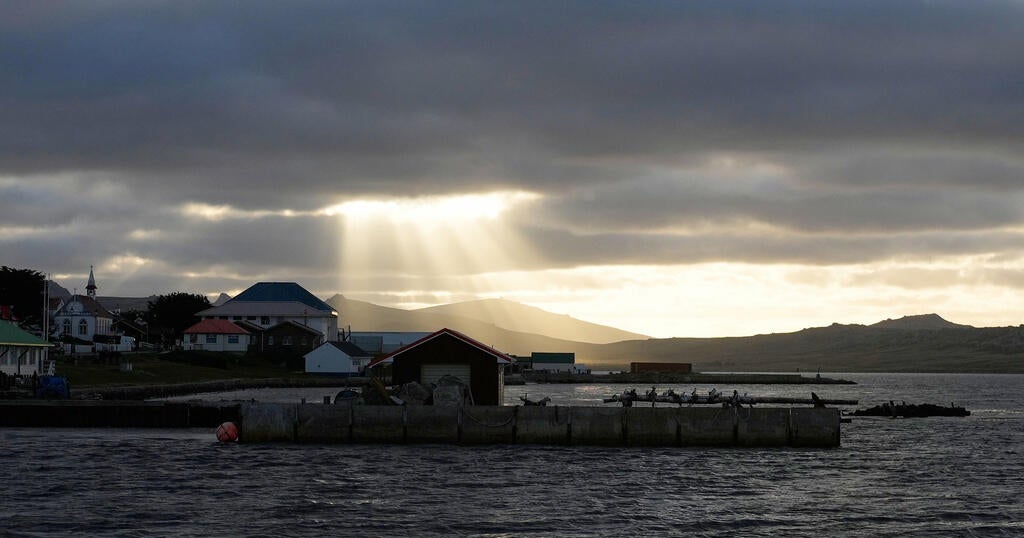
In the waters of the South Atlantic, a decades-old territorial dispute has resurfaced with renewed intensity. Argentina's latest bid to halt oil drilling near the Falkland Islands—known as the Malvinas in Argentina—has been decisively rejected by an international tribunal, clearing the way for energy exploration in these contested waters. The decision, announced in Hamburg, Germany, has reignited tensions between Argentina and the United Kingdom, echoing the conflict that led to war between the two nations over these remote islands more than four decades ago.

At the heart of the dispute lies the Sea Lion offshore oil project, located approximately 220 kilometers north of the Falkland Islands themselves. Argentina had petitioned the International Tribunal for the Law of the Sea to provisionally suspend drilling activities, arguing that the project violates United Nations resolutions and Argentina's sovereignty claims. However, the tribunal voted 18-3 against Argentina's request, with judges ruling that granting the suspension would have devastating consequences for the Falkland Islands' economy.
"In no way prejudges the tribunal's jurisdiction to deal with the underlying merits of the dispute," explained tribunal member Maurice Kamga regarding the decision, which specifically addressed only Argentina's request for a provisional suspension.
The tribunal acknowledged that halting drilling operations would cause substantial economic harm to the island community.
The Falkland Islands, situated 480 kilometers off Argentina's southeast coast, have been a source of contention since Argentina invaded the archipelago in 1982, sparking a brief but intense war with the United Kingdom. The conflict ended with British forces regaining control, and the islands have remained under British administration since 1833. In 2013, the approximately 3,500 Falkland Islanders voted overwhelmingly to remain British, a referendum that Argentina has consistently refused to recognize.
For the Falkland Islands, the oil project represents significant economic potential. The tribunal acknowledged that halting drilling operations would cause substantial economic harm to the island community. Rockhopper Exploration and Navitas Petroleum, the companies involved in the project, can now continue preparations for drilling operations scheduled to begin in March 2027, with actual oil production expected to commence a year later in 2028.
British officials welcomed the tribunal's decision as a vindication of their position on the islands. "We welcome the tribunal's decision," stated British Foreign Secretary Ed Miliband. "We call on the Argentine government to respect the right of the people of the Falkland Islands to determine their own future and to abandon broader economic pressure."
Miliband, along with Attorney General Ellie Reeves, emphasized that the outcome "validates London's sovereignty over the archipelago" and reinforces "the right of self-determination of the Falkland Islanders." The British government has consistently maintained that the Falkland Islanders have the right to determine their own political future.
Argentina's President Javier Milei, however, condemned the project and vowed to continue his country's long-standing sovereignty claim. "We are against the oil project and we will take measures against the companies involved in the development of the field," Milei declared, adding that "this decision is not the final word" in the dispute.
The tribunal's rejection of Argentina's request does not resolve the underlying sovereignty dispute between Argentina and the United Kingdom. Argentina has indicated it will continue pursuing its legal challenges against the oil project, while the United Kingdom maintains its commitment to the Falkland Islanders' right to self-determination.
As the scheduled drilling date approaches in 2027, the waters around the Falkland Islands remain a focal point in this enduring geopolitical standoff, with energy resources adding a new dimension to a conflict that has persisted for nearly two centuries.