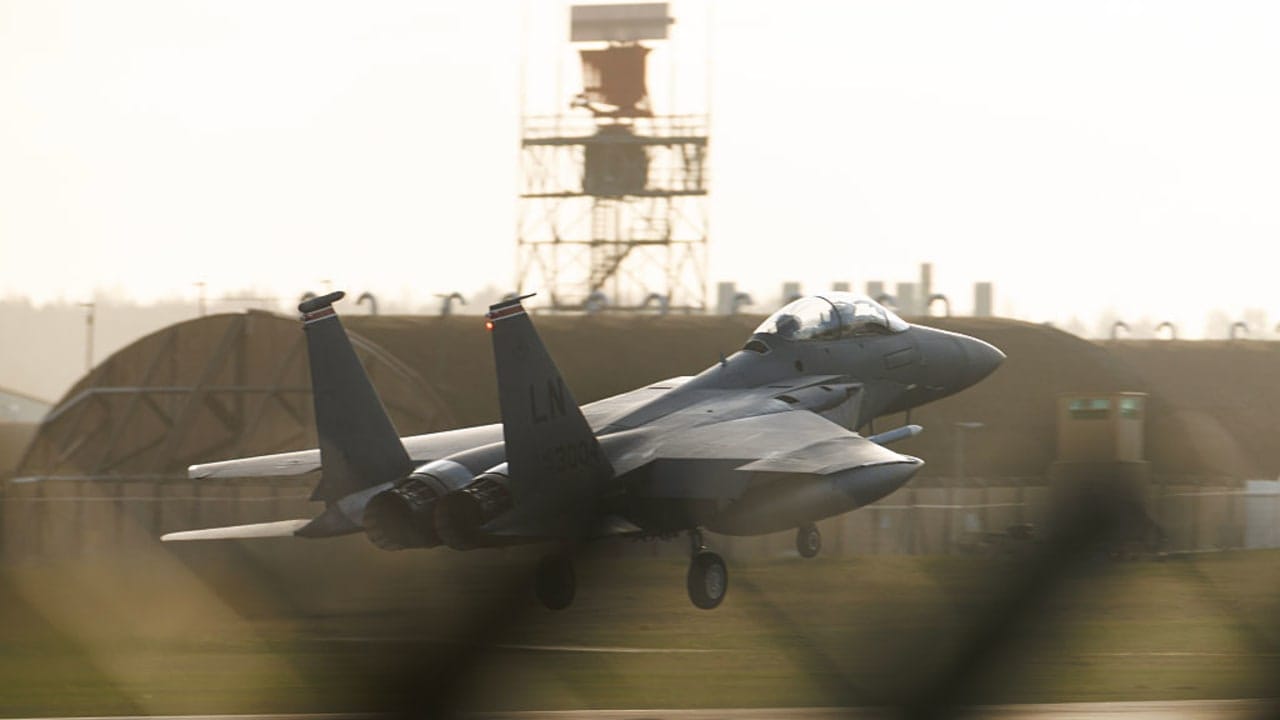
Following reports of potential Iranian-backed threats, the routine rhythm of military logistics at RAF Mildenhall in the United Kingdom was broken by a strategic exodus. In a move that underscores the growing volatility of Middle Eastern geopolitics, the United States military began evacuating multiple refueling aircraft from the base. Two of these refueling assets were diverted specifically to Germany, as part of a broader effort to reposition American hardware away from potential danger zones. This was not merely a routine training rotation; it was a calculated response to a specific, looming shadow: the threat of Iranian-backed retaliation.

When military assets move with such urgency, it is rarely due to a single isolated incident, but rather a response to a shifting landscape of risk. In this instance, the movement is a direct reaction to reports of potential Iranian-backed threats. The decision to relocate these aircraft reflects a fundamental principle of modern military security: if a location becomes a target, the most effective defense is to ensure the target is no longer there. Secretary of State Marco Rubio confirmed that the administration is actively addressing the threat by "moving people away from the threat."

JUST IN: The U.S. moved refueling tankers based at RAF Mildenhall in the United Kingdom to a base in Germany because of an unspecified Iran threat, according to a source familiar with the matter. Read more: https://t.co/j4eD93JxWA
This is not the first time the United States has felt the need to pull its most vital assets back from the British countryside. The current movement mirrors a significant operation that took place in October 2024. During that period, B-1 bombers were evacuated from RAF Fairford. The motivation then, much like now, was rooted in deep concerns over plots specifically targeting U.S. pilots. By looking at these two moments—the bomber relocation in 2024 and the refueling aircraft evacuation—a clear pattern emerges. The U.S. military is increasingly treating its presence in the UK as a variable that must be adjusted based on the intensity of external threats.
military is increasingly treating its presence in the UK as a variable that must be adjusted based on the intensity of external threats.
As the aircraft departed, the security environment on the ground underwent a parallel transformation. Officials upgraded the security status at both RAF Mildenhall and RAF Lakenheath to FPCON Charlie. In military terms, this represents an escalation in readiness and a heightened state of alert. This shift in posture is a physical manifestation of the intelligence being processed behind closed doors—a signal that the risk of an attack is significant enough to warrant more stringent controls and a more defensive stance for all personnel remaining on site.
To understand why these specific bases in the UK are under such scrutiny, one must look toward the geopolitical history of the region. Iran has a documented history of designating UK air bases used by the United States for strikes as legitimate targets for retaliation. This creates a complex situation for the U.S. military: the very bases that serve as essential hubs for American operations in Europe and the Middle East are also viewed by Tehran as high-value targets for response. The movement of aircraft is, therefore, a dance of deterrence and survival, attempting to maintain operational capability while minimizing the vulnerability of personnel and high-value equipment.