
On November 8, 2026, the sky over the Gaza Strip opened up, turning a landscape of makeshift survival into a scene of quiet desperation. For the families living in temporary shelters, the arrival of heavy rain is not a seasonal change to be weathered, but a direct threat to their very existence. Photojournalist Mahmoud Hamda captured the reality of this moment: Palestinian families wading through ankle-deep, murky water that has seeped into the very fabric of their homes. These are not houses of brick or stone, but tents—fragile membranes designed to shield against the wind, not to withstand a deluge.
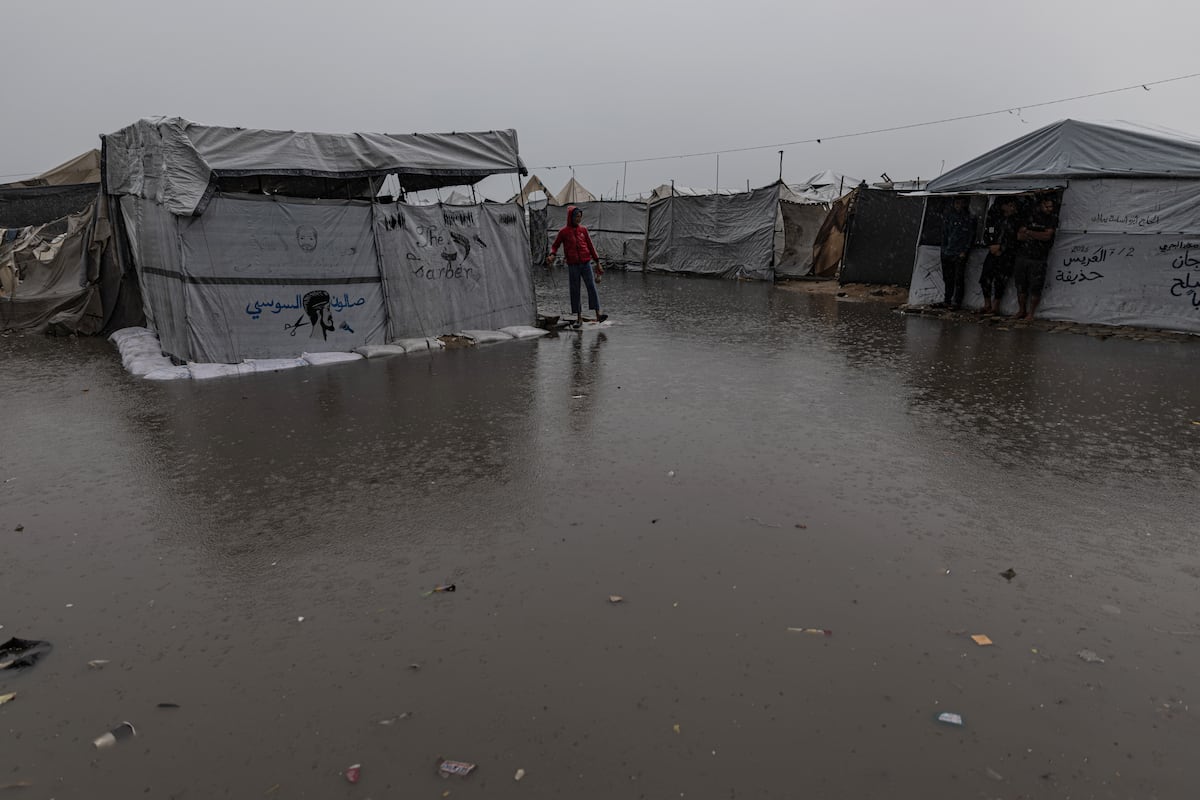
The scale of the crisis is visible in the numbers. Approximately 70,000 tents have been inundated by these heavy rains. Each of those tents represents a family, a collection of lives stripped of permanence and forced into a precarious dance with the weather. When water fills a tent, it does more than just dampen bedding or ruin meager supplies; it transforms the living space into a site of constant, exhausting labor. The struggle to drain the water, to keep the floor from becoming a swamp, is a relentless task for those already exhausted by displacement.
This is not a sudden misfortune, but a recurring trauma. For many of these families, this marks their fourth consecutive winter exposed to the elements. The passage of time has not brought the stability of permanent housing or even the relative security of more robust temporary shelters. Instead, the years have compounded the difficulty. The scarcity of essential shelter materials, such as tent poles and mobile homes, means that as the seasons turn, the protection available to these families remains stubbornly inadequate. They are caught in a cycle where the arrival of winter is met with the same lack of preparation and the same fundamental vulnerability as the years before.
The vulnerability of these families is inextricably linked to the state of the territory's infrastructure.
To understand why a heavy rain becomes a catastrophe in Gaza, one must look beneath the surface of the floodwaters. The vulnerability of these families is inextricably linked to the state of the territory's infrastructure. Israel's destruction of Gaza's essential systems—including water, sewage, and healthcare networks—has stripped away the layers of defense that usually mitigate the impact of natural weather events. In a functioning urban environment, drainage systems and sewage networks manage runoff and prevent the accumulation of stagnant water. In Gaza, those systems have been razed.
When the water rises in these camps, it is not clean. Because the sewage and water networks have been destroyed, the floodwaters are often a mixture of rainwater and waste. This creates a secondary, more insidious crisis: the onset of disease. The combination of damp living conditions, lack of clean water, and the destruction of the healthcare system creates a perfect storm for illness. For a population already struggling to survive, the presence of murky, stagnant water inside their primary place of refuge is a precursor to a public health emergency that the remaining medical infrastructure is ill-equipped to handle.
As the rain continues to fall, the reality for those in the 70,000 deluged tents remains one of profound instability. The struggle is both immediate—the physical act of bailing out water—and long-term, as the lack of poles, mobile homes, and infrastructure ensures that the next winter will likely bring the same challenges. For now, the families remain in the water, navigating a landscape where the basic necessity of shelter has become a battleground against the sky.