
On November 20, 2026, the quiet corridors of Danish diplomacy became the site of a sharp confrontation. The Danish government issued a decisive order: a Russian military attaché has been declared persona non grata and must depart the country within seven days. The term 'persona non grata' is a standard but severe tool in the toolkit of international relations, used when a state no longer wishes to host a specific foreign official, effectively severing their legal presence on national soil.
This expulsion was not a sudden, unannounced gesture. It followed a formal meeting between Danish authorities and the Russian ambassador, a session during which a diplomatic note was delivered to the Russian mission. While the mechanics of the meeting were formal, the underlying tension was palpable. In the world of high-stakes diplomacy, such notes often serve as the official vehicle for expressing grievances or announcing significant shifts in bilateral relations.
Despite the suddenness of the order, the Danish government has maintained a calculated silence regarding the specific reasons for the attaché's expulsion. In the delicate dance of international intelligence and statecraft, withholding the precise catalyst for such a move is often a strategic choice. By not disclosing the exact provocation, Denmark retains a degree of leverage, leaving the Kremlin to navigate the ambiguity of the decision.
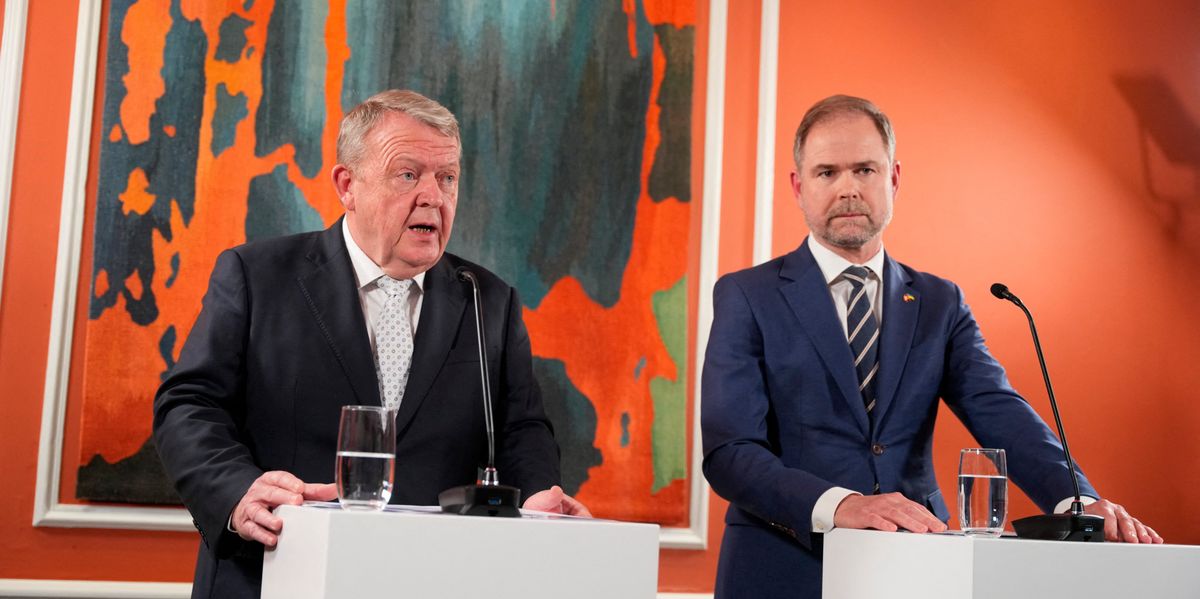
Foreign Minister Rasmussen announced that the Danish government intends to restrict the issuance of visas to Russian citizens.
This lack of transparency does not mean the move is without context. The expulsion of a military official—someone tasked with representing the defense interests of their home nation—is a significant escalation in the friction between Copenhagen and Moscow. It signals that the Danish state perceives a level of activity or intent from the attaché that is no longer compatible with the security or interests of the nation.
Beyond the removal of a single individual, Denmark is moving to implement broader systemic barriers. Foreign Minister Rasmussen announced that the Danish government intends to restrict the issuance of visas to Russian citizens. This policy is specifically targeted at non-urgent and non-essential travel, a move designed to prune the flow of people between the two nations without completely severing the lines of humanitarian or critical necessity.
Visa restrictions serve as a powerful lever of soft power. By making it more difficult for citizens of a particular nation to enter, a state can signal its disapproval and reduce the overall footprint of that nation's influence within its borders. For Denmark, this is not merely a local policy shift, but a component of a larger geopolitical realignment.
Minister Rasmussen did not stop at the borders of Denmark. In a move that seeks to transform a national decision into a continental standard, he called on other European Union member states to adopt similar visa restrictions. This appeal highlights a growing desire within the EU to move away from fragmented responses and toward a more unified, coordinated approach regarding Russia.

When individual nations act in isolation, the impact can be easily mitigated. However, when the European Union acts in concert, the collective weight of the bloc creates a much more formidable barrier. Rasmussen’s call is an attempt to synchronize the European response, ensuring that the tightening of relations is not just a Danish phenomenon, but a shared European stance.
The events of November 20, 2026, mark a definitive pivot in the relationship between Denmark and Russia. What began as a diplomatic meeting ended with an ultimatum and a plan for broader restrictions. The seven-day window given to the military attaché creates a ticking clock, a period of forced transition that underscores the urgency with which Denmark is treating this matter.
As the attaché prepares to leave and the new visa protocols are drafted, the broader implications for European security and diplomacy continue to unfold. Denmark’s actions suggest a growing conviction that the era of open, unhindered diplomatic and civilian movement with Russia is being replaced by a period of heightened scrutiny and controlled engagement.