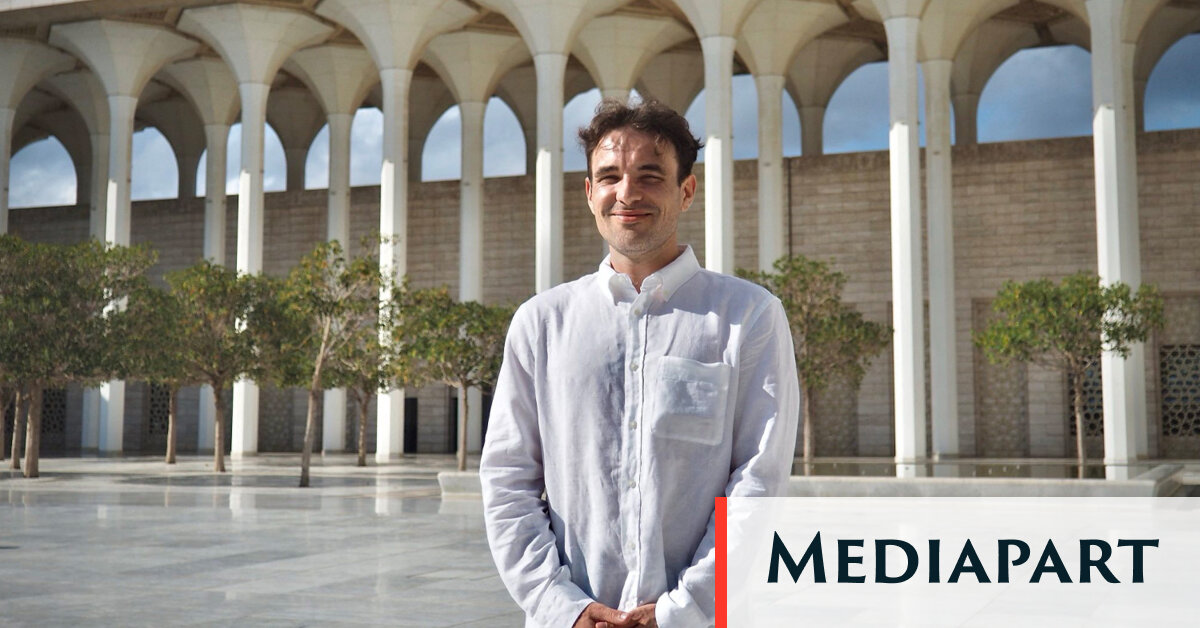
In the quiet domestic spaces of Sylvie Godard, a different kind of clock is ticking. It is not a timepiece on the wall, but the relentless, cumulative weight of 500 days that her son, Christophe Gleizes, has spent imprisoned in Algeria. Gleizes is a sports journalist who found himself caught in a legal ordeal that has now solidified into a formal verdict. The number 500 is not just a statistic; for Godard, it is a ledger of absence. She describes the emotional toll with stark clarity, noting that while the public might think in months or political cycles, her family measures his absence in days. For Gleizes himself, the timeframe is even more granular and punishing. As Godard expressed, for him, every single hour counts. This daily grind of separation has transformed a professional life into a personal ordeal that is testing the limits of a mother’s resilience.

The situation reached a critical and harrowing milestone when Christophe Gleizes received a seven-year prison sentence. This judicial decision changed the trajectory of the crisis from an uncertain detention to a concrete, lengthy period of incarceration. The legal system has spoken, and its words have carried the force of a heavy hammer, landing with finality on a family that has already been suspended in anxiety for over 500 days.
Sylvie Godard has become the face of this campaign, using her platform to highlight the inadequacy of the current diplomatic approach. Her criticism is not of the principle of negotiation, but of its pace. She argues that relying on political negotiation plans that stretch over six months is a luxury that her son cannot afford. The phrase she uses, stating that one cannot bet on political negotiation plans with a six-month horizon, cuts to the heart of the issue. Diplomacy operates on timelines that respect state interests, but Godard’s insistence on this urgency is a call for the government to recognize that the human cost of slow walking is being borne by her son. She is demanding that the state elevate the urgency of his case to match the severity of his sentence.
There is a growing frustration that the diplomatic channels are moving too slowly to match the gravity of the situation.
The fight for Gleizes’ release has extended well beyond his family circle, drawing in major organizations like Reporters Without Borders. They are intensifying their calls for a shift in tone from French authorities. The criticism directed at the government is that its current diplomatic posture is too soft, too tentative. There is a growing frustration that the diplomatic channels are moving too slowly to match the gravity of the situation. These organizations are pressing for a more assertive approach, suggesting that the current strategy of careful negotiation may be failing to signal the seriousness with which France takes the situation of its citizen in an Algerian jail.
The football community has also entered the fray, adding another layer of pressure and visibility to the case. The combined pressure from family, press freedom advocates, and the sports world is creating a crescendo of demand for action. The core of this demand is simple: the tone must be hardened. The call is for the government to move away from the slow, measured language of diplomatic protocols and adopt a more forceful, urgent stance. It is a push for a recognition that 500 days is a long time to wait, and seven years is a long time to live inside a cell.
As of now, the impasse remains. The seven-year sentence stands, and the 500-day count continues to tick forward. The family, the advocates, and the community are all pointing in the same direction: toward a government that is being urged to act with greater speed and severity. The story of Christophe Gleizes has evolved into a defining test of international diplomacy. The pressure is mounting, driven by the simple, heartbreaking reality that for Sylvie Godard, the clock is not a metaphor. It is a daily, hourly, and painful reality that demands a response commensurate with its urgency.