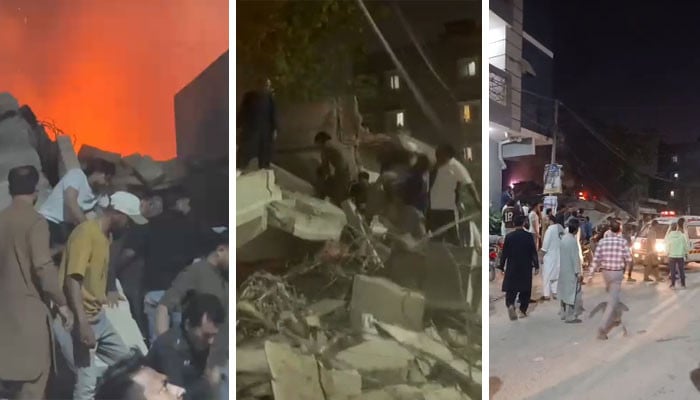
The hum of everyday life in the Mahmoodabad area of Karachi, a densely populated neighborhood where residential blocks sit close together, was abruptly severed on November 28, 2026. The event that shattered the local routine began near a well-known landmark for residents: Ambala Bakery. It was not a gradual failure or a slow leak that residents could have anticipated; it was a sudden, powerful shockwave that rippled outward from a single point. In neighborhoods like Mahmoodabad, where the architecture often prioritizes density over setbacks, the consequences of such a force are rarely contained. The explosion did not just damage a single household; it tore into the structural integrity of a residential building, sending a section of it into immediate collapse. The noise of the blast was likely accompanied by the roar of secondary elements, as the impact of the explosion ignited a fire that consumed the debris and the remaining structure. For the residents who heard the bang and saw the smoke rising, the transition from a normal day to a state of emergency was instantaneous. There is no time for processing when the ground beneath your feet gives way; there is only the instinct to move, to look, and to call for help.
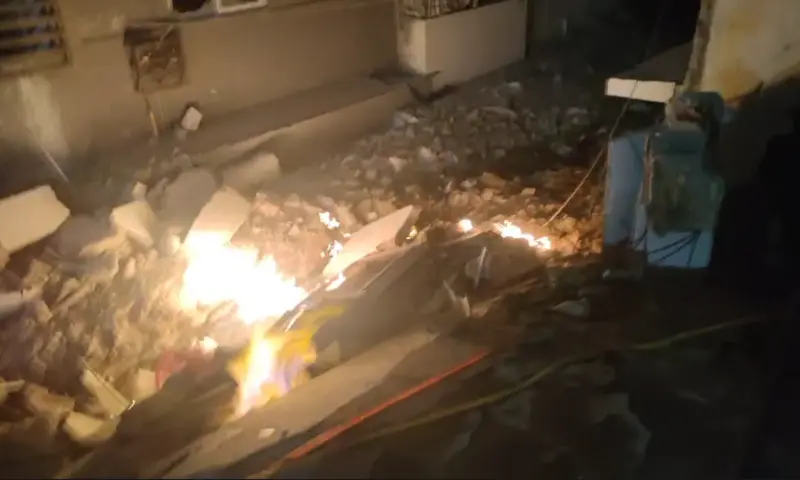
In the immediate aftermath of any major structural failure, the primary question is always why. What creates a force powerful enough to bring down part of a building? In this specific incident, initial reports from the scene pointed to a common household appliance as the trigger: a gas cylinder. Gas explosions are a persistent hazard in many urban environments across the region, where cooking is often done on portable cylinders that are stored in tightly packed kitchens and storage areas. A malfunction, a leak, or a spark can turn that stored energy into a destructive blast. While the exact mechanics of how that gas was ignited remain under investigation, the suspicion of a gas cylinder provides a crucial context for understanding the severity of the damage. It suggests a domestic origin, making the tragedy one that could have happened to any number of families in the area. As the dust began to settle, the focus of the first responders shifted from the immediate shock of the explosion to the forensic reality of the scene: identifying the source of the blast and assessing the extent of the destruction.
Perhaps the most urgent element of the crisis was not the building, but the people inside it. As rescue services and fire brigade teams rushed to the scene, the chaotic noise of the collapsing structure gave way to the organized, if frantic, work of clearing debris. Firefighters worked to contain the blaze that had been ignited by the blast, while rescue workers carefully sifted through the rubble. It is a delicate operation; one wrong move could trigger a secondary collapse. As the teams worked, a specific and terrifying detail emerged from the initial reports: a woman may have been inside the house at the time of the incident. This single fact transformed the event from a property damage incident into a potential loss of life. The uncertainty is what fuels the panic; without confirmed evidence that she escaped or that she was not present, every minute the search continued was defined by hope against the odds. The rescue teams had to balance their firefighting duties with the painstaking task of searching for survivors, a dual mandate that complicates every step of the operation.
It is a delicate operation; one wrong move could trigger a secondary collapse.
With the immediate danger of fire and collapse being managed, the focus turned to the question of accountability and prevention. Police authorities stated that the exact nature and cause of the explosion were under active investigation. This is a standard but critical procedural step. It means that the initial suspicion of a gas cylinder is not yet a confirmed fact; it is a hypothesis that must be verified. Investigators would need to examine the remains of the cylinder, check for signs of tampering or pre-existing damage, and analyze the burn patterns in the surrounding structure. Until this investigation is complete, the public is left with a narrative that is still taking shape. Further details on injuries to other residents and the full scale of the structural damage are pending. The police presence at the scene serves not just to manage the immediate rescue, but to secure the area as a crime scene of sorts, preserving evidence that could prevent a similar tragedy in the future. The road ahead for the Mahmoodabad community is one of waiting: waiting for the rubble to be fully cleared, waiting for the investigators to reach a conclusion, and waiting for the news that might finally explain what happened in that small space near Ambala Bakery.