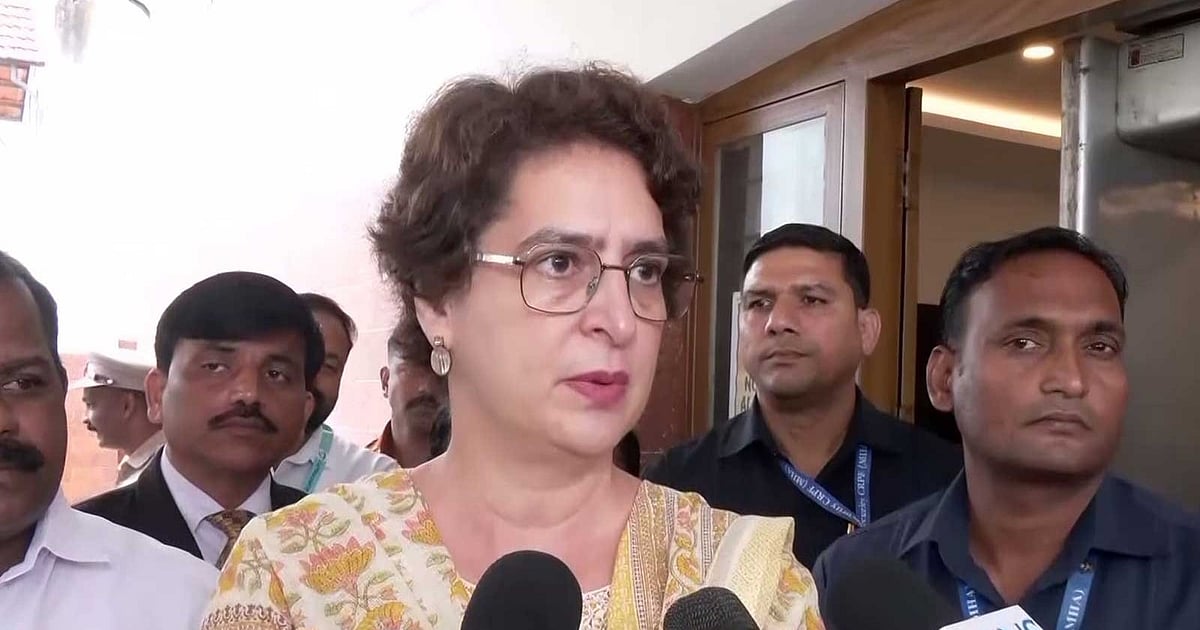
In the quiet political landscape of Wayanad, a new kind of conflict has emerged—one that is less about policy and more about the sanctity of memory. Priyanka Gandhi, the Congress Member of Parliament, stood before a crowd to defend a legacy that has been under siege for decades. The target of this latest political volley is not a piece of legislation or a budget, but a book: 'Belonging: A Journey of Love,' the new autobiography by her mother, former Congress President Sonia Gandhi.

For the Gandhi family, the publication of a memoir is more than a literary event; it is a reclamation of their own history. But for their political opponents, it is a provocation. The release of the book has ignited a firestorm, pitting the personal recollections of one of India's most prominent political figures against the sharp, ideological critiques of the Bharatiya Janata Party (BJP) and the Rashtriya Swayamsevak Sangh (RSS).
On Tuesday, the BJP launched a coordinated critique of the memoir, signaling that they viewed the book not as a personal reflection, but as a political tool. The objections were specific and pointed, targeting the most sensitive chapters of the Gandhi family's political history. The BJP accused Sonia Gandhi of using the pages of 'Belonging' to attempt a justification of the 1975 Emergency period, a controversial era in Indian governance.
In her view, the book is a vessel for a personal viewpoint that has been suppressed or distorted by outside forces for far too long.
Beyond the Emergency, the party leveled further accusations regarding the 1984 anti-Sikh riots. They claimed the autobiography serves as an attempt to clear her late husband, former Prime Minister Rajiv Gandhi, of involvement in those violent events. The rhetoric from the BJP was not merely critical; it was biting. In a move designed to mock the sentiment of the memoir, the party suggested that the title should be changed from 'Belonging' to 'Whitewashing,' implying that the book is an exercise in historical revisionism rather than a sincere account.
Responding to these accusations in Wayanad, Priyanka Gandhi did not shy away from the confrontation. She framed the attacks not as legitimate political discourse, but as a continuation of a long-standing pattern of misinformation. To Priyanka, the criticism is a paradox: the very entities that have spent years propagating what she calls lies about her mother are now the ones labeling her mother's truth as a falsehood.
"For many years, the BJP and RSS have been spreading lies about my mother and former Congress President Sonia Gandhi," Priyanka stated. "But now, when they are telling the truths of their life through a book, they are accusing it as a lie."
Her defense rests on a fundamental principle of individual agency. She argued that every person possesses the inherent right to share their own perspective and document their life story, regardless of how political opponents might interpret it. In her view, the book is a vessel for a personal viewpoint that has been suppressed or distorted by outside forces for far too long.
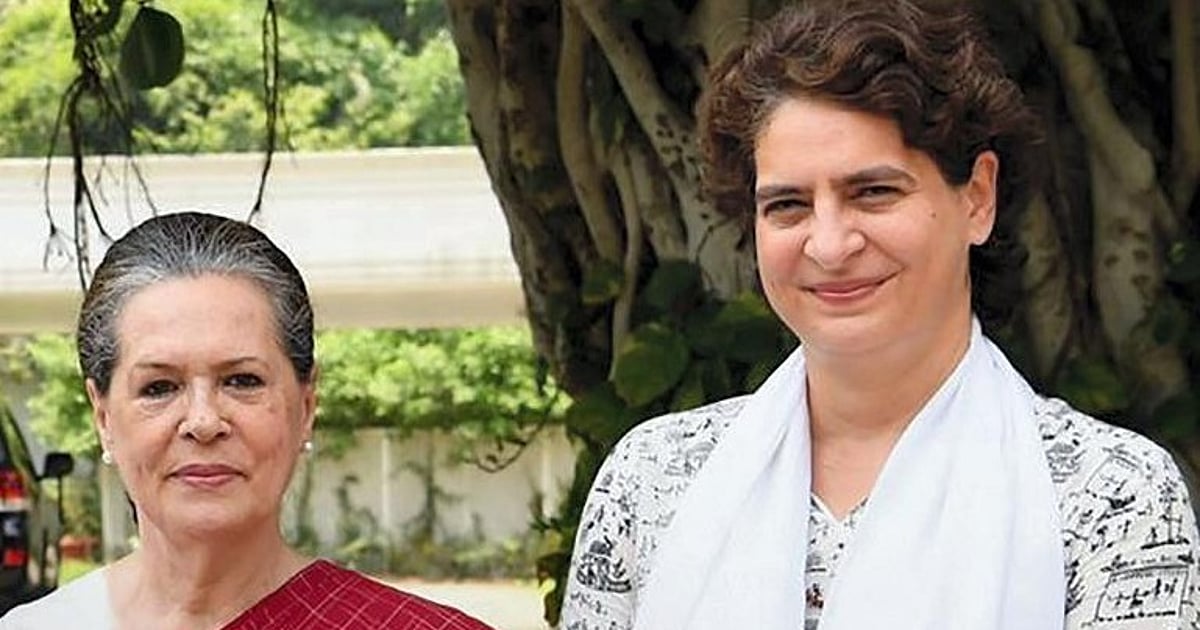
There is a layer of political irony that Priyanka Gandhi was quick to exploit. While the BJP and RSS have positioned themselves as the primary antagonists to the memoir, their intense scrutiny suggests a level of engagement that the Congress MP found almost amusing. Rather than being deterred by the accusations of 'whitewashing,' she leaned into the fact that her opponents are, in effect, studying the very text they seek to discredit.
"It pleases me that the BJP is reading my mother's book," Priyanka remarked, a comment that served to mock the opposition's preoccupation with the Gandhi family's narrative. It was a subtle way of suggesting that if the BJP is reading so closely, they are inadvertently participating in the very act of witnessing the history Sonia Gandhi is attempting to preserve.
The tension surrounding 'Belonging' is rooted in the heavy, often painful milestones of the 20th century. The years 1975 and 1984 remain deeply etched in the Indian political consciousness. By addressing these periods, Sonia Gandhi is stepping into a minefield of historical debate. The 1975 Emergency and the 1984 riots are not merely dates on a timeline; they are the pillars upon which much of the modern political identity in India is built.
When a political figure attempts to provide their own account of such transformative and traumatic events, it inevitably challenges the established narratives held by their rivals. The BJP's reaction suggests they view any attempt to re-examine these years through a Gandhi-centric lens as a threat to their own historical standing.
As it stands, the release of 'Belonging: A Journey of Love' has transformed a personal milestone into a frontline of the ongoing ideological struggle in India. The debate is no longer just about what happened in 1975 or 1984, but about who has the authority to tell those stories.
For the Congress party, the book is an act of truth-telling. For the BJP and RSS, it is an act of historical distortion. As the political dust settles from the initial release, the battle over the Gandhi legacy continues, proving that in the arena of Indian politics, even a memoir is a weapon of war.