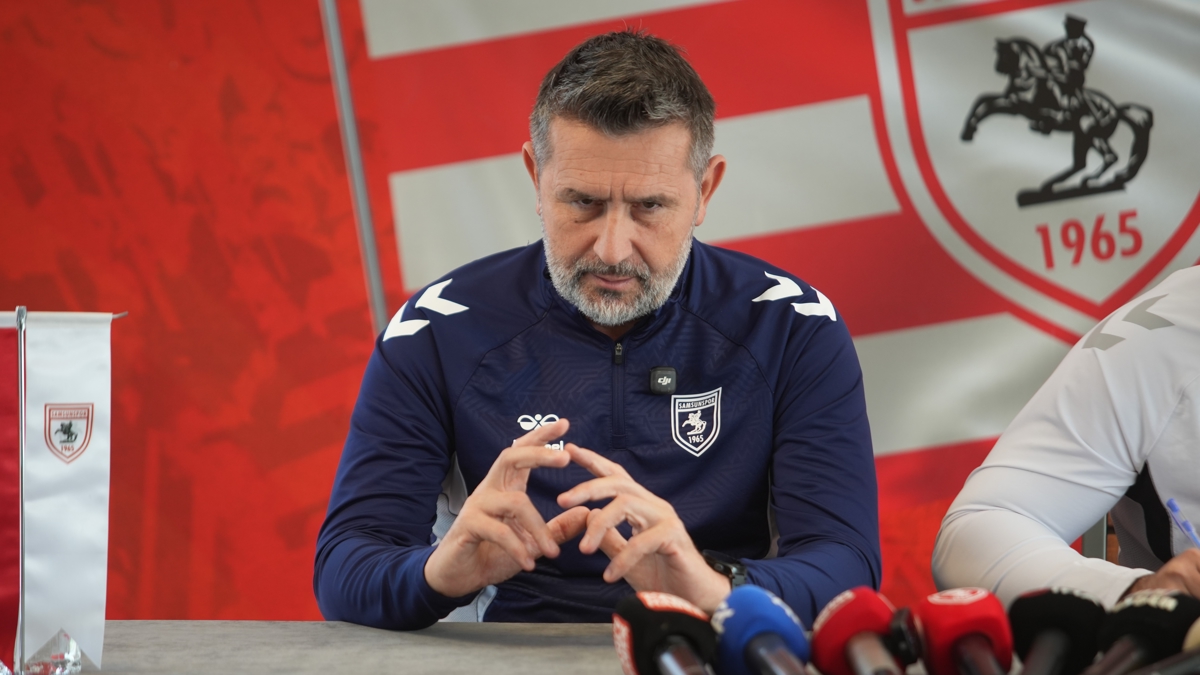
In the quiet corridors of the Nuri Asan facilities, Samsunspor head coach Nenad Bjelica addressed the media with a clarity that belied the pressure surrounding his team. The 13th week of the Super Lig loomed, and with it came the stark reality of football's unforgiving hierarchy. "Our goal is to stay in the league," Bjelica stated, his words carrying the weight of professional survival. The sentiment was simple yet profound: in a league where margins are measured in points and performances, existence itself is the prize.

Bjelica outlined a philosophy that eschews the extraordinary for the essential. "Our philosophy is not about performing extraordinary feats," he explained, "but rather accumulating points as quickly as possible to ensure survival." This pragmatic approach reflects the harsh mathematics of relegation battles, where consistency trumps brilliance. The coach acknowledged that his team often has to fall back defensively due to stress, despite their preference for possession-based football. This tactical adjustment speaks to the psychological toll of fighting against the drop, where every decision is filtered through the lens of necessity.
As Samsunspor prepared to face Genclerbirligi, Bjelica elevated the significance of the encounter. "We will play a six-point game against Genclerbirligi," he declared. In football terminology, a "six-point game" refers to a match between two direct rivals where the victor effectively gains six points in the standings—three for themselves and three denied to their opponent. With both teams embroiled in the relegation fight, this fixture represented more than three points; it was a pivotal moment that could define their seasons.
Samsunspor and Genclerbirligi find themselves in a precarious position, locked in a battle against the drop with their fellow strugglers.
The significance of this matchup extended beyond the immediate fixture list. Samsunspor and Genclerbirligi find themselves in a precarious position, locked in a battle against the drop with their fellow strugglers. In such circumstances, matches between direct rivals take on added importance, as victories against teams in similar situations can provide the psychological edge needed to secure survival. Bjelica's characterization of the game as a "six-point encounter" underscored the high stakes and the understanding that this match could prove decisive in their fight to remain in the top flight.
As the press conference concluded, Bjelica made one final plea that transcended tactical discussions: the need for fan support. In a relegation battle, the psychological boost provided by passionate supporters can be as valuable as any tactical adjustment. The coach emphasized that achieving their goal of staying in the top flight would require not only performances on the pitch but also the unwavering backing of their supporters. This acknowledgment of the fans' role highlighted the communal nature of the struggle, where the team's fight was also the community's fight.
With the match against Genclerbirligi on the horizon, Samsunspor stood at a critical juncture. Bjelica's clear-eyed assessment of their situation—focused on points, survival, and the immediate challenge—provided a roadmap for the weeks ahead. The six-point game against Genclerbirligi represented more than just another fixture; it was a defining moment in their season, a chance to seize control of their destiny. As the team prepared to take the field, the weight of expectation hung heavy, but so too did the possibility of turning their season around, one point at a time.