
In the high-stakes theater of international cricket, the truth often arrives not in a sudden burst of light, but in a slow, agonizing leak. For eight years, the 'sandpaper scandal' has stood as a singular, jagged monument in the history of Australian sport—a moment of perceived betrayal that reshaped the reputations of its players and the integrity of its governing body. But in November 2026, the silence that followed the 2018 events in Cape Town began to fracture. What was once framed as the rogue actions of a few has been recast by new testimony as a systemic, collective secret.

On November 18, 2026, the narrative shifted when former Australian cricketer Cameron Bancroft published a sprawling, 4,000-word account in The West Australian. Bancroft, whose career was irrevocably altered by the events in South Africa, did not merely recount his own actions; he offered a sweeping indictment of the culture surrounding him. His testimony suggests that the ball-tampering plot was not a localized conspiracy of specific players, but a reality known to all players and coaches present in Cape Town during that fateful period.
This is not an isolated claim. The publication of Bancroft's account arrived alongside the release of an autobiography by Usman Khawaja, which acted as a secondary, equally potent catalyst for the debate. Khawaja’s perspective provides a visceral look at the internal pressure of maintaining a facade while the integrity of the game hung in the balance.
We knew what was going on, and we have to take it as a team, and so I was always of that stance.
Khawaja’s words strip away the notion of individual culpability, replacing it with the heavy concept of team complicity. He describes a locker room where the lines between individual responsibility and group identity were blurred by a shared knowledge of the cheating.
"It was all of us," Khawaja stated, emphasizing that the knowledge was not confined to specific roles. "Not the batters, not the bowlers, not the staff. All of us. In an ideal world, I don't want to do this. I don't want to be the one who comes out and talks about the truth. The issue is that I genuinely thought after eight years the truth would have been out by now."
For Khawaja, the issue was not just the act itself, but the enduring nature of the deception. He recalled attempting to address the matter within the team dynamics even in the immediate aftermath, urging a sense of shared accountability: "Even in the change rooms when I was talking to them after the game. I said, 'Take this as a team'. We did this as a team. We knew what was going on, and we have to take it as a team, and so I was always of that stance."
As these allegations surged, the response from the current leadership was swift and emphatic. In Sydney, captain Pat Cummins faced the storm in a 68-minute press conference, a marathon session intended to stabilize a narrative that seemed to be spinning out of control. Cummins used the duration of the briefing to deny the version of events presented by Khawaja, standing in direct opposition to the claim that the entire squad was aware of the tampering.
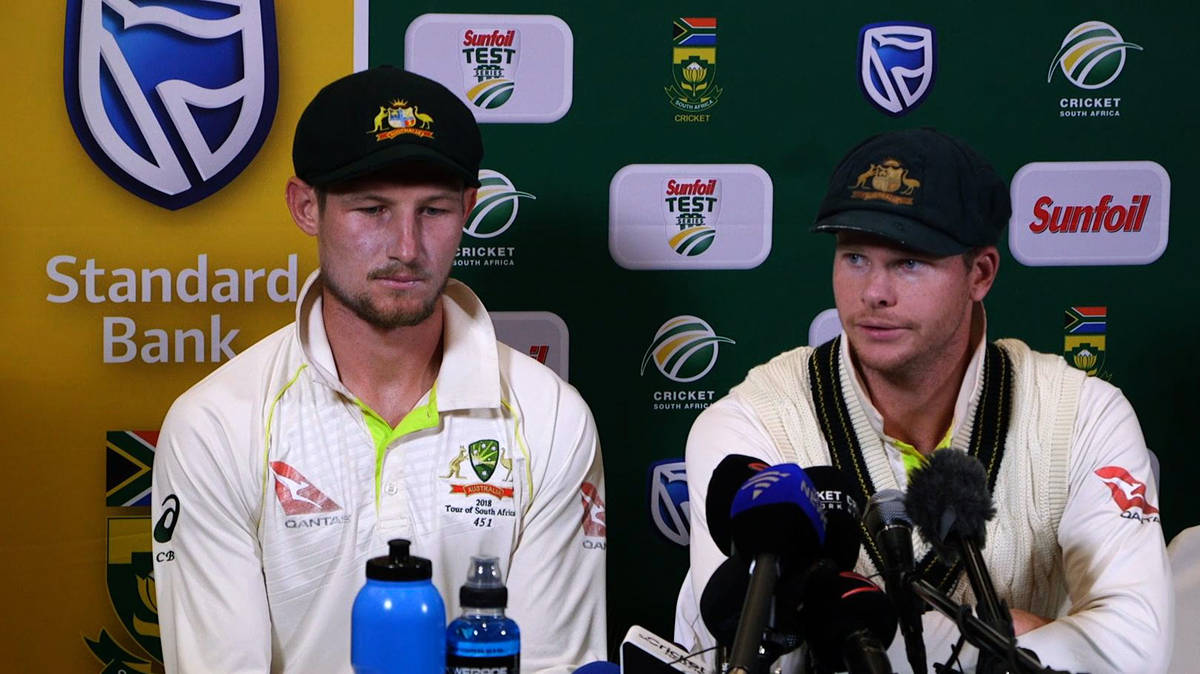
This clash of testimonies creates a profound tension within the sport. On one side, the veteran players and those directly involved in the 2018 incident suggest a culture of total awareness; on the other, the current leadership maintains that the scandal was an isolated breach rather than a team-wide conspiracy. The discrepancy places Cricket Australia and former coach Darren Lehmann back under a microscope, as the public seeks to reconcile these two vastly different versions of history.
To understand why these new claims are so disruptive, one must look back at the findings of the original Cricket Australia investigation. That inquiry established a specific hierarchy of the plot: it concluded that David Warner had developed the plan and subsequently instructed Bancroft to carry out the cheating.
Warner, who has since continued his career with significant resilience—playing for Australia 133 times following his ban—remains a central figure in this ongoing drama. While the original investigation focused on the mechanics of the plan and the chain of command between Warner and Bancroft, the new testimonies from Khawaja and Bancroft suggest the investigation may have missed the broader social reality of the dressing room: the silent consensus of those who were not officially implicated but were, allegedly, fully aware.
As of now, the scandal has been reignited, not as a closed chapter of sports history, but as an open wound. The tension between the official findings of Cricket Australia and the personal accounts of the men who were in the room in Cape Town remains unresolved. The question is no longer just about what happened with a piece of sandpaper, but about the nature of truth within a team and whether a secret of that magnitude can ever truly be contained by a single investigation.