
Imagine a structure so massive that it does more than just stand; it actively erases. It throws a shadow that falls not just on grass, but on headstones, on the eternal flame that burns for the fallen, and on the very principles of democracy that the family believes it represents. This is the central argument of a new legal battle that has pitted the Kennedy family against the current administration’s ambitions for Washington, D.C. The dispute is not merely about architecture; it is a test of who controls the narrative of American memory, and whether the physical landscape of the nation’s capital can be reshaped without the consent of those whose legacies are embedded in its soil.
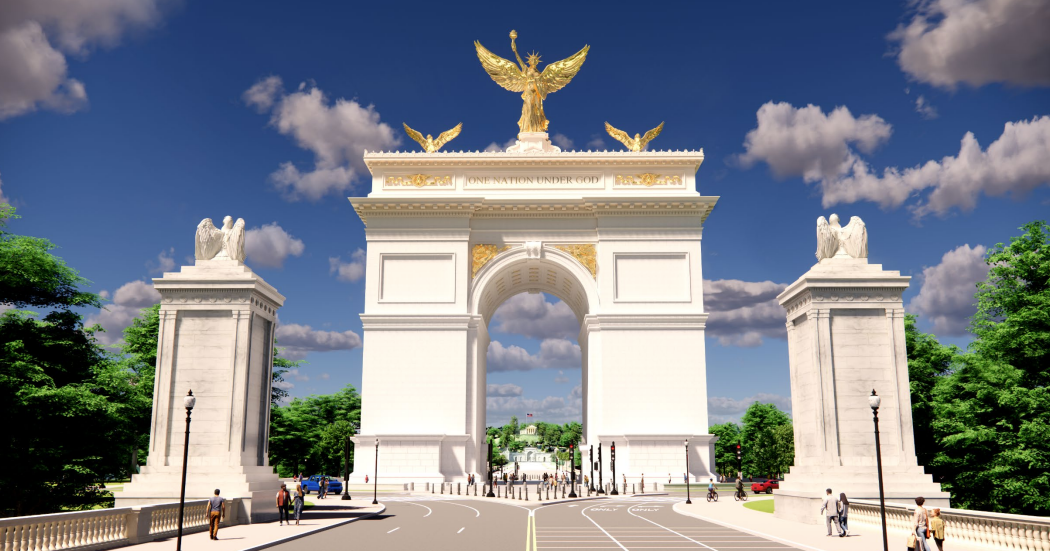
The project at issue is a grand arch intended to mark a significant anniversary: 250 years of American independence. Part of a series of commemorative projects pushed by President Donald J. Trump, the arch is planned for a location directly across the Potomac River from the Lincoln Memorial. The intent, according to the administration, is celebratory—a marker for a milestone in the nation’s history. However, critics argue that the administration has bypassed proper legal processes to fast-track the structure. The result is a clash between a vision of triumphal public art and the strict legal safeguards designed to protect the sanctity of Arlington National Cemetery, located just nearby.
For the Kennedy family, the location of the proposed arch is a personal violation. In court filings, nine members of the family, including descendants of both Robert F. Kennedy and Ted Kennedy, intervened as plaintiffs. They are joining forces with the City of Washington, D.C., and the Commonwealth of Virginia. Their argument is precise: the arch, as currently designed, would block the sightlines of the Kennedy gravesites. More critically, they argue it would cast physical shadows over the “Eternal Flame” that burns at the central point of the cemetery. To the family, this is not a matter of aesthetics; it is a matter of honor. The Kennedy gravesites are not just family plots; they are part of a larger landscape that includes the resting places of servicemen and women who made the ultimate sacrifice for the country. A structure that permanently darkens these sites is, to them, an insult to their memory.
It suggests that the approval process was not just procedurally flawed, but philosophically dangerous.
The family’s stance is articulated with striking rhetorical power in their legal documents. They wrote that a “towering arch casting shadows across the graves of our father, mother, and uncles, as well as the graves of so many who have served our country, would also cast a shadow over our democratic principles, undermining the safeguards established by our elected representatives to protect this hallowed ground for generations to come.” This phrasing is significant. It suggests that the approval process was not just procedurally flawed, but philosophically dangerous. By prioritizing a rapid commemorative project over the established protections of the cemetery, they argue the administration is weakening the checks and balances that keep the nation’s sacred spaces intact.
The pressure on the family is real, because momentum had been building for the arch. The National Capital Planning Commission, the body responsible for reviewing development plans in the capital, voted to approve the plans for the arch just last week. This approval signaled that the regulatory hurdles had been cleared, at least in the view of the commission. The timeline is tight. The plaintiffs are seeking to prevent the groundbreaking, which was scheduled for the current month. The legal battle is now a race against the clock. If the ground is broken, the legal arguments become harder to sustain, and the shadow will physically fall.
In this race, the Kennedies are not fighting alone in the courtroom. A federal judge has already weighed in, noting that the plan is likely illegal. This judicial caution provides the family with a powerful tool. The judge’s observation suggests that the legal loopholes the administration may have used to fast-track the project are not defensible under existing law. The plaintiffs are using this to argue that the commission’s approval was premature and violated the statutory requirements for such a monumental change to the landscape near the cemetery. The legal standard is high: the government must prove that its project does not negatively impact protected views and sites. The Kennedies are arguing that the shadow it creates is a permanent, negative impact.
As of now, the situation hangs in the balance. The arch is not yet built, and the lawsuit is active. The Kennedy family, including Robert F. Kennedy Jr., has been a visible part of this effort, bringing the political and personal weight of their name to the cause. The core of their argument remains that a structure that permanently casts a shadow over the graves of servicemen and women, including the Kennedy Gravesites, is unacceptable. It is a fight for the dignity of the dead and the integrity of the law. In Washington, D.C., where every stone is a symbol, the Kennedies are arguing that some symbols must remain in the light.
