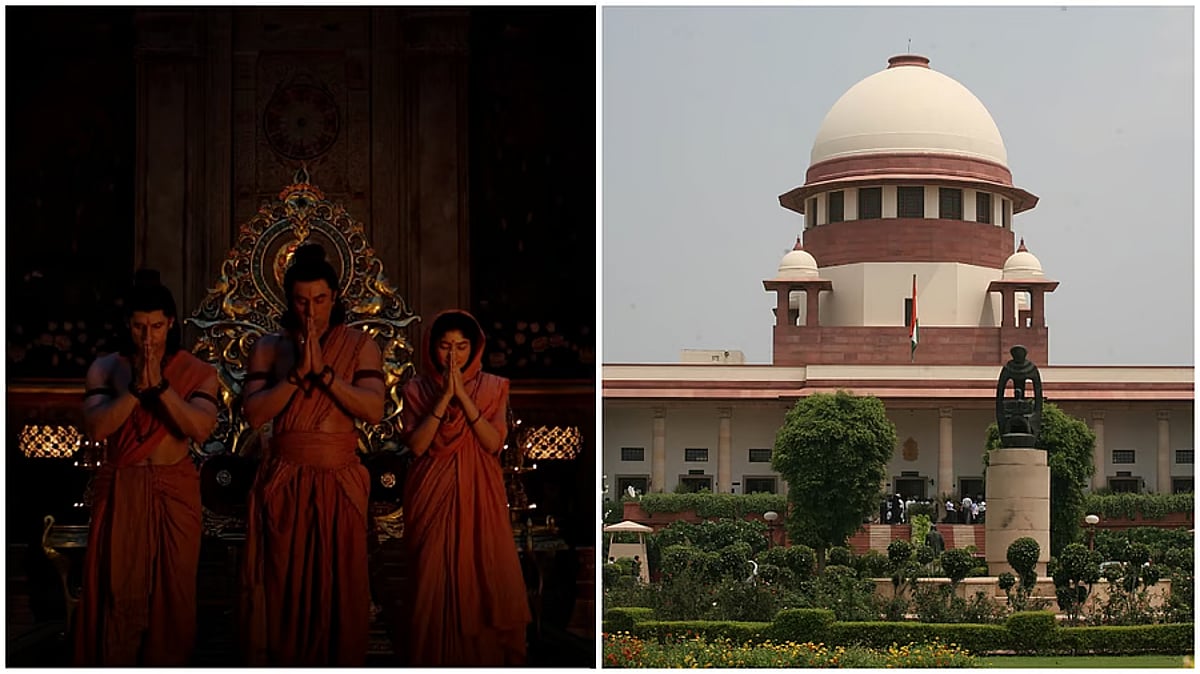
In a defense of artistic expression, India's Supreme Court has declined to intervene in the controversy surrounding the film 'Ramayana: Rise of a Legend.' The court, led by Chief Justice Surya Kant, rejected a request for an urgent hearing on a petition that alleged historical distortions in the movie, which had already been released to theaters on November 5. The judges' response was pragmatic, suggesting that counter-views on the epic should be expressed through creative works rather than legal challenges.

'Ramayana: Rise of a Legend,' directed by Nitesh Tiwari, became the center of a debate when a petition claimed that the film contained factual inaccuracies regarding the ancient epic. The petitioners argued that these distortions could mislead audiences. The film, which features actors like Sai Pallavi and Ranbir Kapoor, had already been in theaters when the matter reached the Supreme Court.
The Supreme Court's refusal to hear the case urgently was rooted in practical considerations. As Chief Justice Surya Kant noted, "The movie has already been released. Those who wanted to watch it have already seen it." This acknowledgment highlighted the futility of attempting to halt a film's exhibition after it had already reached the public. The court emphasized that public criticism or praise of artistic works is a normal and respectable process.
As Chief Justice Surya Kant noted, "The movie has already been released.
Justice Joymalya Bagchi offered a constructive suggestion to the petitioners: "They made a movie as they understand; you make a movie as you understand. Don't waste the time of the court. If you have a counter view about the epic, make a movie based on that." This statement encapsulated the court's stance on creative freedom—rather than seeking judicial intervention, those with differing interpretations should express them through their own artistic works.
'Ramayana: Rise of a Legend' continues its theatrical run, having weathered the legal challenge. The Supreme Court's decision has reinforced the idea that artistic disputes are best resolved through public debate and counter-creativity rather than judicial intervention.