
For two years, the shadow of Bangladesh’s former Prime Minister has loomed over the Ganges-Brahmaputra delta, suspended in exile across the border. Now, that shadow is moving. Sheikh Hasina has announced a specific day for her return: December 16, the nation’s Victory Day. It is a choice that transforms a simple repatriation into a theatrical challenge, one that pits the ousted leader’s demand for dignity against a government determined to neutralize her influence before the holiday. The standoff is not just about a woman coming home; it is about who controls the narrative of Bangladesh’s most volatile transition in decades.

Hasina’s spokesperson, speaking to the press, framed the request with a logic that is as bureaucratic as it is personal. "Since I came to India on a Bangladesh flight on August 5, 2024," the aide stated, "Biman Bangladesh Airlines should send a flight to take me back from Delhi." The argument relies on a reciprocal obligation: because the state facilitated her departure when she was in power, the state must facilitate her return when she is not. It is a plea for procedural symmetry, but it carries a heavy political weight. The aide added that since Hasina was expelled on grounds of constitutional violations, it is the government's responsibility to ensure she returns to Bangladesh with honor on that specific day. For Hasina, who has stayed in India for over two years, this is not merely a logistical detail; it is a final assertion of status.
The selection of December 16 is no accident. This is Victory Day, the anniversary of the end of the 1971 Liberation War, a date that defines the moral bedrock of the Bengali nation. By aligning her return with the most sacred holiday in the country's calendar, Hasina is weaving herself back into the fabric of the national story. She is not just returning to Dhaka; she is attempting to reclaim the symbol of national sovereignty at the moment it is most contested. The timing suggests she believes that if she can land on that day, the government will be trapped—unable to treat a homecoming for a national holiday as a mundane arrest without appearing to trample on the collective memory of 1971. It is a high-stakes gamble, betting that the weight of tradition will outweigh the power of the state.
The anger directed at India spills over into the domestic political sphere with venomous intensity.
In Dhaka, the response was swift and unambiguous. A minister warned that Hasina will be arrested upon her return. Government sources told local media that if Hasina returns to the country, they will definitely arrest her. There is a chilling finality to that statement. It strips the date of any ceremonial warmth. In the government's view, Hasina is not a dignitary coming home for a holiday; she is a fugitive whose presence poses a security threat. Furthermore, officials have stated that no official talks have taken place with India regarding sending a plane to bring her. The silence from the new administration is itself a tactic. By refusing to negotiate the flight, they deny Hasina the "honor" she seeks. If the government does not send the plane, the diplomatic burden shifts entirely to her, forcing her to rely on the very country that hosts her in exile.
The diplomatic friction with India adds a layer of complexity that keeps this story from being a simple domestic dispute. Reports suggest that India had conditions regarding military aircraft or border escorts for any potential transfer. While the confirmed date highlights the ongoing tension, the fact that Hasina has remained in India for over two years suggests a protective relationship. India is not just providing shelter; it is providing a stage. From Delhi, Hasina has continued to engage in political activities, a fact that has enraged critics within Bangladesh. For the new government, allowing her to orchestrate a return on their terms is a loss of control. For India, it is a display of influence over a neighbor that has recently broken with its traditional alignment. The unspoken message is that Hasina's exile is not just a personal tragedy, but a geopolitical asset that New Delhi is unwilling to relinquish cheaply.
The anger directed at India spills over into the domestic political sphere with venomous intensity. Nahid Islam, a Bangladeshi politician, has accused India of providing shelter to Hasina and allowing her to engage in political activities from Indian soil. In a blistering attack, he called for a united stance against what he sees as external meddling. "India is providing shelter to a 'murder plot' against Bangladesh," Islam claimed. This rhetoric escalates the conflict from a legal dispute to an existential threat. By characterizing Hasina’s presence in India as a "murder plot," Islam frames the entire situation as a conspiracy that requires national defense. It is a potent argument in a country where the trauma of 1971 is still fresh, linking the current political instability to foreign aggression. This accusation isolates the government further, rallying the populace against a common external enemy and making compromise with Hasina politically toxic.
Underlying all the theatrical gestures is the cold legal reality of Hasina's expulsion. She was removed from office on grounds of constitutional violations. The new government argues that these violations are the reason she must be arrested. Hasina’s counter-argument is that because the state expelled her for constitutional reasons, the state must uphold constitutional decorum in her return. This is a philosophical battle over the rule of law. Is a prime minister a subject of the state, subject to its police power, or a sovereign actor protected by diplomatic protocol? Hasina argues for the latter, using the state's own machinery (Biman Airlines) as her shield. The government argues for the former, asserting that exile does not grant immunity. This legal ambiguity keeps her in limbo, neither fully in Dhaka nor fully in Delhi, but hovering in a space where the rules are being rewritten in real-time.
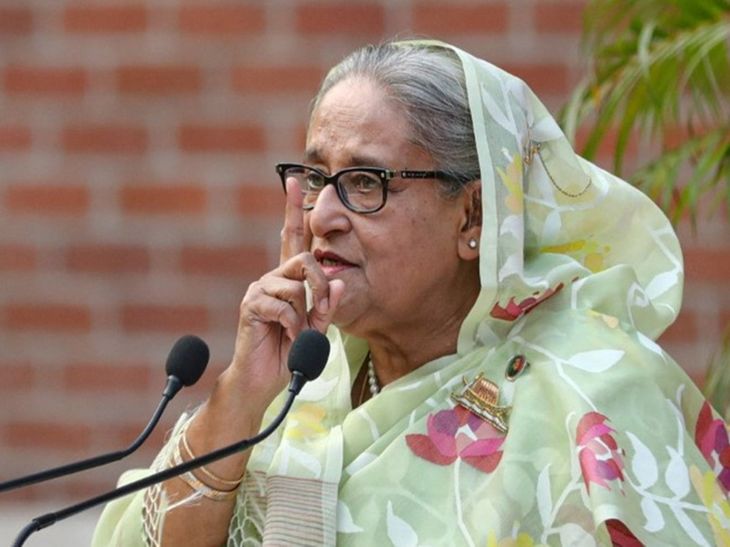
As December 16 approaches, the world watches two planes that are not yet in the sky. One is a Biman Bangladesh Airlines jet, which Hasina demands be filled with fuel and permission. The other is the legal framework of the new government, which demands her handcuffs be ready on the tarmac. Hasina has made her move, pinning a date to the calendar that resonates with the entire nation. Whether she lands as a returning leader or is dragged off a plane as a prisoner, the result will define the character of this new Bangladesh. For now, the silence of the government and the resolve of the exile stand in stark contrast, a standoff where the next move belongs to a leader who is no longer in charge, but refuses to be offstage.