
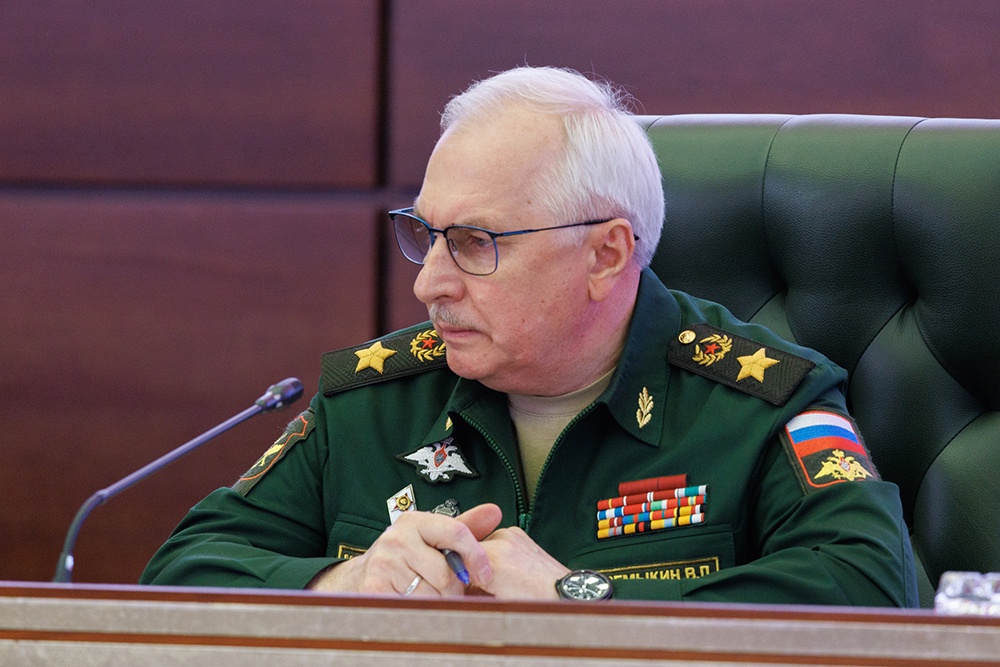
When Viktor Goremykin stepped up to the podium at an expanded Defense Ministry board meeting on November 18, 2026, the headline of his briefing was unmistakable: Russia had reached 89.3 % of its 2026 recruitment target for contract military service and 98.7 % of the goal for its Unmanned Systems Forces. "As of today, we have met 89.3% of the 2026 recruitment target for contract military service and 98.7% of the target for the Unmanned Systems Forces," he declared, framing the statistics as a sign of a recruitment engine that is humming louder than ever.
The two percentages reflect different aspects of Russia's military recruitment efforts. The 89.3 % figure represents the overall contract‑service plan for the entire armed forces. The 98.7 % number applies specifically to the Unmanned Systems Forces. Both numbers are derived from the same recruitment mechanism—military service contracts—yet the near‑completion of the unmanned‑systems quota suggests a particular emphasis on staffing that branch.
At the heart of the achievement lies a network of 96 contract recruitment centers spread across 87 Russian regions. These centers, Goremykin emphasized, are the "primary staffing channel for the Russian Armed Forces." The geographic reach of 96 points in 87 regions demonstrates the ministry's commitment to making recruitment accessible across the country.
The 96 recruitment centers are distributed across 87 regions, ensuring broad geographic coverage for Russia's military recruitment efforts.
The Unmanned Systems Forces represent a key component of Russia's military structure. According to Goremykin, "Комплектование войск беспилотных систем осуществляется исключительно военнослужащими, проходящими военную службу по контракту," underscoring that every soldier in this branch holds a contract rather than serving under conscription.
The 96 recruitment centers are distributed across 87 regions, ensuring broad geographic coverage for Russia's military recruitment efforts. This spread allows the ministry to tap into the full demographic breadth of the Russian Federation.
Goremykin's announcement paints a picture of a recruitment system that is both expansive and increasingly professionalized. With the overall contract‑service target at 89.3 % and the unmanned‑systems quota essentially fulfilled, the ministry can now focus on closing the remaining gap in the broader contract pool. The emphasis on contract staffing for specialized units also indicates the ministry's commitment to maintaining a professional military force. As the board meeting concluded, the message was clear: Russia's armed forces are moving toward a staffing model that combines geographic breadth with specialized capabilities.
In the weeks ahead, the Defense Ministry will likely monitor the final stretch toward 100 % of the contract recruitment plan, while continuing to expand the network of recruitment points. For observers, the numbers announced on November 18 provide a concrete snapshot of where Russia stands in its quest to build a modern military force.