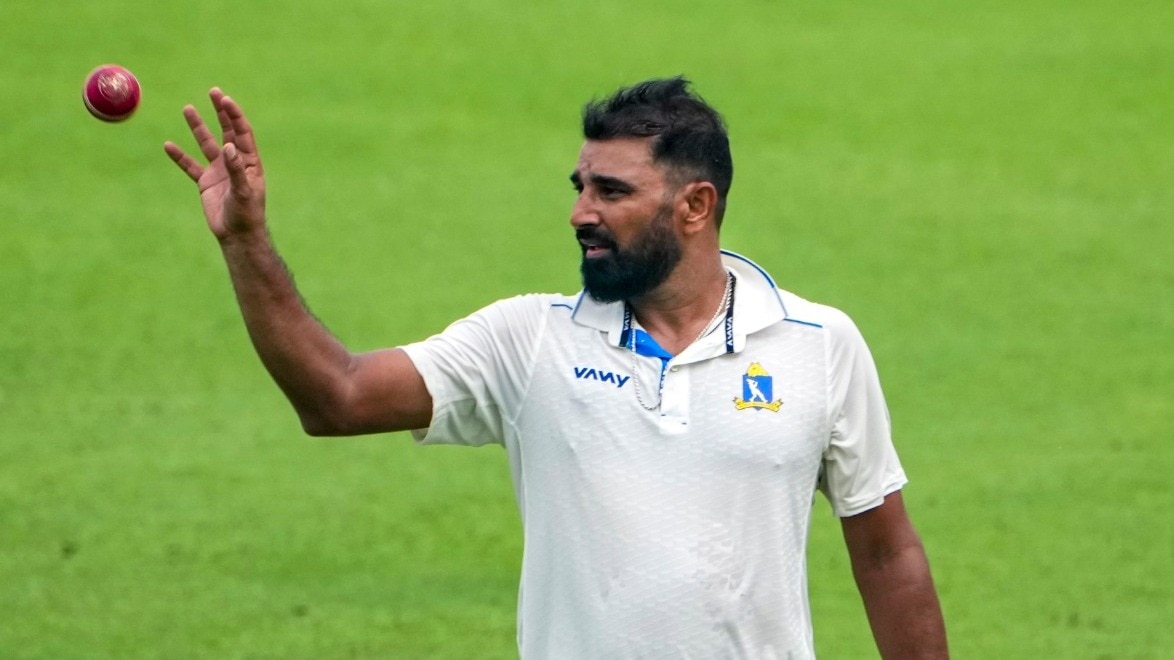
On November 6, the cricketing world heard the soft thud of a white Test jersey being folded for the last time. Mohammad Shami, the renowned Indian fast bowler, posted a brief but heartfelt message announcing his retirement from Test cricket. "I am bidding farewell to white jersey, but memories of Test cricket will always remain in my heart," he wrote, a line that resonated across stadiums, living rooms and social-media feeds alike.

Shami's Test career began over a decade ago, and in the span of 13 years he became a fixture of Team India's pace attack. Across those outings, he claimed 229 wickets, a haul that reflects both durability and the ability to strike at crucial moments. His bowling average—27.71 runs per wicket—underscores a consistency that kept opposition line-ups on edge.

Indian cricketer Mohammad Shami announces retirement from Test Cricket. He tweets, "Safed jersey se vida le raha hoon, lekin usse judi yaadon se kabhi nahi…" https://t.co/X7O4xcOOdi
The statistics that define Shami's Test tenure read like a résumé for any aspiring pacer. Six times he ripped through an innings to claim five wickets, a feat known in cricketing parlance as a "five-for." In total, his 229 scalps came at a rate that kept India competitive in series that swung on the pendulum of a single spell.
He announced that he will concentrate on the limited-overs formats—One Day Internationals (ODIs) and Twenty20 Internationals (T20Is).
While the white jersey will no longer adorn his shoulders, Shami clarified that his love for the sport remains undiminished. He announced that he will concentrate on the limited-overs formats—One Day Internationals (ODIs) and Twenty20 Internationals (T20Is). The move mirrors a broader trend among modern cricketers who, faced with grueling international schedules, opt to specialize in the shorter games that dominate today's commercial landscape. By narrowing his focus, Shami hopes to extend his playing career and continue contributing to India's success in the formats that attract the biggest global audiences.

🚨 Mohammed Shami announced his retirement from test cricket. 💔 https://t.co/7PDLqr7h7p
Fans, too, took to platforms ranging from Twitter threads to stadium chants to celebrate the bowler's career. Many highlighted his signature seam-positioning and the way he could swing the ball both ways, a skill that made him a nightmare for top-order batsmen. The outpouring of support reinforced the notion that Shami's departure is not a loss but a transition, a moment for the cricketing community to reflect on his contributions while looking ahead to the next chapter.
Shami's post-Test roadmap is already taking shape. He will continue to represent India in ODIs and T20Is, formats where his pace, accuracy and ability to bowl at the death are highly prized. Additionally, his involvement with the Bengal side for the 2025 Champions Trophy suggests a dual focus on domestic and international white-ball cricket, allowing him to hone his craft in varied conditions.
The decision also opens a slot in the Test lineup, prompting discussions about who will inherit the responsibility of leading India's pace attack in the longest format.

🔱 INDIAN PLAYERS WHO ANNOUNCED THEIR RETIREMENT DURING 2025–26 :- - Mohammed Shami - Rohit Sharma - Virat Kohli - Cheteshwar Pujara.....seemore https://t.co/watiX25edf
For the millions who have followed Shami's rise—from his early days in the domestic circuit to his thunderous spells on the world stage—his retirement is a poignant reminder of the fleeting nature of sporting careers. Yet the reverence expressed by supporters underscores a lasting impact: a bowler who combined raw speed with tactical acumen, who could swing the ball both ways, and who never shied away from the pressure of a Test match's fifth day.
As the cricketing calendar rolls on, Shami's decision to focus on limited-overs cricket aligns with the sport's evolving economics and audience preferences. While his white-ball future remains to be fully chronicled, the foundations he laid in Test cricket—229 wickets, six five-for hauls, and an average that kept him competitive across continents—will endure in the annals of Indian cricket. The white jersey may be retired, but the memories, as Shami himself affirmed, will never leave his heart.