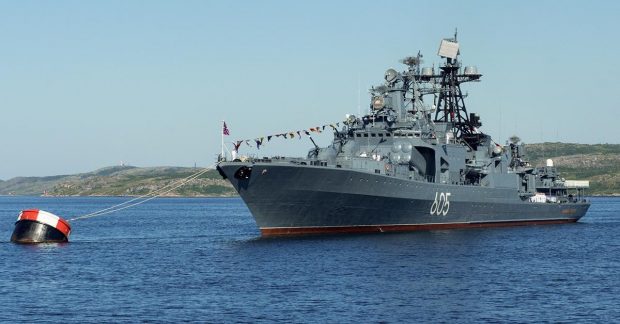
For decades, the Mediterranean Sea has served as a vital artery for global trade and military logistics, but in late November, it became a theater of an unexpected and distant conflict. The story begins not with the turning of a ship’s wheel, but with the sinking of a warship. In the port of Benghazi, Libya, Ukrainian maritime drones executed a precise strike that claimed the Russian corvette, the Merkury. The incident, which occurred on November 22, sent ripples through the international security community that extended far beyond the Mediterranean.

On November 5, a convoy of three Russian-flagged cargo vessels departed from Kaliningrad, the enclave that serves as a key launchpad for Russian naval operations. These ships were not carrying standard commercial goods; they were Ro/Ro (Roll-on/Roll-off) carriers filled with military vehicles, bound for Libya. Escorting this commercial-military hybrid was the frigate Golovko. For three weeks, this flotilla sailed south, its destination unclear but its purpose evident to those tracking its movements. The convoy was part of a broader effort to project Russian power in North and West Africa, a region where Moscow has increasingly invested in private military companies and security contracts.
However, the Merkury attack changed the calculus. A European military official tracking the vessels noted that the convoy’s trajectory shifted dramatically near the Strait of Sicily on the same day as the Benghazi strike. The frigate and its cargo ships turned back, abandoning the trip to Libya. This reversal was not a gradual detour but a complete abandonment of the route, driven by a sudden and palpable fear for the safety of naval assets in a region where Ukrainian strikes had just proven themselves capable of hitting high-value targets.
Three sources from military and security agencies confirmed the details of the reversal.
The operators of the cargo ships involved in this mission were already under severe international pressure. MarineTraffic data identifies the second convoy, which included vessels like the Maia 1, Lady R, and Lady D, as belonging to Russia-based entities JSC Sovfracht and MG-Flot. Both companies have been hit with sanctions by the European Union and the United States. These sanctions were initially designed to cripple the Russian maritime logistics infrastructure, but their existence also made these ships highly visible to intelligence agencies. The sinking of the Merkury transformed these restrictions into a lethal reality.
Three sources from military and security agencies confirmed the details of the reversal. A representative of Ukrainian military intelligence corroborated the flotilla’s decision to abandon the trip, while a Middle Eastern security official provided independent verification of the turn near the Strait of Sicily. These officials emphasized that while Russia and Ukraine have exchanged attacks in the Black Sea for years, incidents in other regions are rare. The Benghazi attack was an anomaly that forced Moscow to rethink its naval posture. The fact that a European military official could track the specific moment of reversal indicates the level of transparency—or perhaps the difficulty of hiding such a large-scale movement—in the Mediterranean theater.
The turn of the Golovko convoy suggests that this pipeline of matériel to Africa has been disrupted.
As of late November, the future destination of the convoy remains unclear. The ships were last tracked near Algeria on November 25, but the threat of further Ukrainian strikes in the Mediterranean persists. The incident highlights a new frontier in the Russia-Ukraine war, one where the conflict is no longer defined by the land borders of the two nations, but by the global reach of their respective military projects. For the crew of the Golovko, the retreat was a tactical necessity; for the broader conflict, it was a strategic message. The Mediterranean, long considered a stable zone, is now a contested space where the shadows of the war in Europe are cast by the light of distant explosions in North Africa.
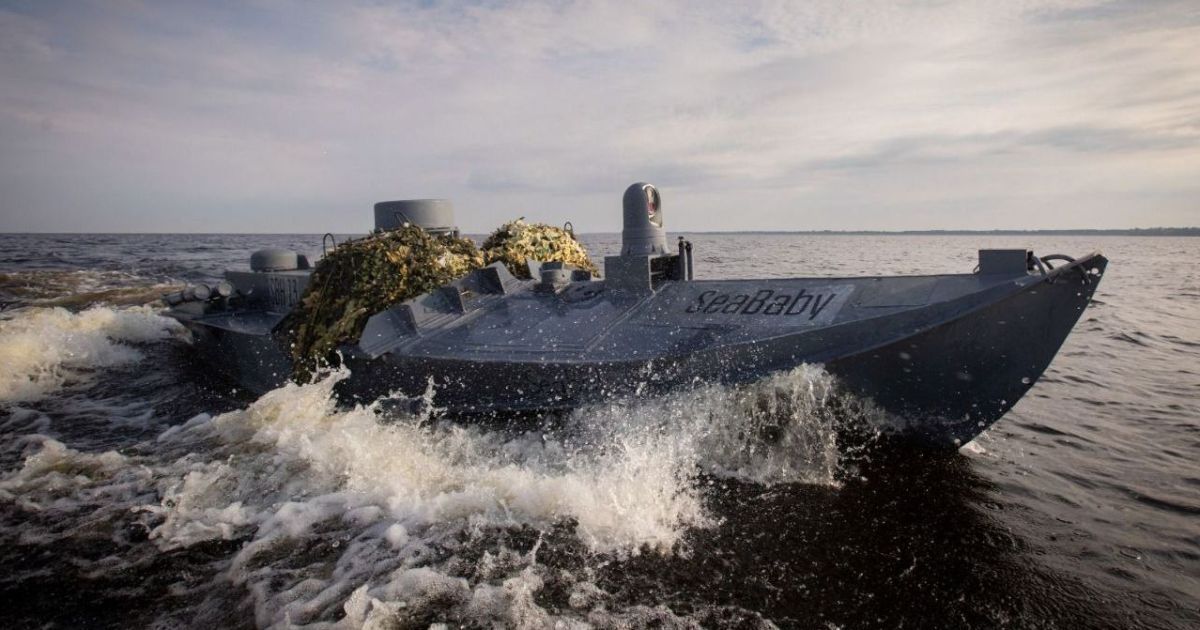
The turning of this flotilla marks a significant shift in the geography of the modern war. It is a reminder that naval assets are vulnerable to small, fast, and technologically advanced threats like maritime drones, even when operating in international waters far from the primary front lines. The sinking of the Merkury was not just a loss of a ship; it was a loss of confidence for Russian planners who had assumed that their operations in Africa and the Mediterranean were safe from Ukrainian retaliation. As the convoy sits off the coast of Algeria, its operators must now decide whether to complete the mission under the shadow of sanctions and drones, or to retreat entirely, admitting that the cost of projecting power in this new, volatile environment has become too high to bear.