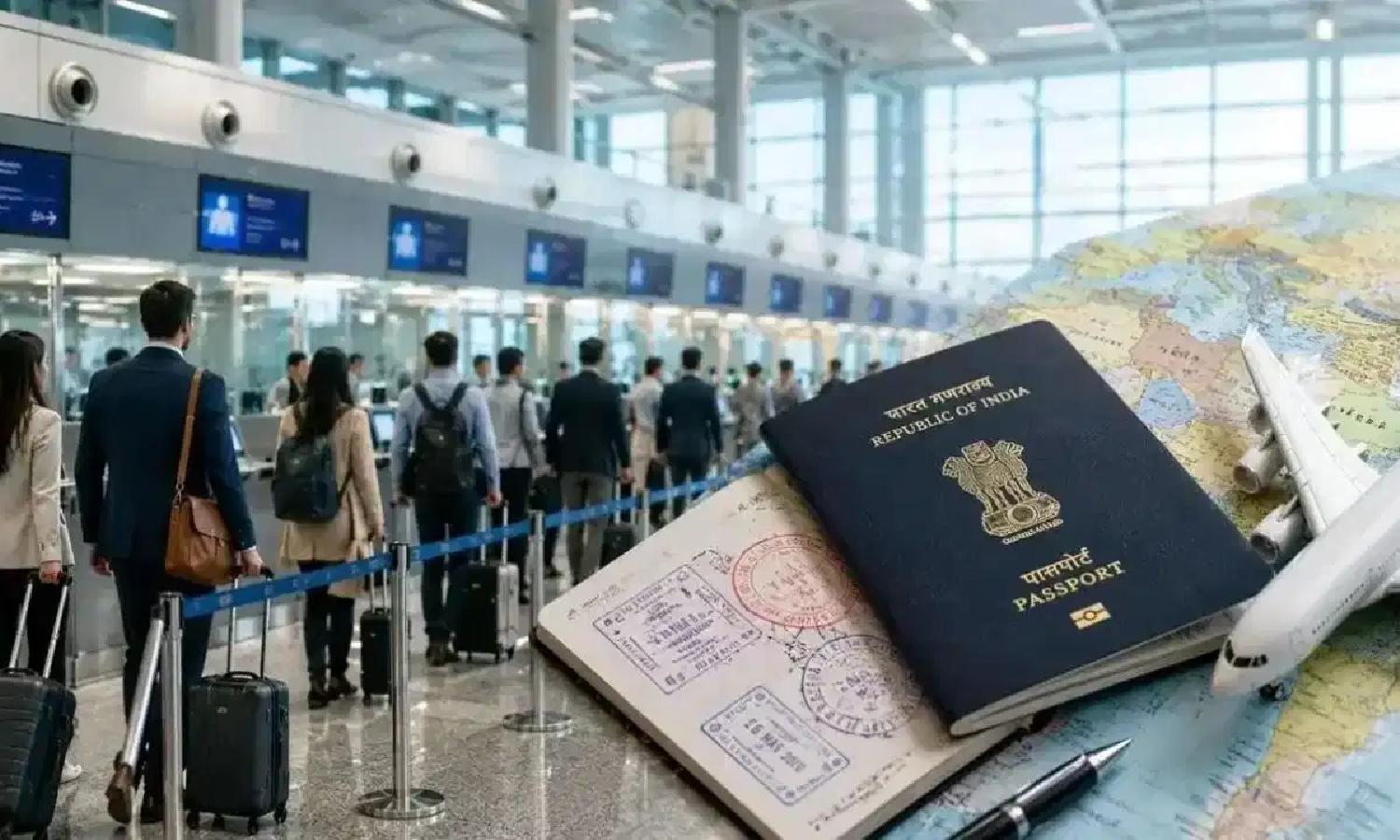
For years, the gateway to India was guarded by a labyrinth of paperwork. To enter the subcontinent, foreign nationals often had to navigate a sprawling electronic visa form that stretched across nine pages, cluttered with redundant questions and technical hurdles. It was a system designed for control, perhaps, but one that often stood in the way of the very people India sought to attract: the curious tourist, the dedicated student, and the ambitious entrepreneur.
On November 12, 2026, the Ministry of Home Affairs signaled a definitive end to that era of complexity. In a sweeping reform aimed at simplifying the nation's visa regime, the Indian central government announced a structural overhaul intended to make travel to the country more intuitive and efficient. This was not merely a cosmetic update; it was a fundamental reduction in the architecture of entry.
The scale of the restructuring is best understood through the numbers. Previously, the Indian visa system operated under 13 main categories, supported by a dense thicket of 49 distinct sub-categories. Under the new policy, the government has aggressively pruned this list, condensing the main categories down to nine and slashing the sub-categories to just 23.
The previous system often left professionals in a gray area, unsure which designation best suited their specific commercial intent.
By reducing the sheer volume of classifications, the Ministry of Home Affairs is attempting to align India's entry protocols with global best practices. The goal is to move away from a system where travelers might struggle to find the exact niche that fits their purpose, toward one that is streamlined and predictable. To support this new logic, an IT system upgrade is scheduled for the end of this year, a digital foundation designed to facilitate the issuance of visas under these new, leaner rules.
One of the most significant shifts occurs within the realm of leisure and exploration. The most popular category, formerly known simply as the tourist visa, has been rebranded as the 'Visitor Visa.' This change brings with it a clear distinction between short-term stays and long-term exploration.
The new V-1 category is designed for the brief traveler, offering a 30-day window to experience the country. For those seeking a deeper immersion, the V-2 category offers much more flexibility, with options for durations of one year, five years, or even up to 10 years on a multi-entry basis. This long-term V-2 option is particularly notable for its inclusion of mountaineering, acknowledging the specific needs of adventure travelers looking to traverse India's diverse landscapes over extended periods.

JUST IN: 🇮🇳 India cuts visa application requirements by up to 70% to attract more international tourism.
While tourists gain flexibility, the business community is gaining something perhaps even more valuable: certainty. The previous system often left professionals in a gray area, unsure which designation best suited their specific commercial intent. The new reforms address this by splitting business visas into two distinct paths: B-1 and B-2.
The B-1 visa is dedicated to long-term industrial entrepreneurship, providing a stable framework for those looking to build lasting operations within the country. In contrast, the B-2 visa is tailored for short-term contracts, a category that encompasses a wide variety of professional activities, including sports and film production.
This distinction is more than just administrative bookkeeping. As noted by The Hindu, "such differentiation will give the business community greater clarity when planning long-term commercial activity." By providing these clear lanes, the government is signaling that it understands the different rhythms of global commerce, from the quick film shoot to the decade-long industrial venture.
The reforms extend deeply into the specialized sectors of education and healthcare. For the international student body, the new framework introduces the S-1 and S-2 categories, providing a structured way to navigate academic stays. Similarly, the medical sector—a significant draw for international patients—has been reorganized into the M-1 and M-3 categories. Notably, the M-3 sub-category is dedicated specifically to Ayush care, reflecting a specialized focus on traditional Indian medical practices.
Perhaps the most immediate benefit for any applicant, however, is the sheer reduction in friction. The government has targeted the application process itself, implementing changes that are expected to reduce the time required to fill out application forms by 65 to 70 percent. By stripping away the redundant questions that once plagued the nine-page electronic forms, the Ministry of Home Affairs is attempting to turn a bureaucratic hurdle into a seamless digital handshake.

A press release by Ministry of Home Affairs reads, "Under the leadership of Prime Minister Shri Narendra Modi and guidance of Union Home Minister Shri Amit Shah, Government of India rationalizes Indian visa regime. Under Visa regime rationalization, main categories for Visa reduced from 13 to 09 and sub categories from 49 to 23. Indian visa regime rationalization to boost foreign tourist arrivals, enhance medical value travel and foreign student arrivals. Number of fields to be filled in the application forms for all 23 visa sub-categories reduced by 65%–70%, now application process easier, faster, and more applicant-friendly. Changes reduce overlap between visa categories and make framework easier to navigate for visitors, patients, students, researchers, investors and business professionals. Rationalization intends to boost legitimate travel, education, healthcare and economic engagement with India through clearer, purpose-based visa options."
As the country prepares for the IT upgrades at the end of the year, the landscape of Indian entry is already shifting. We see glimpses of this new openness in specific bilateral arrangements, such as the current policy where 30-day e-visas for Russian citizens are provided free of charge.
From the diplomat and the journalist to the worker and the student, the new categories—ranging from diplomatic and work visas to the newly minted visitor and business tiers—represent a concerted effort to modernize. India is no longer just managing a border; it is managing an invitation, attempting to ensure that the path to its shores is as welcoming as the country itself.